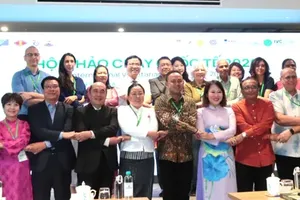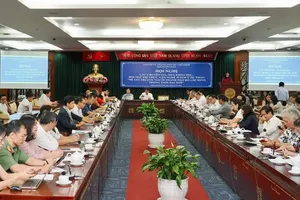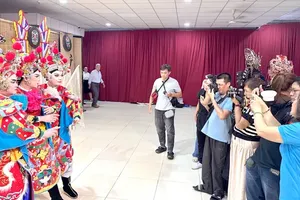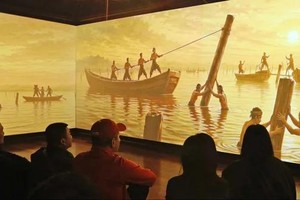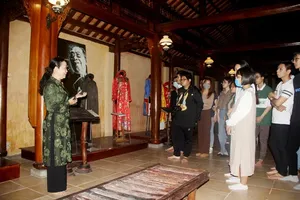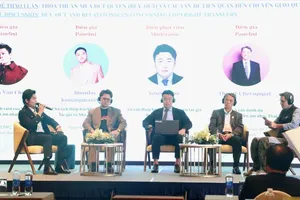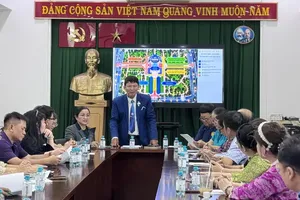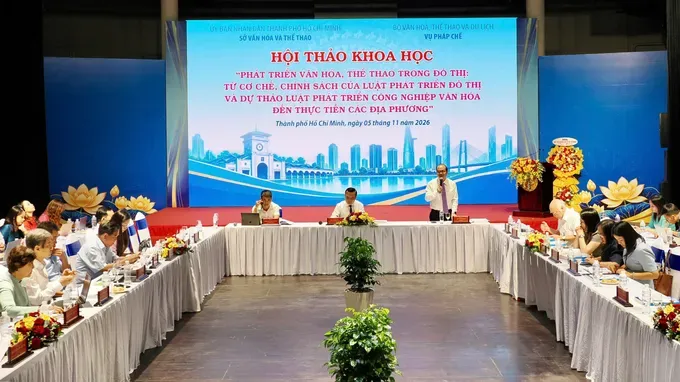
The Ho Chi Minh City Department of Culture and Sports, in coordination with the Legal Department under the Ministry of Culture, Sports, and Tourism, held a scientific seminar on the morning of November 5 to discuss “Urban Cultural and Sports Development: From Policy Mechanisms under the Law on Urban Development and the Draft Law on Cultural Industry Development to Local Practices” at Phu Tho Multi-Purpose Circus and Performance Theater.
In his opening remarks, Le Van Thai, Deputy Director of the Ho Chi Minh City Department of Culture and Sports, emphasized that culture and sports play an important role in improving residents' spiritual well-being, enhancing the city's appeal and competitiveness, and affirming its distinctive identity.
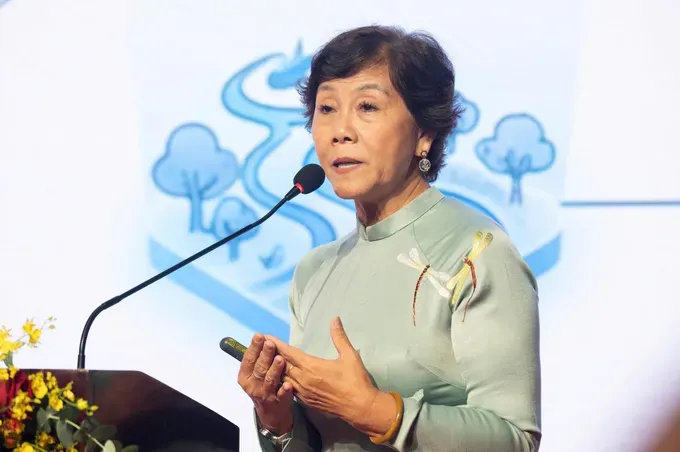
At the seminar, Dr. Nguyen Thi Hau, General Secretary of the Ho Chi Minh City Historical Science Association, said the city possessed a diverse system of urban heritage distributed across three spatial corridors, including the historical Saigon–Cho Lon axis; industrial and river-port heritage along the Ben Nghe, Binh Dong and Ba Son areas; and the riverine and ecological landscapes of Can Gio and Cu Chi.
According to Dr. Nguyen Thi Hau, Saigon–Ho Chi Minh City's urban heritage could serve as an important foundation for urban cultural development and the cultural industries. However, this potential would not automatically translate into tangible results. Heritage exploitation must ensure transparency in intellectual property rights and equitable benefit-sharing, she noted.
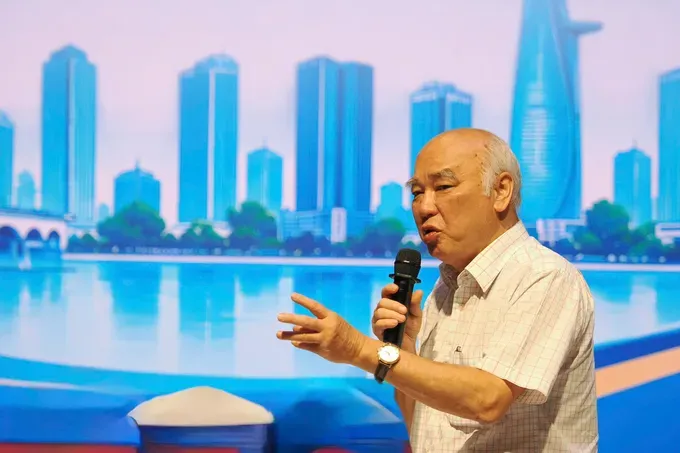
In the sports sector, Dr. Nguyen Thi Hien Thanh, Director of the Center for Sports Training and Competency Development at Hoa Sen University, described the implementation of the Law on Urban Development as a “golden opportunity” for Ho Chi Minh City to restructure its sports industry.
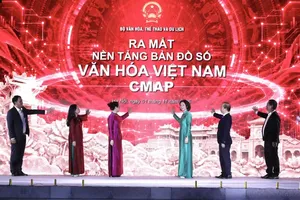
Meanwhile, Dr. Chu Tien Dat, Chairman of the Members' Council of VTC Digicom under VTC Corporation, pointed out that heritage data remained fragmented across individual cultural institutions, while ticketing systems operating through multiple channels were not yet interconnected.
The city needs to establish a digital heritage repository as a component of the shared database under the Law on Urban Development, interconnected with the National Digital Cultural Data Repository. It should also pilot the model during 2026–2027 at several museums under the Ho Chi Minh City Department of Culture and Sports and selected special national heritage sites, Dr. Chu Tien Dat proposed.
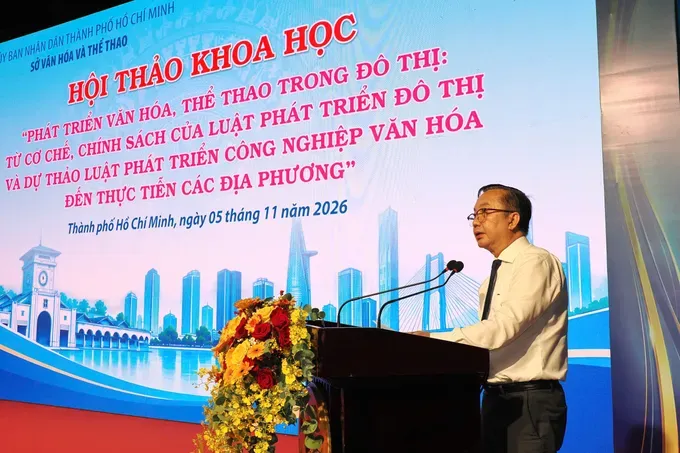
At the seminar, Director of the Ho Chi Minh City Department of Culture and Sports, Tran The Thuan, outlined four key task groups identified by the department, including introducing preferential mechanisms for cultural creative centers and clusters, while making effective use of surplus public assets, restructuring grassroots cultural and sports institutions under a tiered operational model, building a cultural industry ecosystem, and piloting public-private partnerships in the management of theaters, museums, and sports centers, and attracting and making effective use of talent across all three generations.
Cultural industry development must always go hand in hand with the preservation and promotion of cultural values, avoiding commercialization, Director Tran The Thuan affirmed.