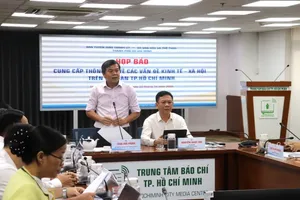
On July 17, the Central Commission for Propaganda and Mass Mobilization in coordination with the Ho Chi Minh City Party Committee, held a forum in Ho Chi Minh City on improving the quality and effectiveness of Party communications and public engagement.
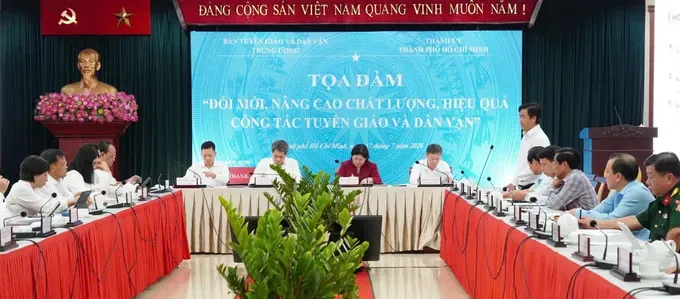
Opening the event, Van Thi Bach Tuyet, Dputy Secretary of the Ho Chi Minh City Party Committee, said the rapid development of the Fourth Industrial Revolution, driven by artificial intelligence (AI), big data and digital multimedia communications, is fundamentally changing how people access information.
She said cyberspace has become an important arena in the country's political and social life, particularly for younger generations, while public opinion is increasingly shifting to online platforms where information spreads rapidly.
According to Deputy Secretary Van Thi Bach Tuyet, after one year of implementing the two-tier local government model and streamlining the organizational structure, Party communications and public engagement efforts in Ho Chi Minh City and southern provinces and cities have achieved positive results.
Authorities have proactively maintained public confidence during institutional restructuring, expanded communications through digital platforms, and effectively promoted the "Skilled Mass Mobilization" campaign, helping address land clearance issues and support infrastructure development.
However, she noted that several challenges remain, including the limited capacity of grassroots officials to meet the demands of decentralization, fragmented and poorly integrated digital data infrastructure and management tools, and increasingly sophisticated attempts by hostile forces to misuse AI for subversive activities.
The Deputy Secretary proposed several areas for discussion, including conducting an objective and comprehensive assessment of Party communications and public engagement in southern provinces and cities, particularly following the implementation of the two-tier local government model.
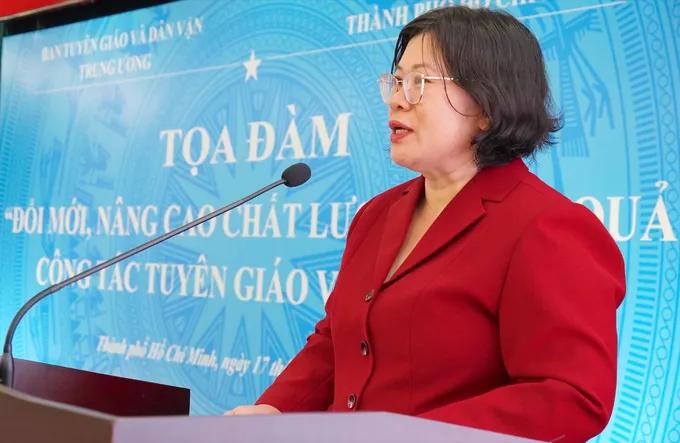
She said participants should analyze changes in the social environment, population structure, information consumption habits and public expectations in order to further modernize the content, formats and methods of Party communications and public engagement.
She also called for practical and innovative solutions tailored to local conditions while ensuring they are feasible to implement.
Participants were also asked to examine coordination mechanisms between the Central Commission for Propaganda and Mass Mobilization and Party committees, government agencies and local authorities, clarify the responsibilities of provincial, municipal and commune-level Party bodies, and define procedures for sharing and using information and data as well as responding to emerging issues.
The forum also encouraged delegates to share successful models, innovative practices and experiences that could be replicated elsewhere, while proposing practical measures to strengthen the capabilities of officials responsible for Party communications and public engagement, especially at the grassroots level.





)