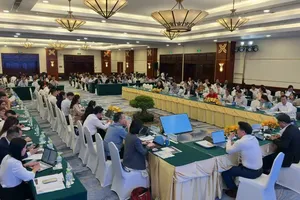
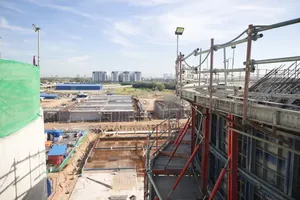
A key aspect of this approach is that it unlocks space for spatial reorganization and grants Ho Chi Minh City greater autonomy, befitting its status as a special municipality, to enhance its competitive edge against major regional urban centers.
Creating a stable, predictable legal framework
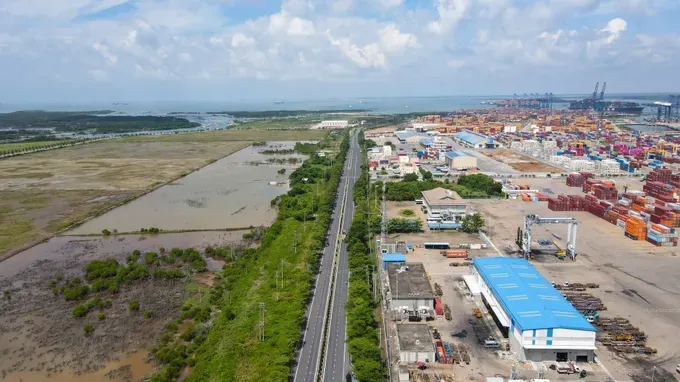
These models are framed within the vision of a fully integrated urban ecosystem where FTZs are anchored to seaports and airports, seamlessly linking with the VIFC, industrial zones, commercial and service hubs, as well as innovation, startup, data, and R&D centers.
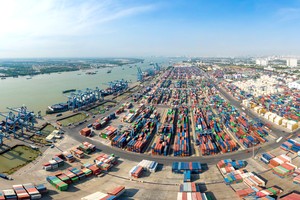
With its expanded development space following administrative consolidation, Ho Chi Minh City is well-positioned to connect the Cai Mep – Thi Vai port cluster with the industrial parks of the former Binh Duong region, the VIFC in the Thu Thiem New Urban Area, Long Thanh International Airport, and the manufacturing corridors of the Southeast region. This will foster a highly interconnected and mutually supportive growth ecosystem. Institutionalizing these mechanisms into law will establish a more stable, predictable legal framework, thereby bolstering the confidence of strategic investors.
A notable breakthrough in the draft law is its bold push for decentralization and delegation of authority. The Municipal People's Council is empowered to regulate management mechanisms, incentives, and trade facilitation measures for FTZs and integrated logistics hubs. Meanwhile, the Chairman of the Municipal People's Committee is authorized to establish and adjust the boundaries, objectives, functions, and related operational scope of these zones.
Furthermore, the city will pilot novel mechanisms, refine criteria for selecting strategic investors, enforce regulations to revoke or reclaim incentives if investors fail to meet their commitments, institute local fees and charges, and exercise greater autonomy in resource allocation.
For non-tariff zones, the draft law relaxes key foreign trade controls and streamlines customs procedures. Within FTZs, businesses are permitted to list prices, quote contracts, and execute transactions in foreign currencies. These provisions signal the initial formation of a distinct institutional framework tailored for emerging economic spaces.
However, while the draft sets out principles for the application of the law and transitional provisions for existing mechanisms and projects, it does not clearly address the preservation of incentives and rights already established throughout the life of a project when policies change; the adjustment period and arrangements for addressing resulting losses; or mechanisms for resolving cases where the city and central agencies have differing interpretations. These issues are particularly important for the VIFC and FTZ models.
When committing capital to emerging markets, strategic investors prioritize legal stability, contract enforceability, and the protection of property rights. Experiences from international jurisdictions, most notably Singapore, demonstrate that a transparent, stable, and predictable regulatory climate carries far greater weight than tax incentives alone.
To address this, the bill should explicitly enshrine principles of policy stability, the protection of legitimate rights, and seamless transition management. Should the State modify policies for macroeconomic management or public interest, it must allow a reasonable adaptation period and establish clear mechanisms to resolve accrued rights, obligations, and lawful interests.
Granting substantive authority to expand development space
For FTZs and integrated economic zones, there should be a single agency with sufficient authority to handle inter-agency procedures and coordinate and make decisions on matters related to investment, land, construction, taxation, customs, labor, immigration, foreign exchange, and financial licensing. The boundaries of authority should be determined based on the scope of impact and level of risk. The central government should oversee issues with national implications, including monetary policy, financial system safety, foreign exchange reserves, anti-money laundering, national defense and security, foreign affairs, and international obligations.
Ho Chi Minh City should be empowered to proactively organize development spaces, establish internal governance and linkage models, set project selection criteria and investment procedures, and promote controlled pilot mechanisms and licensing for activities involving identified and contained risks. In other words, the central government sets the framework and general principles and exercises oversight, while the city takes the initiative in selecting implementation tools and assumes responsibility for the outcomes.
About fiscal decentralization and urban finance, the draft law expands Ho Chi Minh City’s authority to make spending decisions, introduce certain fees and charges, mobilize urban resources, and raise capital for investment. However, the decentralization approach remains somewhat cautious, as the city lacks sufficiently stable local tax instruments while facing substantial spending needs. The law should take a bolder approach by allowing Ho Chi Minh City to impose certain surcharges within a framework set by the central government, thereby linking its authority to mobilize resources with its responsibility for service delivery and development investment.
For foreign trade taxes generated by FTZ operations, a portion of the revenues should, during the initial phase, be retained to supplement the Special Urban Region Development Fund, enabling reinvestment in infrastructure within the zone and in regional connectivity projects. These resources would not only serve Ho Chi Minh City but also create advantages for other localities that jointly utilize the regional seaport, logistics, transport and supply chain systems. Therefore, mechanisms for allocating and using these revenues should accurately reflect the scope of benefits while encouraging localities to coordinate investment and share responsibility for common infrastructure projects.
Another issue that should not be overlooked is the need to develop in greater detail a dispute resolution mechanism in line with international standards. A specialized arbitration center could be established, with international arbitrators selected and expedited procedures applied. The recognition and enforcement of arbitral awards must be swift, transparent, and predictable.
The draft Urban Development Law represents an important step forward, reflecting innovative thinking in institutional reform and creating greater space for Ho Chi Minh City to leverage its potential and competitive advantages. The success of these new models will ultimately depend on implementation capacity, governance quality, policy stability and the extent to which authority is genuinely decentralized.
Regarding foreign exchange, the law should enable VIFC members and enterprises operating in FTZs to open multi-currency accounts, conduct cross-border payments, implement centralized treasury management and hedge against exchange-rate risks, alongside strict requirements for customer identification, anti-money laundering, transaction reporting and capital-account security.
Tax and customs procedures should be simple, stable and fully digitalized. Incentives should be tied to tangible outcomes, such as the creation of high-quality jobs, investment in research and development, exports, technology transfer and linkages with Vietnamese enterprises. Customs authorities should shift decisively toward risk-based management, single-window declarations, increased post-clearance audits and data sharing.