Pham Quang Nhat, Director of the Ho Chi Minh City Investment and Trade Promotion Center (ITPC), said that the DDCI 2026 framework had been comprehensively redesigned to align with the city's new administrative structure and boundaries following the recent restructuring.
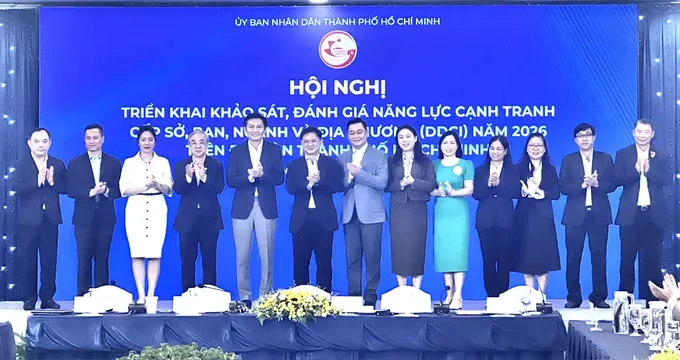
The index was developed based on field surveys, consultations with 22 departments and agencies and 168 wards, communes and special administrative zones, along with input from experts, to ensure that it accurately reflects the quality of governance and administrative performance.
A key new feature of this year's DDCI is the introduction of two separate questionnaires for businesses and household businesses, enabling the survey to better reflect the specific concerns and experiences of each group.
The index comprises nine component indicators for departments and agencies and 10 for local administrations. It also introduces new criteria covering digital government, green transformation, sustainable development and public-service ethics.
The entire survey will be conducted digitally, with respondents' information encrypted and anonymized to ensure the objectivity and reliability of the results.
According to the Director of the Ho Chi Minh City Investment and Trade Promotion Center, the city will conduct the large-scale survey from August through mid-September, followed by in-depth interviews with strategic businesses. The results are scheduled to be announced in December 2026.
The assessment will provide the first baseline dataset on the quality of governance across Ho Chi Minh City's administrative system following the implementation of the two-tier local government model. It will also serve as a basis for monitoring administrative reform in the years ahead.
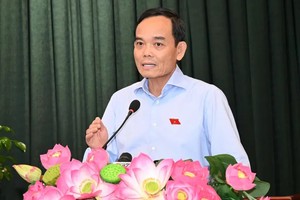
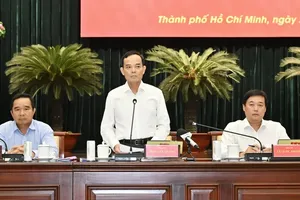
Speaking at the conference, Vice Chairman of the Ho Chi Minh City People’s Committee Nguyen Manh Cuong said that as the city continues to consolidate its administrative apparatus, improving the investment and business environment must remain a key priority to maintain its role as Vietnam's economic hub.
He described DDCI 2026 as more than a survey or ranking, calling it a “comprehensive checkup” of the administrative system and a tool for measuring businesses' experiences.
The assessment is expected to help identify bottlenecks and shortcomings within individual agencies and organizations, enabling the city to introduce timely corrective measures and improve the quality of public services, he said.
The Vice Chairman of the Ho Chi Minh City People’s Committee requested that the survey be conducted independently and objectively, accurately reflecting the actual administrative performance of each department, agency and locality.
The results should not only be used to rank agencies but, more importantly, to identify areas of weakness and bottlenecks in administrative procedures, thereby strengthening the accountability of agency heads and driving substantive reforms, he said.
He also instructed agencies not to interfere with or manipulate the survey results and called on businesses, cooperatives and household businesses to provide feedback objectively, frankly and responsibly.
According to the municipal People's Committee, the DDCI 2026 results will provide an important basis for departments, agencies and local administrations to review their performance and address shortcomings. They will also support the city in developing administrative reform measures and improving its Provincial Competitiveness Index (PCI).
In the longer term, the dataset is expected to form the basis for a regular mechanism to monitor governance quality at all levels, contributing to a more transparent and efficient administration and strengthening business confidence in the city.