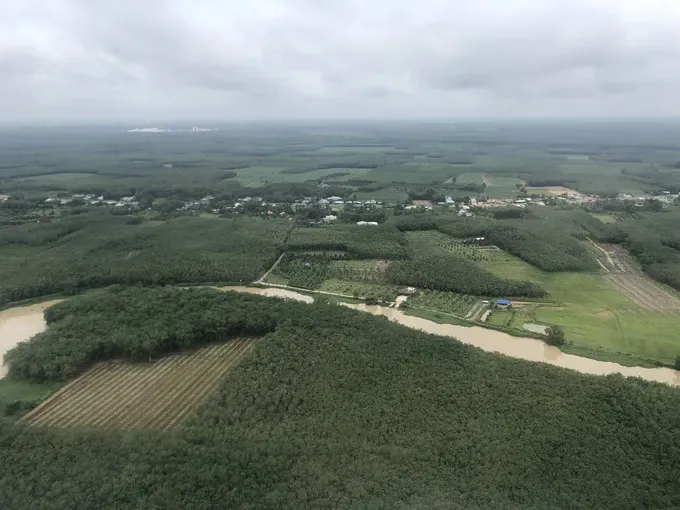
According to the Ho Chi Minh City People’s Committee, the city has a total of 453,924 hectares of agricultural land, nearly four times more than in the past, spreading across 168 commune-level administrative units. The city’s agricultural sector is undergoing significant transformation, focusing on restructuring to increase value-added, promote sustainable development, and move toward a modern, green, and eco-friendly urban agriculture model with high-tech applications.
In recent years, the city’s agriculture has maintained steady growth, with the output value of the crop, forestry, and fishery sectors estimated to rise by around 2.5 percent annually.
Notably, high-tech agriculture now accounts for around 45 percent of the city’s total agricultural output value. Ho Chi Minh City currently has 692 high-tech crop production facilities, 797 high-tech livestock farms with a total herd of approximately 14.5 million animals, as well as 171 brackish-water shrimp farms and modern aquaculture breeding facilities.
The city is mapping and planning the development of high-tech agricultural zones, with a proposal to establish seven zones covering more than 1,344 hectares. The plan is currently under review by the Ministry of Agriculture and Environment before submission to the Prime Minister for approval.
In addition, the production of green, clean, and safe agricultural products continues to expand, with strengthened management of cultivation area codes and export-oriented packaging facilities, helping to enhance the competitiveness of the city’s agricultural products in international markets.
The ‘One Commune, One Product (OCOP)' program continues to be implemented effectively, with more than 1,000 products certified, contributing to brand building, boosting agricultural sales, and increasing local incomes.
Ho Chi Minh City is establishing several farming zones that combine cultivation with ecotourism. Community tourism, traditional craft villages, and agricultural experience tours contribute to the preservation of natural and cultural heritage while providing sustainable livelihoods for local communities.
However, the city’s agricultural sector faces significant challenges. Agricultural land is diminishing, production remains small-scale and fragmented, certification costs for VietGAP and organic products are high, supply chain integration is weak, and the effects of climate change, such as flooding and salinity intrusion, are increasingly evident.
In 2026, the city’s agricultural sector aims to build a modern urban agriculture model, shifting from a production-oriented mindset to an agricultural economy approach that emphasizes multifunctionality and value diversification.
Ho Chi Minh City plans to accelerate digital transformation in agriculture, applying mechanization, high-tech solutions, smart farming, and circular agriculture; strengthen traceability and management of cultivation area codes; and expand organic and green agriculture production.
In addition, the city will review and implement the Urban Agriculture Development Program for 2026–2030, with a vision toward 2050, alongside key initiatives on digital agriculture, urban agricultural services, and sustainable forest management linked to carbon credit programs in the Can Gio mangrove forests.
With a strategic direction and coordinated solutions, Ho Chi Minh City aims to successfully develop a modern, green, and eco-friendly urban agriculture model, contributing to food security, improving quality of life, and promoting sustainable development in the digital era.
)