From cleaning up litter to preventing waste
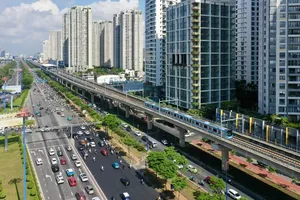
Ho Chi Minh City aspires to become a global, smart, and livable metropolis. However, achieving these ambitions requires addressing a persistent problem in everyday urban life: litter in public spaces.
The proposal to make the city the cleanest in Vietnam within three years should be treated as a concrete urban governance objective, with a clear deadline, measurable performance indicators, and defined responsibilities for authorities at every level, sector, and resident.
Waste is more than an environmental sanitation issue. A plastic cup left on a sidewalk, a nylon bag floating in a canal, or an unauthorized dumping site may seem insignificant in isolation. Repeated daily, however, such incidents become part of the city’s public image.
Litter undermines urban aesthetics and affects how residents, tourists, and investors perceive Ho Chi Minh City. It also creates broader environmental problems, including water pollution and additional pressure on flood prevention efforts.
In recent years, the city has introduced numerous environmental cleanup programs and action plans. In 2018, the Ho Chi Minh City Party Committee issued Directive 19, calling on residents to refrain from littering streets and canals. Other measures have included clearing accumulated waste, receiving public complaints, installing surveillance cameras, and inspecting and penalizing violations.
These efforts have delivered initial positive results. The greater challenge, however, is preventing waste from returning after cleanup campaigns end. The recurring problem suggests that the city continues to devote substantial resources to addressing the symptoms while the underlying causes, particularly entrenched littering habits, remain unresolved.
Ho Chi Minh City therefore needs to move beyond a cleanup-oriented approach and focus on preventing waste from being improperly discarded in the first place. This requires recognizing cleanliness as a shared responsibility of the government, businesses and every resident.
Stronger management, higher standards for cleanliness
Experiences from cities around the world show that cleanliness depends not only on public awareness but also on effective management. Singapore, for example, has established a comprehensive system of surveillance, enforcement and regular maintenance, helping it become a model of urban sanitation.
Ho Chi Minh City can draw lessons from international practices while developing standards tailored to its own conditions. The ambition to become Vietnam’s cleanest city will carry weight only if it translates into tangible improvements that residents can see and measurable results that authorities can demonstrate transparently.
The city should establish an urban cleanliness index and conduct regular assessments across individual neighborhoods and districts. Indicators could include the number of litter hotspots, response times to public complaints, the frequency with which illegal dumping recurs, and the volume of waste found along key roads and waterways.
Another priority is to develop a citywide waste map identifying where litter originates, the types of waste involved, the causes of illegal dumping and the times when it occurs. Making this information publicly available would allow residents to participate in monitoring conditions while giving local authorities a clearer basis for evaluating performance and identifying areas requiring intervention.
Proper waste disposal must also become more convenient. The city needs to position public bins strategically and organize collection services that reflect conditions in residential neighborhoods, rental housing areas, canal-side communities, markets, food stalls, and other crowded locations.
Public education must be accompanied by consistent enforcement. The key is not necessarily to impose heavier fines, but to increase the likelihood that violations will be detected and offenders held accountable. When people understand that littering carries a real risk of penalties and responsibility for remediation, improper disposal is more likely to decline over time.
Ho Chi Minh City already has local initiatives that could provide a foundation for broader action. Some local authorities have used surveillance cameras, asked residents to sign commitments against littering, penalized illegal dumping, and required offenders to remedy the damage they caused.
These initiatives should be systematically evaluated and expanded where they prove effective, rather than remaining isolated efforts implemented on a limited scale.
Becoming Vietnam’s cleanest city within three years is an ambitious undertaking. Yet the goal is attainable if the city demonstrates sustained political commitment, adopts appropriate management methods, and secures meaningful public participation.
What Ho Chi Minh City needs is not another series of short-lived campaigns that gradually lose momentum, but a lasting shift in public behavior. Residents must recognize that keeping public spaces clean is a civic responsibility and that anyone who dirties shared spaces should be accountable for putting them right.
Ultimately, the greatest value of a clean city lies in establishing a new standard of urban living, where disposing of waste properly becomes second nature. If Ho Chi Minh City can embed that principle in everyday life, it will not only improve its urban environment but also offer a model of more effective, responsible, and civilized city governance.



)