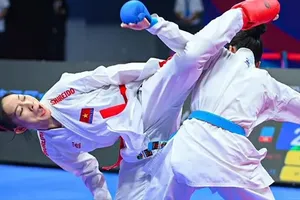
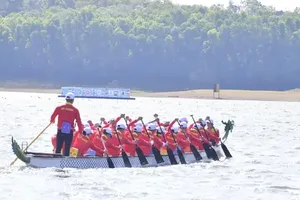
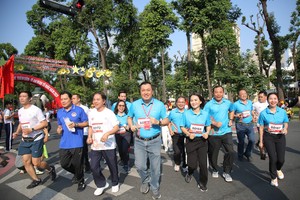
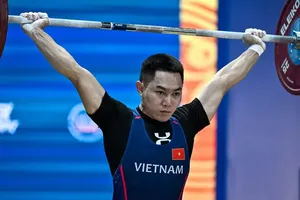
Over the 50-year development of Ho Chi Minh City’s sports sector, athlete Tran Quang Ha’s gold medal at the 1994 Asian Games stands out as a landmark achievement, marking not only personal glory but also a turning point for the city’s and the nation’s sporting aspirations.
Looking back at the 1994 Asian Games in Japan, taekwondo athlete Tran Quang Ha recalls the moment with emotion, noting that it feels like yesterday. Even after three decades, the gold medal retains its historical significance for both Vietnamese sports and Ho Chi Minh City. In those years, Vietnamese sports were still finding their footing in Asia, hindered by limited training conditions and investment. Yet, in the men’s 55-kilogram sparring event, the Ho Chi Minh City athlete demonstrated resilience, battling past strong competitors to secure a place in the final.
His 4–2 victory over an Indonesian opponent not only secured the championship but also opened a new chapter for Vietnamese sports. For the first time, Vietnam’s national flag was raised atop the highest podium at the Asian level, an affirmation that the country could compete on equal footing with regional powerhouses. For Ho Chi Minh City, it marked a pioneering milestone, the first imprint of a journey toward greater achievements.
From that historic gold medal, Ho Chi Minh City’s sports sector entered a period of stronger development. Successive generations of athletes were inspired with greater motivation, daring to dream and to conquer new heights. Following the path paved by taekwondo athlete Tran Quang Ha, the city’s sports sector, particularly taekwondo, continued to leave its mark with notable achievements. Ho Nhat Thong won gold at the 1998 Asian Games, while athlete Tran Hieu Ngan secured a silver medal at the Sydney 2000 Olympics, the first Olympic medal in Vietnam’s sporting history. Together, these accomplishments helped affirm Ho Chi Minh City’s leading position within the national sports landscape.
After retiring from competition, the athlete, born in 1971, moved into coaching and training, contributing to the development of successive generations. With solid professional expertise and a dedicated approach to mentoring, he has helped nurture many accomplished athletes, including Cao Trong Chinh, Phan Tan Dat, Tran Thi Ngoc Bich, Dinh Vuong Duy, Le Huynh Chau and Hoang Ha Giang.
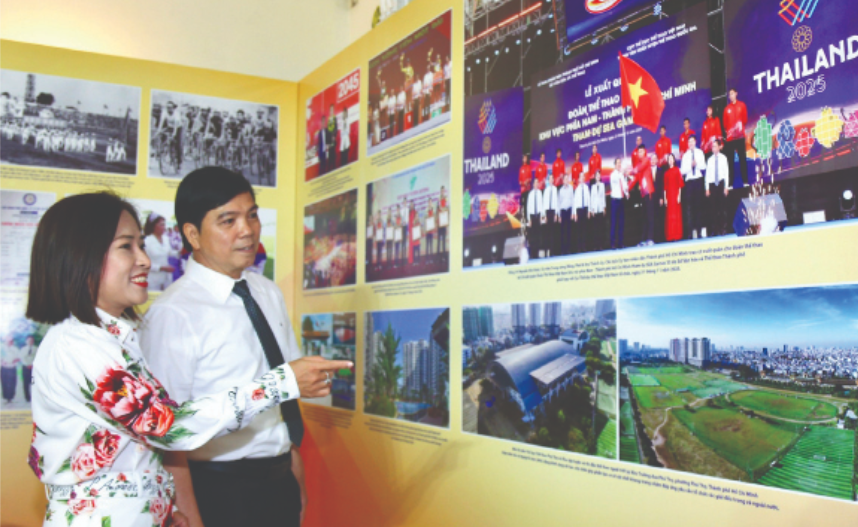
At the ceremony marking the 80th anniversary of Vietnam’s sports sector and the 50th anniversary of Ho Chi Minh City’s sports development, held on March 27 at the Saigon Opera House, the image of Tran Quang Ha left a lasting impression. Now serving as the Deputy Head of the Sports Division under the city’s Department of Culture and Sports, he continues to dedicate himself to the sector in a quieter yet steadfast role.
Whether as a coach or a sports administrator, Tran Quang Ha has remained closely engaged with the development of Ho Chi Minh City’s and Vietnam’s sports. As he shared, he will continue striving to contribute, in his own way, to the journey ahead.
From his historic gold medal at the 1994 Asian Games, a journey was set in motion, one defined not only by medals, but by growth, breakthroughs and the enduring ambition of Ho Chi Minh City’s sports sector over the past three decades. Building on that foundation, the city’s sports community continues to shape its future, pushing boundaries and turning aspirations into achievements.