It serves to advance the implementation of the Politburo’s Resolution 71 dated August 22, 2025 on breakthrough reforms in education and training, fostering a robust higher education system that embraces diverse missions while remaining aligned with shared national development objectives.
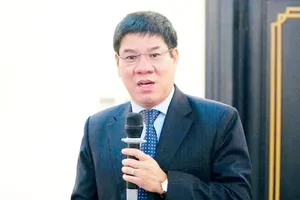
According to Professor Nguyen Tien Thao, Director General of the Department of Higher Education under the Ministry of Education and Training, the Strategy aims for all higher education institutions to meet quality standards by 2035. It also targets a higher education enrollment rate of 45 percent among individuals aged 18 to 22, with postgraduate students accounting for 15 percent of total enrollment. STEM students are expected to comprise 40 percent of learners at every level, while 90 percent of graduates are projected to secure employment relevant to their qualifications within 12 months of graduation.
The Strategy is considered the development roadmap for Vietnam's higher education, as well as the basis for organizing the network, assigning tasks, and investing resources in the coming period. The overarching spirit is shifting from development driven primarily by scale to development based on quality, efficiency, and contribution level.
Higher education quality must be demonstrated through learners' capabilities, post-graduation employment, research outcomes, technology transfer, and the degree of contribution to sectors, localities, and the country.
“The higher education investment model will shift away from uniform funding allocation and instead focus on institutional missions and measurable outcomes. Under the Strategy, around 30 key higher education institutions will be selected for targeted development, with three to five being transformed into elite universities. Priority will be given to fields critical to national development, strategic technologies, and key national missions”, said the Director General of the Department of Higher Education.
Meanwhile, Associate Professor Nguyen Thanh Chuong, Vice Principal of the University of Transport and Communications, noted that it is essential for universities to perform a guiding role, focusing on two main pillars including human resource training and scientific research directly serving socio-economic development.
Regarding human resource development and training, universities are expected to fulfill a guiding role, first by pioneering the creation of modern and novel training programs; producing truly high-quality human resources that meet the development requirements of science and technology as well as socio-economic development in the era of Industry 4.0. Scientific research programs must be substantive, yielding commercializable and internationalized products.
The State provides strategic direction and targeted investment; universities are autonomous and accountable; and scientists are given the space to innovate. Only when these three elements come together can we build strong universities and research centers that are truly capable of competing regionally and internationally.
Assoc. Prof. Tran Trong Dao, President of Ton Duc Thang University
New state-university partnership key to developing Vietnam’s elite universities
Professor Chu Duc Trinh, Principal of the University of Engineering and Technology (UET) (Vietnam National University, Hanoi), emphasized that Vietnam needs to have excellent and elite universities. Building elite universities in Vietnam must begin with a close combination of outstanding quality commitments and national responsibility.
To realize the goal of developing 3 to 5 training institutions into elite universities, a "new social contract" must be formed between the State, enterprises, and schools. In this framework, the State grants autonomy and trust to the schools, while universities commit to building a culture of sustainable quality, linking autonomy with accountability.
The ultimate goal is to train talents with leadership capabilities while generating new knowledge and technologies, contributing to ushering the country into an era of development rooted in technological mastery and creativity.
According to Associate Professor Tran Trong Dao, President of Ton Duc Thang University, to create the foundation for implementing the strategy's goals, governance must first be reformed and substantive university autonomy implemented. A university can hardly compete internationally without sufficient proactivity in academic, organizational, personnel, and resource utilization matters. Autonomy does not mean the State reduces its investment role.
Conversely, for strategic tasks such as basic research, doctoral training, core technology development, or building world-class research universities, public investment must still play a leading role.
Next is the issue of system stratification based on missions and targeted investment. Not every school should develop along a single model. The system needs internationally competitive research universities, regional universities driving local development, applied schools linked with enterprises, and specialized schools. When missions differ, investment mechanisms and evaluation criteria must also vary.
An elite educational institution is evaluated not only through research indicators or titles but also through its capacity to lead the system, create new knowledge, and build influential technology ecosystems. Three core elements including outstanding quality, an environment of excellence, and clear social impact are emphasized.
Assoc. Prof. Phan Hong Hai, President of Industrial University of Ho Chi Minh City:
Promoting the innovative university model
Vietnam’s higher education development strategy for the coming period must drive fundamental changes in research, digital transformation, and innovation. Research generates knowledge; digital transformation advances innovation in organization, governance, education, and knowledge utilization; and innovation converts knowledge into technology, products, businesses, and new value for society. These three core missions must be integrated into a unified ecosystem.
The Politburo's Resolution 71 on breakthrough development in education and training has set the right direction by calling for the promotion of the innovative university model, positioning universities as the driving force of the innovation ecosystem while fostering collaboration among the Government, universities, and businesses.
Accordingly, to achieve the strategy’s objectives, universities, particularly key institutions, must step up research, digital transformation, and innovation.
Ho Chi Minh City must maximize its higher education advantages
The goal of advancing Vietnam’s higher education system to Asia’s leading standards and establishing several world-class universities is an aspiration worth pursuing. More importantly, however, is the question: what contributions will these universities make to the nation’s development capacity? By 2045, Vietnam needs a higher education system capable of training highly qualified talent, generating knowledge and technology, enhancing business competitiveness, and helping localities address major challenges. International rankings are one measure of success, but the true test lies in the value universities create for society over the long term.
Building on the national strategy, Ho Chi Minh City is well positioned to become a regional hub for higher education, science, and innovation. The city is home to numerous universities, research institutes, businesses, hospitals, and a large market. It can prioritize several strategic areas, such as high-tech workforce development, healthcare, logistics, green transformation, and urban development. Based on these priorities, the city can commission partnerships among universities, research institutes, and businesses to jointly conduct education and research activities. The city should also support shared research infrastructure, provide data on workforce demand, and establish mechanisms to ensure that research outcomes are translated into production and everyday life.
The 2045 vision must begin with practical and measurable actions today. If Ho Chi Minh City can establish effective coordination mechanisms among the government, universities, and businesses, it will not only meet its own development needs but also provide a model that can be replicated across Vietnam’s higher education system.
Tran Dinh Ly,
Vice President of Nong Lam University Ho Chi Minh City