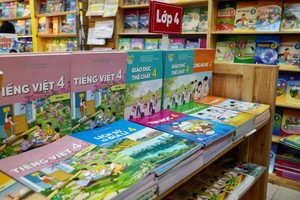
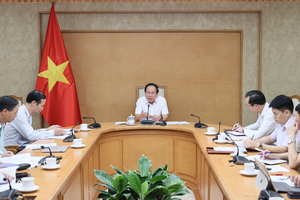
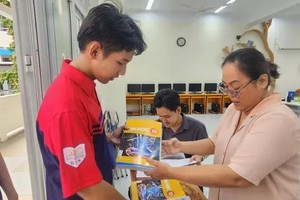
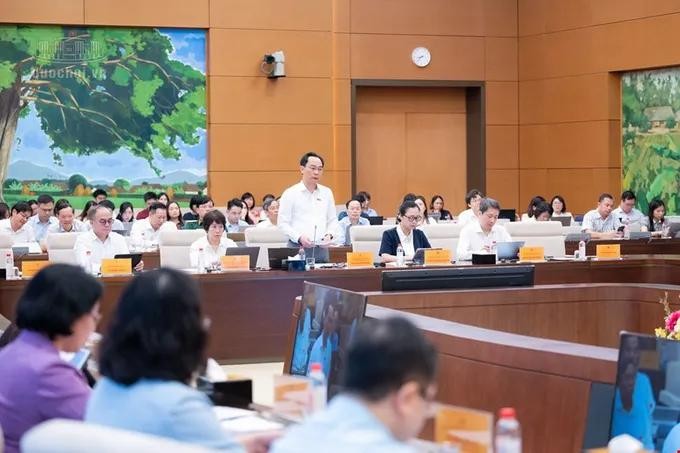
On the morning of September 20, the National Assembly’s Committee for Culture and Education held an explanation session on the implementation of education and training policies and laws in 2026, where the textbook shortage was among the hot topics of delegate concern.
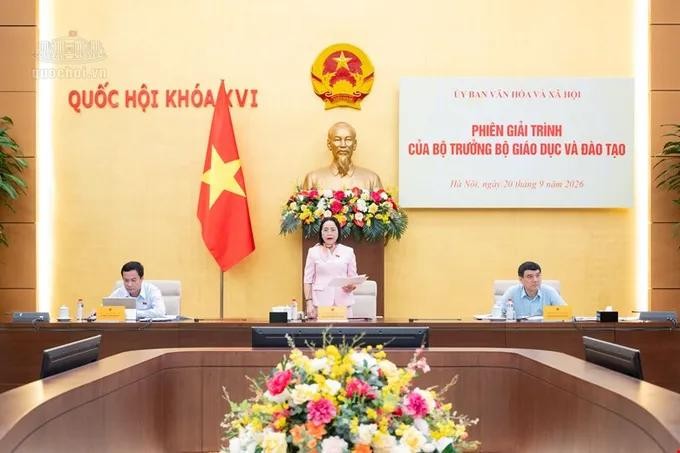
National Assembly Vice Chairwoman Nguyen Thi Thanh emphasized at the session that following a period when the National Assembly focused on perfecting institutions and issuing many breakthrough policies, the central requirement now is to shift strongly toward implementation to bring policies into reality.
The National Assembly Vice Chairwoman requested delegates to clarify practical obstacles that have persisted over many years without fundamental solutions, pointing out which policies remain slow and where the bottlenecks lie.
The National Assembly Vice Chairwoman requested relevant agencies to clarify the causes, with the determination not to let this situation repeat.
Earlier, in a report prepared for the explanation session, the Committee for Culture and Education requested the Ministry of Education and Training to devise plans for demand forecasting, printing, and distribution tightly, along with maintaining a backup supply of books for vulnerable areas, aiming to absolutely avoid textbook shortages at the beginning of the school year.
In addition, parents and students must not be made to bear incurred costs due to shortcomings in book distribution and supply.
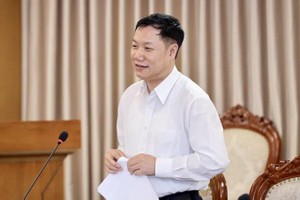
Explaining at the meeting, Minister of Education and Training Hoang Minh Son affirmed that textbooks are direct tools to implement the 2018 General Education Program. The ministry’s responsibility does not stop at compilation or appraisal, but also includes ensuring full, timely supply and accurate content.
Implementing instructions from leaders of the Party, State, and Government, the Ministry of Education and Training is carrying out a plan to review and amend the curriculum and textbooks synchronously and comprehensively. The revisions aim toward developing comprehensive capacity for students, enhancing moral education, life skills, and social responsibility, while reducing the duration of subjects that are no longer practical. The ministry has selected a team of experts and established appraisal councils to carry out the task urgently and strictly.
Regarding textbook supply, in December 2025, the ministry approved the selection of one set of textbooks and instructed the Vietnam Education Publishing House along with localities to formulate production and supply plans.
Ministry of Education and Training vows to prevent future textbook shortages
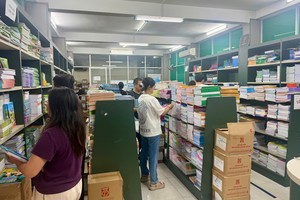
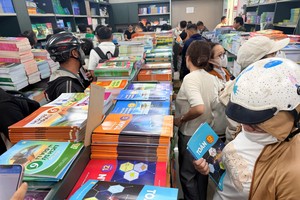
Speaking on the issue of delayed textbook deliveries, the Minister of Education and Training said that by 5:00 p.m. on September 19, approximately 900,000 textbooks had yet to reach students. This accounts for just 0.25 percent of the estimated total supply of 240 million copies, meaning that 99.75 percent had already been delivered nationwide.
According to the ministry, the remaining shortage stems largely from orders submitted by local authorities after August 30. Publishers and distribution units are continuing efforts to ensure that all students receive their textbooks as soon as possible.
Addressing concerns over the delays, the minister acknowledged shortcomings in the coordination process, stating that the Ministry of Education and Training had drawn profound lessons from the experience.
To prevent similar situations in the future, the ministry plans to establish a closer coordination mechanism with provincial and municipal Departments of Education and Training. The new approach will support direct textbook distribution through schools, reduce intermediary stages, and improve supply planning and responsiveness.