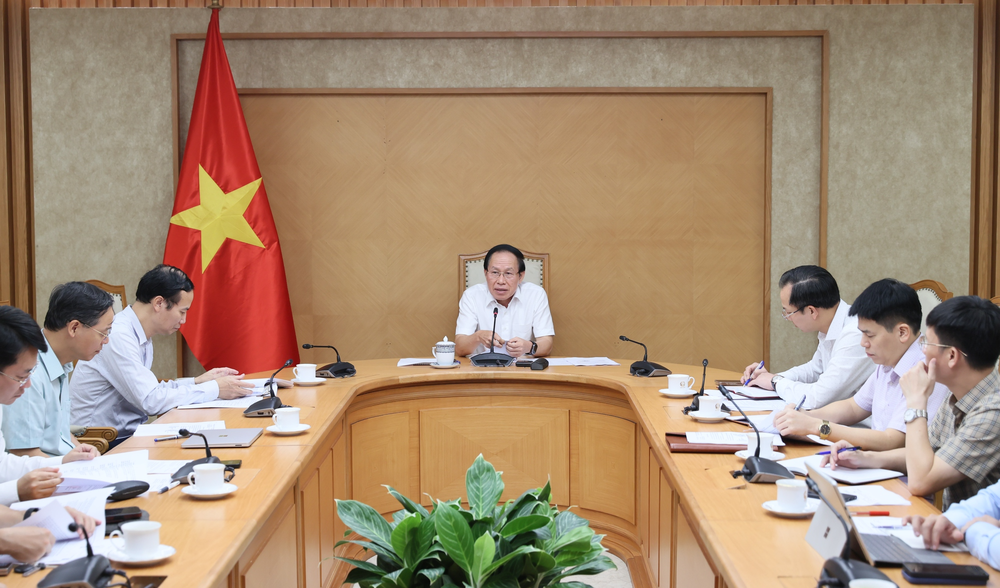
The Government Office issued a notice on Sep 10 setting out Deputy Prime Minister Le Tien Chau's conclusions after a Sep 9 meeting on textbook supplies for the 2026-2027 academic year.
Textbooks should be treated as an essential, specialized commodity
Deputy Prime Minister Le Tien Chau said textbooks should be treated as an essential, important and specialized commodity, with timely and sufficient supplies guaranteed for students, parents and schools before the start of each academic year.
Textbook supplies should be managed as an essential commodity, he said, with timely and adequate availability taking precedence over profit and prices kept under strict State control.
The fact that students and schools in some localities had entered the new academic year without sufficient textbooks exposed shortcomings across the supply chain, including demand assessment, forecasting, ordering, publishing, stockpiling, coordination, and distribution, according to the government notice.
The Ministry of Education and Training was held accountable for the shortages and ordered to identify shortcomings, clarify responsibility, and take corrective measures to prevent a recurrence.
To address the immediate shortage, the ministry was ordered to coordinate with local authorities and direct Vietnam Education Publishing House to conduct a nationwide review of textbook availability.
The review must determine how many students still lack textbooks in each locality, identify shortages by title, and pinpoint areas with surplus stocks.
Books should then be transferred immediately from areas with excess inventory to those facing shortages, and additional supplies should be distributed and further copies printed where necessary.
The Government has set Sep 15 as the deadline for ensuring that every student has a full set of textbooks, warning that shortages must not disrupt learning.
Rapid-response task force to ensure textbook supplies
The Ministry of Education and Training was also instructed to establish a rapid-response task force with a unit operating around the clock until Sep 30. The unit will receive reports of shortages and coordinate textbook deliveries to affected areas, with dedicated contact numbers made public for reporting supply problems.
Beyond the immediate response, the ministry must conduct a comprehensive review of State management of textbooks, covering demand forecasting, production, reserves, publication, distribution, inspection, and supervision.
Authorities must also designate a single body with overall responsibility for ensuring textbook supplies to schools and students.
The Government called for reviews to determine the responsibility of organizations and individuals linked to localized shortages.
The ministry was further tasked with assessing production capacity, reserve stocks, distribution networks, sales methods, and mechanisms for transferring books between localities.
A contingency plan should be developed to maintain adequate reserve supplies and reduce dependence on orders placed through intermediary distributors. The review is due to be completed in September.
The Ministry of Education and Training will also work with the ministries of Finance and Industry and Trade and other agencies to propose a revised regulatory framework for textbook production, reserves, and distribution by the end of October.
Under the proposed approach, textbooks would be treated as a specialized essential commodity and a public product or service, with the State overseeing quality and prices while safeguarding the security and stability of supply.
The Ministry of Public Security, meanwhile, was instructed to review textbook production, printing, publication, and distribution activities and identify any potential legal violations.
Authorities were told to act against group interests, collusion, profiteering, market manipulation, and the production or sale of counterfeit and illegally published books.
Despite the Government intervention, many families still could not obtain complete textbook sets as of Sep 10.
Nguyen Thi Huong of Quynh Mai Ward, Nghe An Province, said she was still unable to secure a full set of textbooks for her child as of Sep 9.
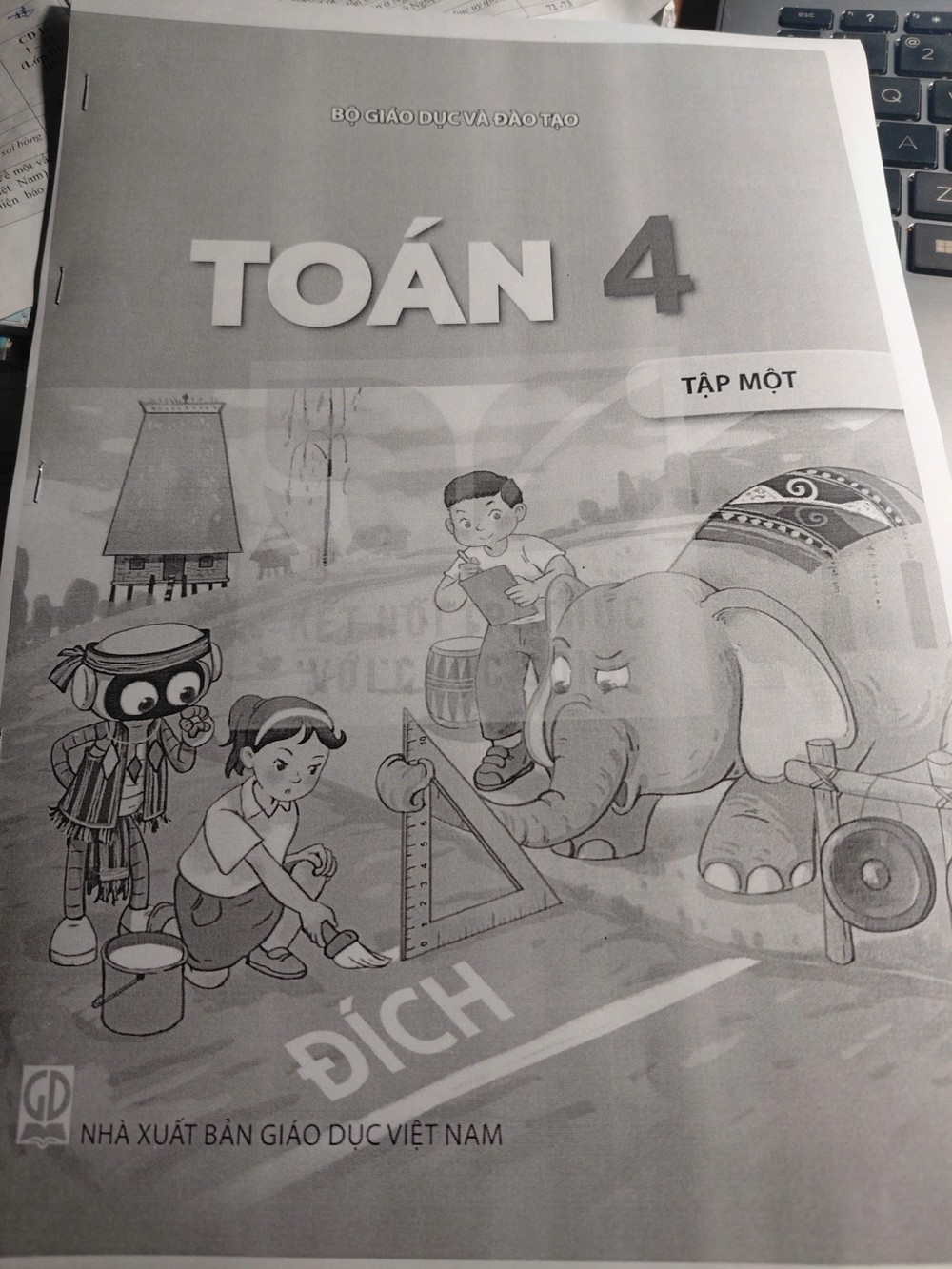
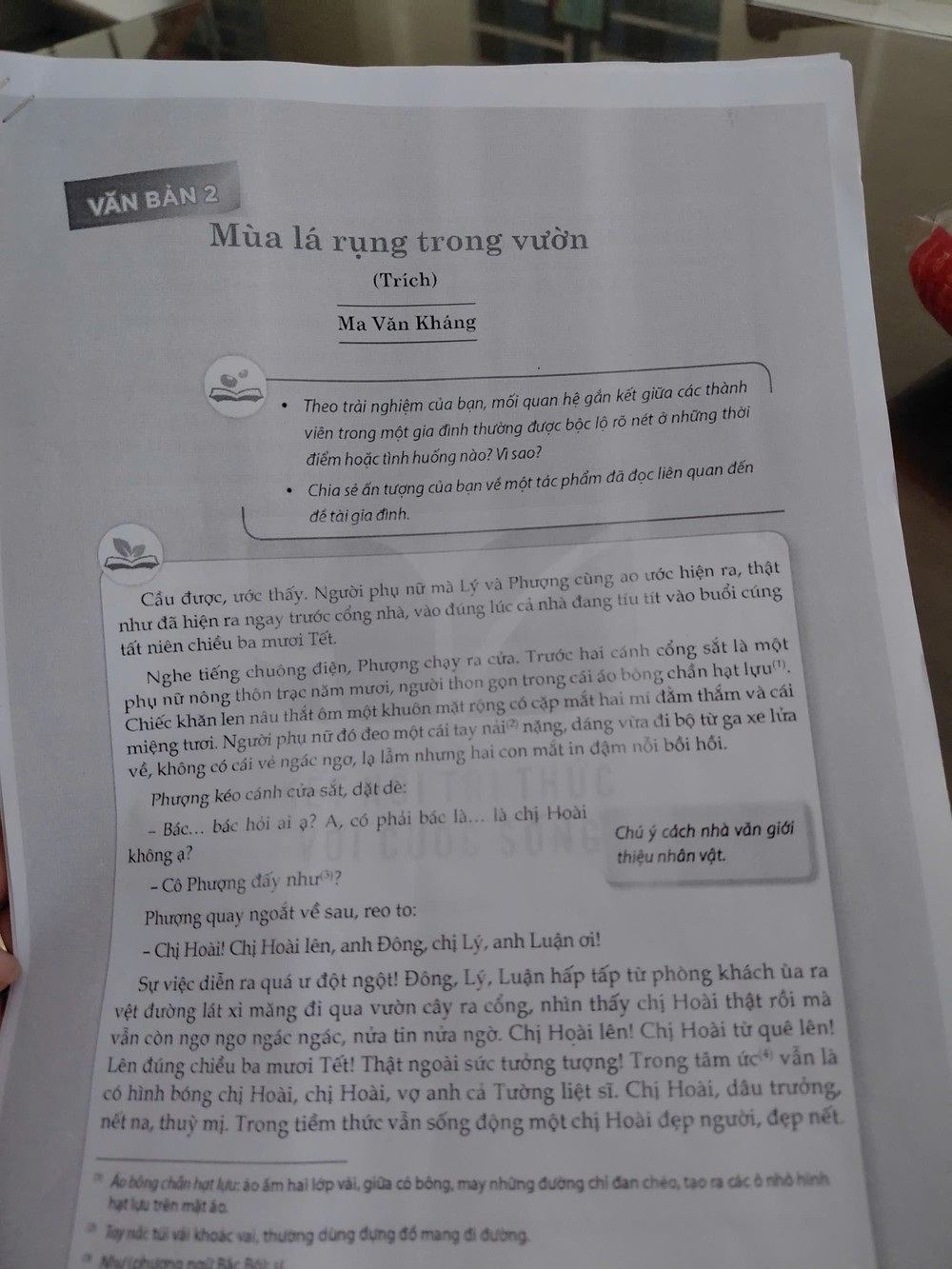
With several titles unavailable, including a Grade 4 mathematics textbook, she resorted to printing electronic versions for her child to use.
"The printed version seems lifeless and uninspiring to my child," she said.
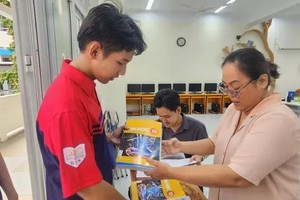
At Quynh Luu 2 High School in Nghe An, students had ordered textbooks through the school but were told that supplies had yet to arrive. Some parents said families of primary school students were searching extensively for missing books, while high school students were temporarily studying from printed PDF versions.
Tran Thanh Ha in Hanoi said she had never faced such difficulty buying textbooks for her child.
Although the family reused old books where possible, several titles in her child's Grade 5 set were still missing. Ha said she searched several major bookstores before and after the National Day holiday but could not find the missing titles, despite assurances that new supplies would arrive after the break.
She eventually asked a relative to buy them in neighboring Hung Yen, where they were readily available.
Parents in Khanh Hoa, Lam Dong, and other localities have also reported difficulties finding textbooks on education forums.
In Ninh Binh, some teachers said students who ordered textbooks through their schools had generally received complete sets, while those trying to buy books independently faced shortages. Some students have had to print electronic editions for temporary use.
Teachers have also been affected. In some schools, educators said they had to print digital versions of textbooks to prepare lessons because physical copies were unavailable. The problem has been particularly disruptive where textbook content has changed, including some Grade 12 Literature materials introduced this year.