At a regular press briefing organized by the Central Commission for Information and Education on the morning of September 15, ministry officials reported on textbook supplies for the 2026-2027 academic year, an issue that has drawn growing public concern.
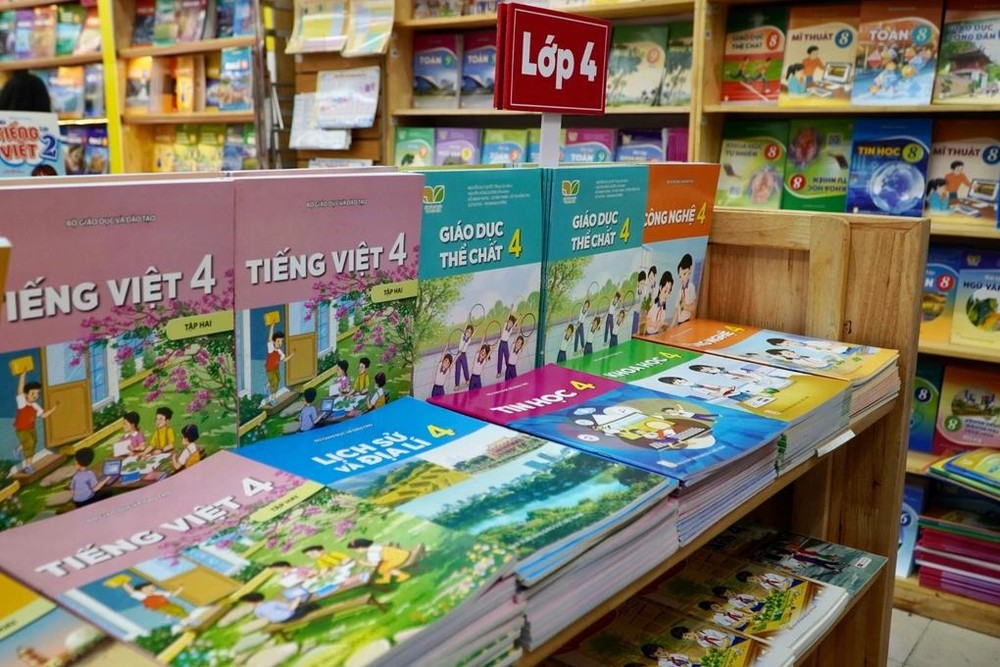
A shortage of nearly 4 million textbooks
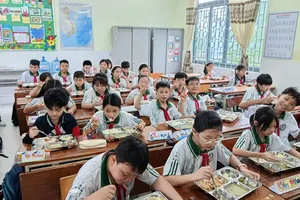
The 2026-2027 school year marks the first time Vietnam has introduced a single unified set of textbooks for nationwide use.
The policy represents a major shift requiring coordinated planning, accurate demand forecasts, and contingency measures to ensure textbooks reach students in sufficient quantities and on time, according to the ministry.
Its implementation has coincided with several other changes affecting demand. Some localities have introduced programs to subsidize or provide textbooks to students. Meanwhile, administrative restructuring and the reorganization of school networks have altered the size, composition, and geographical distribution of student populations.
Together, these changes caused textbook demand in some areas to fluctuate sharply within a short period, diverging significantly from initial estimates.
The ministry said it had begun directing preparations in late 2025 and early 2026, covering key participants and stages throughout the textbook supply chain. The initial target was to ensure sufficient supplies nationwide by August 15, 2026.
However, reports of localized shortages began emerging in the media in mid-August.
The ministry subsequently issued a series of directives requiring sufficient books to be delivered before the start of the new academic year. Shortages nevertheless persisted in several localities after classes began.
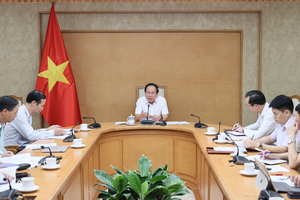
Amid mounting concerns, Deputy Prime Minister Le Tien Chau chaired a meeting on Sep 9 to review textbook supplies and demand urgent measures to address the problem.
According to consolidated figures from Vietnam Education Publishing House, or VEPH, total textbook demand had been revised upward to 245.94 million copies by the end of Sep 14, compared with an initial printing plan of 228.9 million.
By that point, the publisher had supplied approximately 236.6 million copies to localities nationwide.
On the afternoon of Sep 14, the Ministry of Education and Training held an online meeting with education departments in all 34 provinces and cities to review outstanding shortages and coordinate further supplies.
Figures confirmed as of 6 p.m. that day showed localities were still short of 3,916,370 textbooks.
The ministry instructed VEPH to immediately redistribute available books and make additional deliveries on Sep 15.
Priority was to be given to students who had received no textbooks or were missing several titles, particularly those attending boarding schools in border areas, schools in remote and disadvantaged communities, and students eligible for subsidized, free or loaned textbooks.
Local authorities were also ordered to continue reviewing and updating their figures and submit reports by 4 p.m. on Sep 15 so remaining shortages could be addressed as quickly as possible.
The ministry said the objective was to ensure every student had the textbooks required for their studies.
Demand forecasting failed to keep pace
The ministry attributed the shortages to a combination of structural changes and shortcomings in planning and coordination.
Among the external factors, it cited the nationwide introduction of a unified textbook set, new local subsidy programs, administrative restructuring, and changes to school networks.
The period between the final determination of demand and the deadline for supplying books was also unusually short, leaving limited time for printing, production, and distribution to respond to rapidly shifting requirements.
However, the ministry acknowledged that its own forecasting and analysis had failed to keep pace with changing conditions.
It said assessments of VEPH's production capacity, management systems, and distribution network had not been sufficiently comprehensive, while measures to address bottlenecks and reallocate textbook stocks had not been fast or flexible enough.
In some localities, registration, forecasting, and coordination with suppliers had also lacked initiative, creating a gap between actual demand and the information used for production and distribution planning.
Updates were particularly slow in some areas after changes to school structures, textbook assistance policies, and additional purchases by students and parents.
The ministry said responsibility for the localized shortages was shared among the ministry itself, Vietnam Education Publishing House, and local authorities. It described the situation as regrettable and said the shortcomings must be seriously reviewed and corrected to prevent a recurrence in following school years. Particular attention would be given to monitoring demand, improving forecasts, integrating data, strengthening oversight, and responding more quickly to unexpected changes in demand.
In the immediate term, the ministry said it would focus on supplying all textbooks confirmed as lacking.
VEPH has been instructed to transfer books between localities, continue printing where necessary, and provide additional stocks based on updated demand, with areas and students facing the most acute shortages receiving priority.
While printed copies are being delivered, students and schools can access electronic textbooks free of charge through VEPH's online learning platform.
Schools have also been encouraged to make greater use of library copies and reusable textbooks from previous years to minimize disruption to teaching and learning.
In the longer term, the ministry plans to review the textbook management system and propose necessary reforms. Under the proposed approach, textbooks would be treated as a special category of essential public goods and services rather than solely as ordinary commercial products. The entire supply chain would be managed through a unified data system, with clearer responsibilities assigned to State agencies, local authorities, and businesses.
The ministry also intends to establish stronger reserve mechanisms and more flexible systems for redistributing stocks when shortages emerge. The aim, it said, is to establish a supply system that can anticipate demand and ensure a stable, timely supply of textbooks from the start of each school year.