The Party Central Committee Office has issued a notice conveying the conclusions of Party General Secretary and State President To Lam at a working session on August 25, 2026, with relevant agencies on the results of one year of implementing Politburo Resolution No. 71-NQ/TW, dated August 22, 2025, on breakthrough development in education and training.
After one year of implementing Resolution No. 71-NQ/TW, the entire political system has undertaken the work in a serious, urgent, and determined manner, bringing about clear changes in awareness, institutions and policies, resource mobilization, and governance approaches.
However, improvements in the quality of education and training, as well as in teachers, learners, and human resources, have yet to become truly evident. Many shortcomings and limitations remain unresolved, including issues that have caused public concern for years. Resolution No. 71-NQ/TW calls not only for continued fundamental and comprehensive reform but also for breakthroughs in education and training development. Therefore, its implementation must deliver more concrete and substantive results.
The notice sets out six key tasks for the coming period. These include continuing to implement Resolution No. 71-NQ/TW in a resolute, coordinated, and effective manner, shifting decisively from institutional and policy development to implementation, translating the Resolution into practical action and delivering concrete, substantive results; focusing on ensuring essential conditions for education, first and foremost the goal of “enough schools, enough classes, and enough teachers”; driving substantive reform from within the education sector; giving priority to education in preparing human resources and talent for the country’s future; strongly promoting digital transformation and the application of artificial intelligence (AI), while ensuring that technology remains a means of education rather than replacing its fundamentally humanistic nature; and making sweeping improvements in leadership, management, and the implementation of Resolution No. 71-NQ/TW, with clear accountability for heads of agencies and organizations.
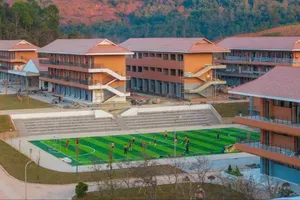
Party General Secretary and State President To Lam asked the Government to direct the Ministry of Education and Training and localities to develop specific roadmaps, clearly defining responsibilities and deadlines to gradually address fundamental shortages of schools, classrooms, and teachers. He also called for avoiding the practice of treating reductions in administrative units as achievements, tackling overcrowding in schools in urban areas, industrial parks, and areas experiencing rapid population growth due to migration, and comprehensively addressing school shortages, particularly in urban areas.
The Government must establish clear implementation roadmaps and direct localities to proactively allocate land for educational facilities in urban development projects. It must also urgently convert surplus office buildings and state-owned land and property facilities for use in education and healthcare. The overarching goal is to ensure that no student has limited access to education because of shortages of schools, classrooms, or teachers; no student’s educational quality or future depends on where they were born and raised; and equitable access to quality education becomes an important measure of the effective implementation of Resolution No. 71-NQ/TW.
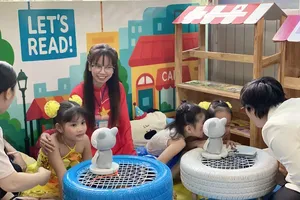
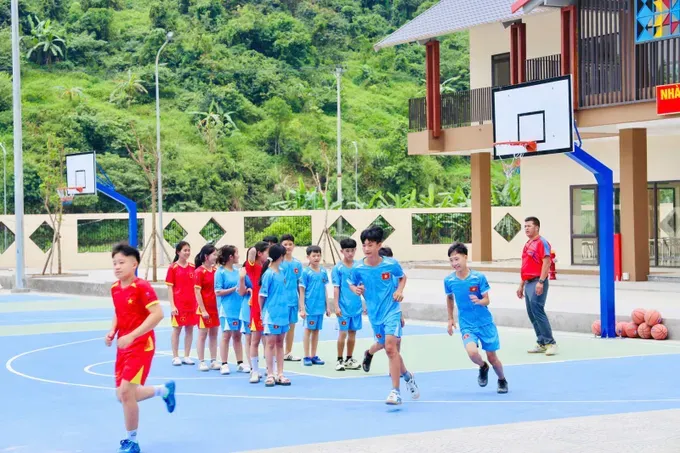
The ultimate goal of education is not grades, degrees, or school rankings, but the kind of people education helps shape. Therefore, greater efforts are needed to provide comprehensive education encompassing moral, intellectual, physical, and aesthetic development. Particular attention should be paid to ethics and character, physical and mental health, culture, history and the arts, as well as national pride and pride in the Vietnamese language. Education should also develop digital and foreign-language competencies and STEM—integrated learning in science, technology, engineering, and mathematics—along with scientific thinking, creativity, and adaptability.
The conclusion also calls for research into the development of a model of socialist education and its piloting in areas meeting the necessary conditions.
Party General Secretary and State President To Lam called for comprehensive action to rectify violations and negative practices in education and for the principle of “Thay ra thay, tro ra tro" (teachers should be true teachers, students should be true students) to be implemented seriously and substantively. He stressed the need to resolutely and strictly address the pursuit of achievements and academic dishonesty, the distortion of extra teaching and learning, negative practices in enrollment, training, and degree issuance, plagiarism, scientific misconduct, school violence, and inappropriate conduct in teacher-student relationships, among other issues.