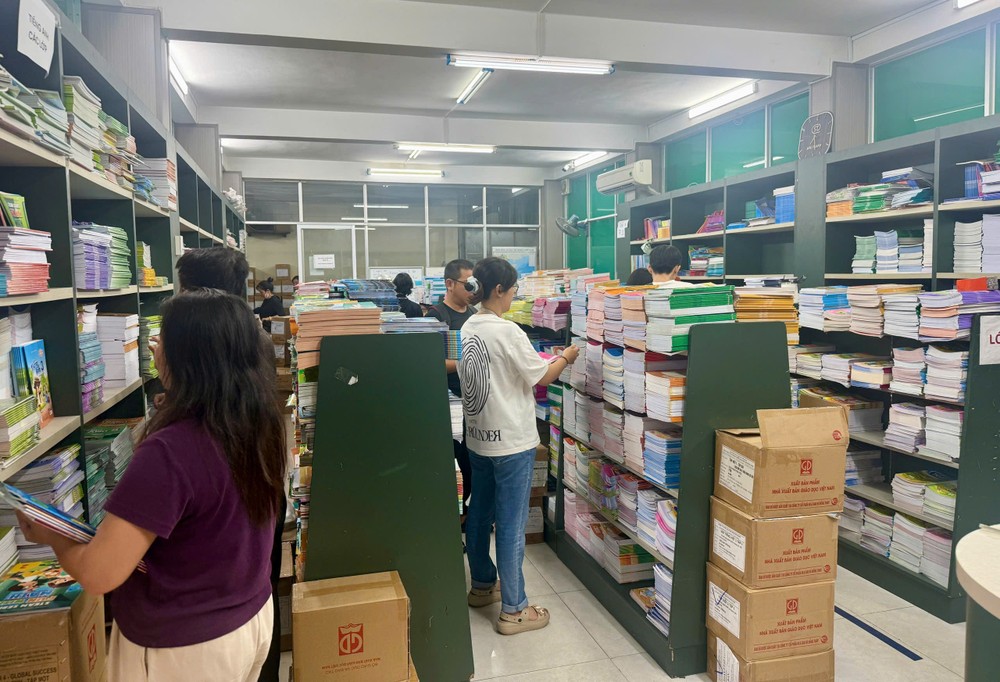
The publisher said hundreds of millions of textbooks had been printed and distributed to localities based on registered demand, but actual requirements later diverged significantly from initial forecasts.
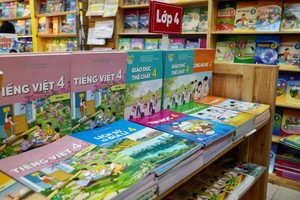
According to a Ministry of Education and Training report, Vietnam was still short of 3,916,370 textbooks as of 6 p.m. on September 14, equivalent to 1.5 percent of total demand.
The Vietnam Education Publishing House, however, said the term "shortage" needed clearer definition.
It questioned whether the figure referred to students who had registered to buy books but had not received them, shortages at retail stores, schools receiving fewer books than contracted, or gaps between available supplies and the number of books local authorities later planned to purchase with public funds for students to borrow from school libraries.
"If a textbook title remains available in warehouses or bookstores but a school reports a shortage based on projected demand, that does not necessarily mean there is a shortage in overall market supply," a representative of the publisher said.
The publisher also noted that total demand had ultimately exceeded the original printing plan by more than 17 million copies, indicating a substantial shift after production planning had already been completed.
It called for greater transparency over where and when the additional demand emerged and how much of it resulted from new public procurement under the free textbook policy.
The Vietnam Education Publishing House said the recent problems did not stem from the policy itself, which it described as socially beneficial, but from efforts by some localities to introduce it before the required administrative and procurement conditions were in place.
Before shortages emerged in late July, the publisher said it had already sent documents to the Ministry of Education and Training and provincial education departments outlining a proposed timetable for implementing the policy.
By July 20, the Vietnam Education Publishing House said it had printed 99 percent of its planned volume and distributed 85.15 percent of the books registered by localities. It had also produced 13.3 million additional copies as contingency stocks for areas affected by natural disasters, storms, and flooding.
At that stage, production lines were nearing the end of their annual cycle, and the printing plan was almost complete. Sudden changes in both demand scale and the textbook-purchasing mechanism disrupted distribution, the publisher said.
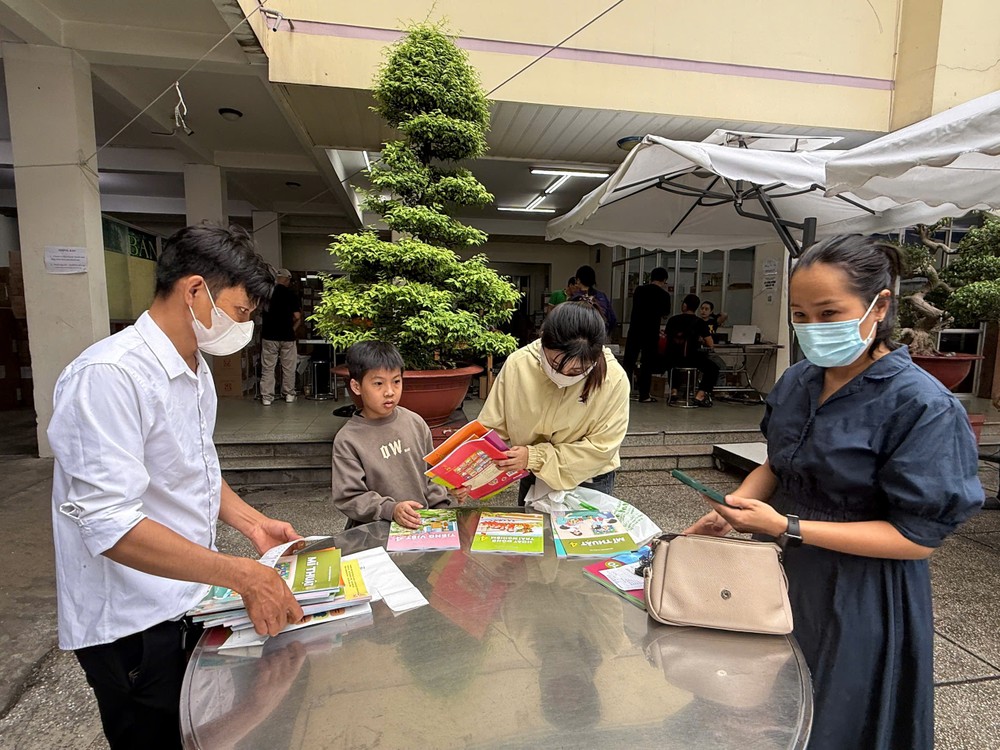
The Vietnam Education Publishing House also argued that implementing free textbooks immediately in the 2026-2027 academic year did not align with the sequence set out in Clause 3, Article 33 of Government Decree No.271/2026/ND-CP.
Under that process, textbook demand forecasts must be consolidated before October 30 to serve as the basis for budget planning, while books must be delivered to school libraries no later than June 15 each year.
The publisher said announcing the free textbook scheme before preparations were complete changed the behavior of schools and parents, disrupted ordering data, and contributed to localized surpluses and shortages.
Some local authorities launched procurement tenders shortly before the new school year, when most books printed under the original plan had already been allocated based on orders from students and schools.
Meeting large additional orders immediately before the start of the school year was therefore impractical, the Vietnam Education Publishing House said.
The policy announcements also affected demand among families. Some parents delayed buying textbooks after hearing that they might be provided free of charge. Meanwhile, schools waited for official procurement plans and either did not submit orders or reduced their initial estimates. Local book distributors, in turn, lacked a reliable basis for ordering sufficient quantities.
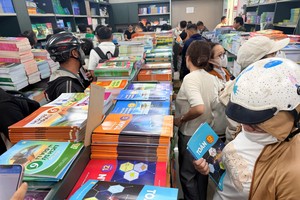
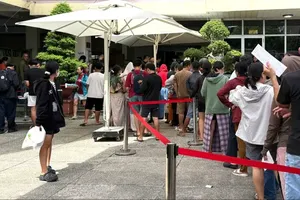
As the school year approached, the postponed demand suddenly returned to the retail market within a matter of days.
"The queues seen at bookstores were the final consequence of an information disruption that had begun several weeks earlier," the publisher said.
Implementation also varied widely between localities. Some abandoned plans to provide free books, while others narrowed eligibility to specific groups. In some areas, procurement packages had yet to secure suppliers, while elsewhere authorities only determined how many books libraries needed after most parents had already purchased textbooks themselves.
The Vietnam Education Publishing House said the policy could help safeguard access to education, ease financial pressure on families at the start of the school year, and allow textbooks to be reused through school libraries.
However, it stressed that free textbook provision involved large-scale public procurement and public asset management and therefore required detailed preparations before official announcements were made.
"Every official statement by local authorities can influence the decisions of hundreds of thousands of families and thousands of schools," the publisher said. "Those responsible for issuing or communicating such information must therefore take into account its impact on the market."
The Vietnam Education Publishing House recommended that localities announce that students would be able to borrow textbooks free of charge only after at least five conditions had been secured: clearly defined beneficiaries; book titles and quantities for each school; a lawful funding source; a confirmed procurement method and supplier; and a delivery schedule accompanied by contingency measures for any shortfall.
Localities that have already announced free textbook schemes should also disclose when their demand forecasts were approved, how budgets were calculated, whether procurement procedures had been completed and when books were expected to reach school libraries, the publisher said.
Where such conditions were not in place before an announcement was made, the Vietnam Education Publishing House said authorities should clarify responsibility for any resulting disruption to statistics, ordering decisions, and parents' expectations.