Vietnam is working to develop a comprehensive, long-term strategy to safeguard its cultural heritage, as officials and experts emphasize that preservation must go beyond short-term restoration projects to include coordinated policies, technical support, and active community participation, ensuring traditions, architecture, and ways of life remain living heritage rather than fading into relics or commercialized facades.
Communities must take responsibility for heritage preservation
Deputy Minister of Culture, Sports and Tourism Hoang Dao Cuong stated that to make heritage “living heritage”, every citizen, community, and management agency must take responsibility for preserving, nurturing, and enriching its value. Exploiting heritage in cultural activities, cultural industries, and tourism must comply with the law and UNESCO’s principles of sustainable development, especially ensuring that heritage’s integrity and identity are not compromised.
This spirit was affirmed in Resolution 33-NQ/TW (2014) and reiterated in Resolution 80-NQ/TW (2026) of the Politburo, which identifies culture and people as the foundation, endogenous resource, and driving force for rapid and sustainable development. The ultimate goal is not to maximize exploitation of heritage in one period but to keep heritage alive in communities, preserved, recreated, and passed on to future generations.
Experts point to international models. In Kawagoe, Nagahama, and Sawara (Japan), local communities, especially merchants and owners of old houses, formed associations, set rules, and agreed on how to maintain facades, signage, materials, and landscapes. The state played a facilitating role by issuing legal frameworks, providing technical support, and partial funding, but did not replace community initiative.
In South Korea, Bukchon Hanok in Seoul remains a living neighborhood, with houses used as cafes, libraries, restaurants, creative spaces, and guesthouses. The 600-year-old Hahoe Village shows another dimension: preserving old houses must go hand in hand with maintaining festivals, rituals, customs, village structures, and traditional lifestyles. In other words, preserving architecture without preserving life leaves only an empty shell.
Heritage preservation must be guided by a long-term strategy
Phan Thanh Hai, member of the National Cultural Heritage Council and Director of Hue Newspaper and Broadcasting, explained that Hue’s garden and Ruong houses are not only recognized by their “house–garden–lane–green fence” structure or harmonious arrangement with nature, but also as “living institutions” preserving family traditions and values across generations. Preservation must therefore be part of a long-term strategy, treating heritage as a sustainable development resource and making development itself a mechanism to sustain preservation.
He stressed that promoting the value of old houses must be done carefully, respecting homeowners’ privacy and avoiding mere commercialization. Effective preservation requires coordinated action among sectors and local authorities. Current policies still focus mainly on financial support, while residents seek technical guidance, simplified procedures, and professional advice. The State should shift from funding support to accompanying homeowners through technical guidance, streamlined processes, resource connections, and appropriate co-funding mechanisms.
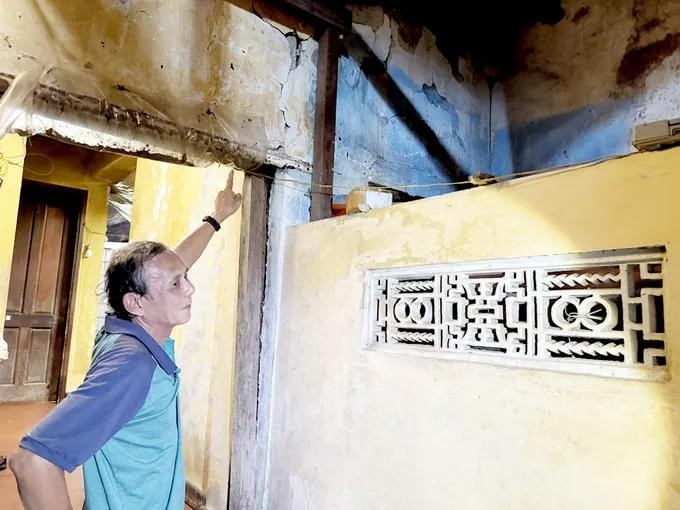
“Many families with deteriorating ruong houses do not know where to start, how to restore properly, where to find craftsmen, how to apply for permits, or whether they can use the house after restoration. Fixed financial support alone is limited, even leading to ‘half-preservation,’ where the house remains but original elements are gradually replaced, gardens distorted, and long-term motivation not formed,” Hai analyzed.
He added that heritage can only be sustainable if it does not become a burden for those preserving it. Heritage is also difficult to maintain if fragmented land plots continue, construction density rises, incongruent architecture appears, public spaces shrink, and tourism grows without organization.
A 2025 study by Hoang Hong Hiep, Director of the University of Finance and Marketing branch in Hue, and Hoang Thi Thu Huong of the Central and Central Highlands Social Sciences Institute, emphasized that heritage preservation and promotion in Hoi An must highlight the central role of communities—the true custodians of heritage.
Similarly, architect Dang Khanh Ngoc, Director of the Institute for Heritage Conservation, proposed policies to encourage residents to remain in old towns, such as loan support or tax reductions to invest in businesses, while reviving distinctive cultural traditions and values.