As a result, after periods of relentless change and gradual decay, many historic architectural sites now face the threat of becoming mere hollow shells of the past.
The historic property's landscape integrity has been compromised
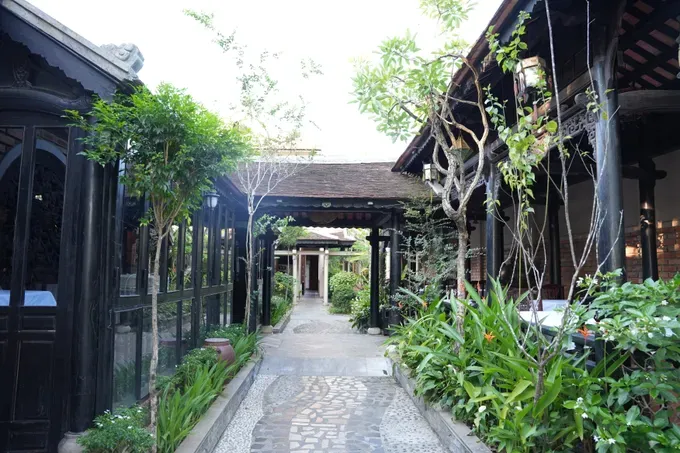
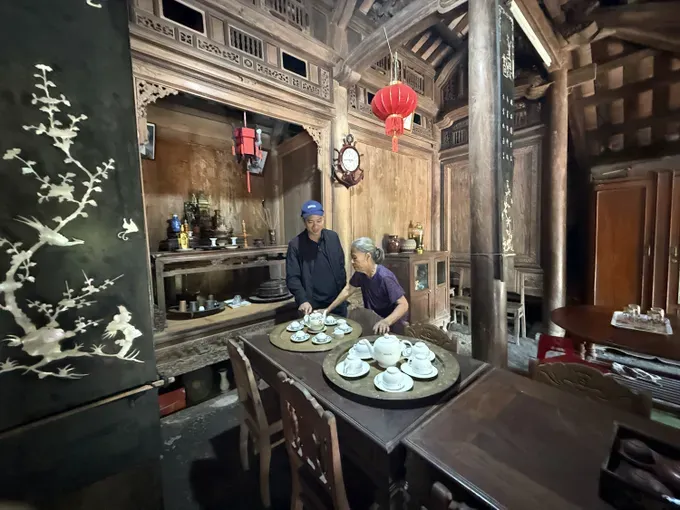
Nestled at 31 Nguyen Chi Thanh Street in the Phu Xuan ward of Hue City, the shrine of Princess Ngoc Son stands as one of the city’s quintessential traditional garden houses. Spanning 2,370 square meters, the Ruong house of Hue, characterized by a structure of three main compartments and two wings, whose collection of horizontal lacquered plaques, calligraphy couplets, hand carved mahogany wood platform bed, ornate tea cabinets, and antique bookcases is preserved like a miniature museum of aristocratic lineage.
More crucial than the architecture itself, however, is the intangible legacy kept alive by successive generations, the daily rhythms, ancestral customs, and refined social etiquette passed down through time. According to Ms. Nguyen Thi Suong, the estate’s current custodian, the house has endured for over nine decades and underwent a major restoration in 2017. To safeguard its historical authenticity, the family repaired only the brick flooring, perimeter walls, and surrounding grounds, leaving the original tiled roof and precious hardwood frame entirely untouched.
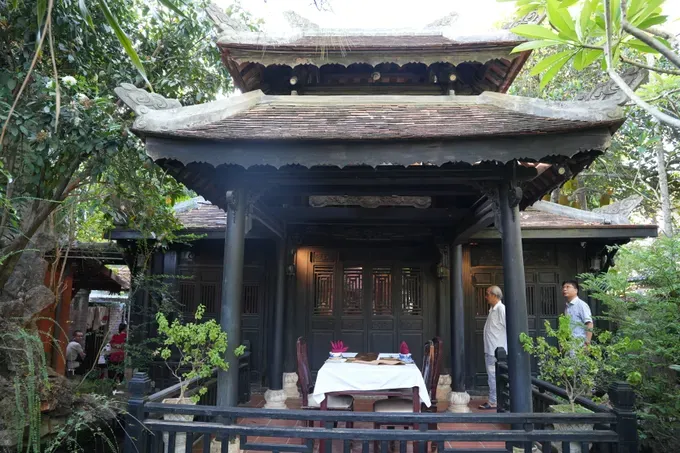
In the historic city of Hue, the traditional garden house is far more than a dwelling; it is a living work of art, seamlessly weaving architectural craftsmanship, lush greenery, and spiritual life into a single sanctuary. Yet this unique heritage is disappearing at a staggering pace. In 2002, the city boasted 7,178 garden houses—though only roughly 150 remained fully intact. By 2012, that number had plummeted to fewer than 100. In an attempt to safeguard and revitalize these signature estates, the provincial government approved a targeted support policy in 2015. The People's Committee of Thua Thien Hue Province (now Hue City) approved and implemented the Scheme on Policies to Support the Preservation and Promotion of the Value of Hue's Traditional Garden Houses.
Mr. Nguyen Xuan Hoa, a prominent researcher and former director of the former Department of Culture and Information of Hue City, noted that early preservation initiatives—including the revitalization of the Phu Mong area, the conservation of the ancient Phuoc Tich village, and subsidies for restoring traditional Nha Ruong (Ruong house)- have yielded promising initial results. Still, he warned that current measures remain insufficient against the relentless pressures of urbanization and commercial growth, leaving many historic structures vulnerable to ongoing decay or irreversible alteration.
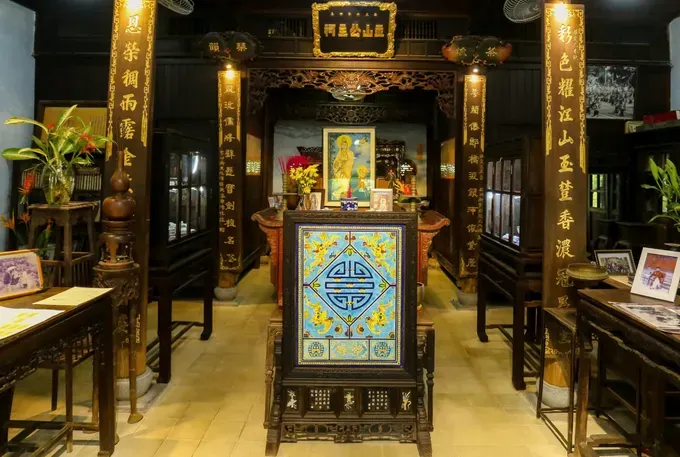
Dr. Phan Thanh Hai, a member of the National Cultural Heritage Council and director of the Hue City Press, Radio and Television, identified the unrelenting strain of urban development as the primary threat today. Across the historic city, numerous garden estates are being subdivided, carved up, or repurposed—a process that destroys their architectural and landscape harmony, the very essence that defines the soul of Hue’s garden houses.
Fewer residents remain in "living museums"
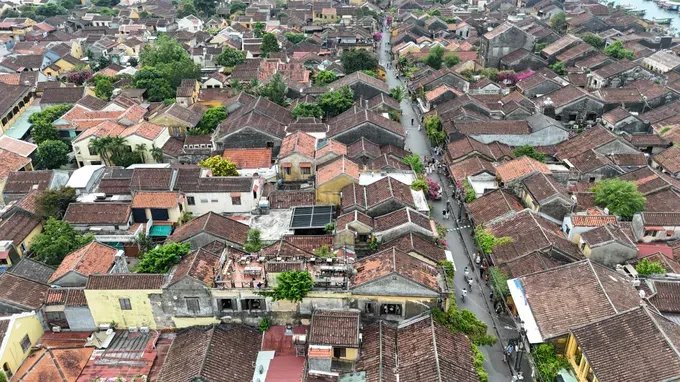
On December 4, 1999, the ancient town of Hoi An in Da Nang City was inscribed as a UNESCO World Heritage Site. At the time, nearly 1,400 structures fell within its protected zone, with more than 83 percent serving as privately owned residences. Today, however, a recent survey by the Hoi An World Cultural Heritage Conservation Center reveals a striking shift: the proportion of native locals actually residing in and owning these historic homes has plunged to around 40 percent.
The vast majority of these heritage properties have been sold or leased to commercial operators. Take 166 Tran Phu Street, a townhouse that once encapsulated classic Hoi An architecture with its yin-yang tile roof, open-air courtyard, family kitchen, and ancestral shrine. To accommodate retail needs, key structural elements have been altered. Dozens of similar homes have been repurposed for service businesses, slowly shrinking—or completely erasing—the intimate domestic, culinary, and sacred spaces that once breathed life into the ancient town.
")
According to Mr. Pham Phu Ngoc, director of the Hoi An World Cultural Heritage Conservation Center, commercial conversion is quietly eroding the intrinsic cultural fabric woven into Hoi An’s historic homes. Historically, these residences served as multi-generational sanctuaries—complete with sacred altars, living quarters, and merely a modest storefront facing the street.
Today, original wooden partitions, carved doors, and intricate architectural details are systematically dismantled to make room for metal display racks. Ancestral shrines, horizontal lacquered boards, calligraphic couplets, and generations of heirloom artifacts vanish alongside the departing families. The result is not merely physical disfigurement; it is the fading of the intangible cultural traditions that once gave this ancient town its living soul.
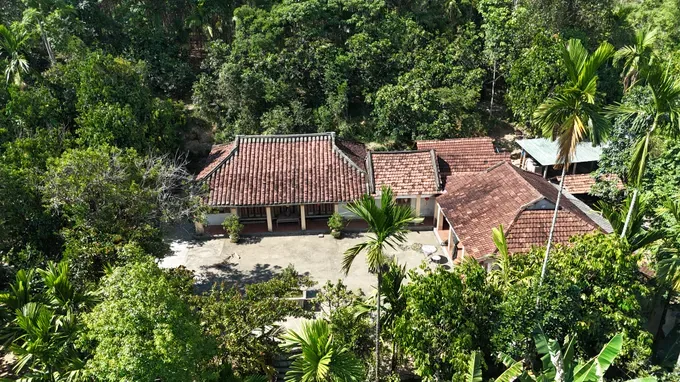
Loc Yen Ancient Village in Thanh Binh Commune, Da Nang City, recognized in 2019 as a national heritage site and celebrated as one of Vietnam’s four most picturesque historic hamlets, is slipping toward irreparable decay. Preservation efforts remain mired in regulatory bottlenecks while century-old timber homes suffer severe termite damage and structural decline. A similar crisis haunts nearby Hoi An, behind moss-covered, postcard-perfect facades, interior wooden pillars, rafters, and partitions are quietly rotting away.
Many structures are now uninhabitable, yet bureaucratic red tape stalls critical dismantling and restoration work. According to Mr. Pham Phu Ngoc, director of the Hoi An World Cultural Heritage Conservation Center, several historic residences face imminent collapse, posing direct threats to public safety and the town's architectural character. Bound by administrative constraints, officials find themselves left with virtually no recourse except evacuating residents whenever severe storms approach.