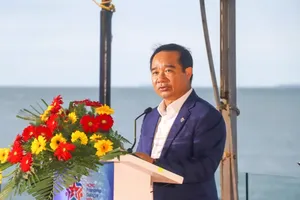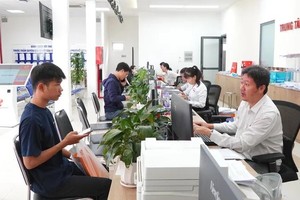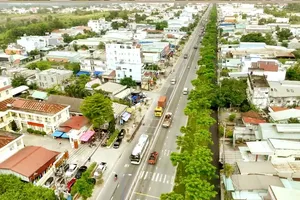
Chairman of the Ho Chi Minh City People’s Committee Nguyen Van Duoc expressed confidence that, through decisive and coordinated actions, the city will gradually resolve long-standing stalled projects, unlock land and investment resources, and transform dormant developments into factories, urban areas, and modern infrastructure projects that serve the public and drive socio-economic development.
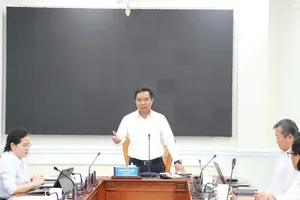
On June 2, the Ho Chi Minh City People's Committee held a conference to disseminate and implement Conclusion No. 24-KL/TW of the Politburo and Resolution No. 29/2026/QH16 of the National Assembly; review the implementation of Plan No. 34/KH-UBND; and launch Plan No. 243/KH-UBND aimed at further addressing bottlenecks affecting long-stalled projects and developments.
Removing bottlenecks, unlocking resources
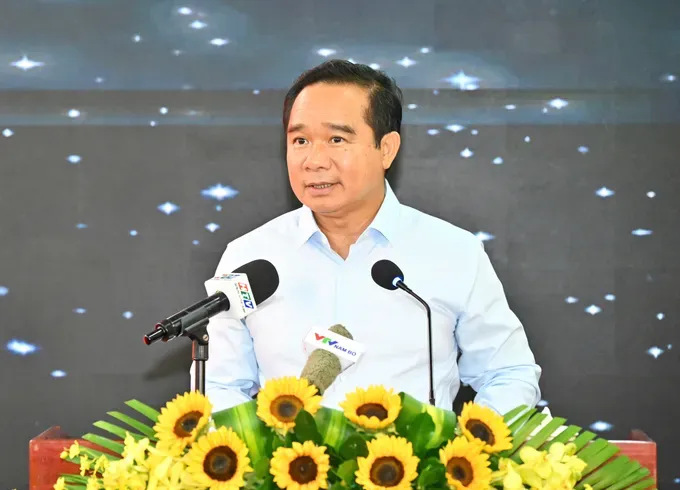
Concluding the conference, Chairman of the Ho Chi Minh City People’s Committee Nguyen Van Duoc affirmed that the city consistently stands alongside residents and businesses, viewing the business community as a vital resource and a key driver of economic growth and socio-economic development.
"The success of businesses is a source of joy for the city’s leadership, while their difficulties are also a matter of concern for us," Chairman Nguyen Van Duoc said.
He reiterated the city’s commitment to continuing its close partnership with businesses in addressing obstacles and bottlenecks related to long-delayed projects.
To date, Ho Chi Minh City has resolved or issued directions for handling all 838 out of 838 projects subject to review, achieving a 100 percent completion rate. These efforts have helped unlock more than VND206 trillion (US$7.8 billion) in investment capital and nearly 17,000 hectares of land, creating favorable conditions for projects to be implemented and for resources to be mobilized in support of socio-economic development.
Chairman Nguyen Van Duoc noted that, drawing on Ho Chi Minh City’s experience in resolving project-related obstacles, as well as the experiences of other localities—particularly the five localities with the largest number of long-stalled projects—the city has proactively worked with these localities to propose to the central government a range of breakthrough mechanisms and policies.
Among them, Conclusion No. 24-KL/TW of the Politburo and Resolution No. 29/2026/QH16 of the National Assembly are regarded as particularly important institutional foundations, providing a favorable legal framework for comprehensively resolving long-standing stalled projects. They also serve as a springboard for Ho Chi Minh City to further unlock resources, promote investment, and contribute to achieving its goal of sustaining double-digit economic growth.
To accelerate the resolution of remaining stalled projects, Chairman Nguyen Van Duoc directed relevant agencies to urgently complete the project database and conduct a comprehensive review and inventory of all projects and works facing difficulties and bottlenecks. He also called on the business community to proactively register projects requiring support so that the city can review and include them in the list of projects to be addressed during 2026.
Commitment to protecting officials acting for the city’s development
The Chairman of the Ho Chi Minh City People’s Committee has also instructed departments, agencies, and local authorities to make full use of existing mechanisms and policies to focus on resolving stalled projects, based on the fundamental principle of clearly defining the responsibilities of each organization and individual involved in the handling process.
He emphasized that the city strictly prohibits any acts of exploiting the policy of removing difficulties for personal gain, legalizing violations, or causing losses of state assets; any violations will be handled in accordance with the law.
In addition, he affirmed the necessity of protecting officials who dare to think, dare to act, and dare to take responsibility for the common interest.
Leaders of Ho Chi Minh City have pledged to consistently protect officials who demonstrate dedication, resilience, and a commitment to the city’s development without personal gain, Chairman Nguyen Van Duoc emphasized.
Reaffirming the determination to translate commitments into concrete actions, he stated that the city will continue to stand alongside enterprises to safeguard their lawful and legitimate rights and interests.
At the same time, Ho Chi Minh City will work to unlock capital flows and mobilize development resources to contribute to economic growth. “This is both a responsibility and a duty of a facilitative, service-oriented government,” he underscored.
For enterprises whose difficulties and obstacles have been resolved, the Chairman of the Ho Chi Minh City People’s Committee requested that they urgently accelerate construction progress and soon put projects into operation and exploitation. He also emphasized the need to fully fulfill financial obligations to the State, thereby generating substantive economic value and contributing to both business development and the city’s overall growth.

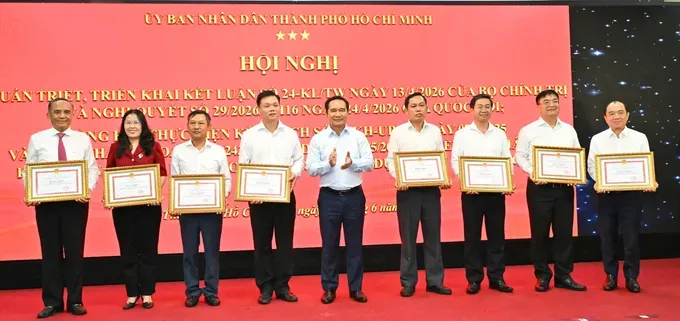
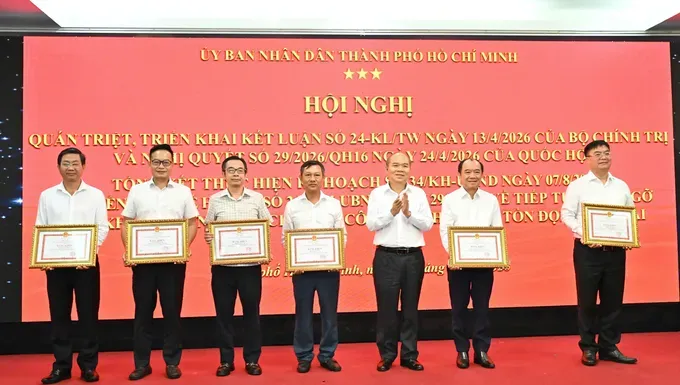
On this occasion, he presented Certificates of Merit to eight collectives and 34 individuals in recognition of their outstanding achievements in addressing difficulties and obstacles in long-delayed projects and works.
Emphasizing that the resolution of difficulties and obstacles in projects and works is not only about addressing legacy issues but also a mission of shaping the future, as well as a responsibility to the people, the business community, and future generations, the Chairman of the Ho Chi Minh City People’s Committee expressed confidence that the city will gradually transform long-standing stalled projects into facilities serving residents and turn “dormant” developments into factories, urban areas, and modern infrastructure works.
Through these efforts, Ho Chi Minh City aims to contribute to the realization of its double-digit growth target, improve the quality of life for its residents, and further affirm its role as the country’s leading economic hub in a new era of development.