On that basis, the city will gradually increase the localization rate and move toward mastering urban railway technologies.
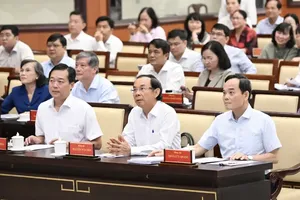
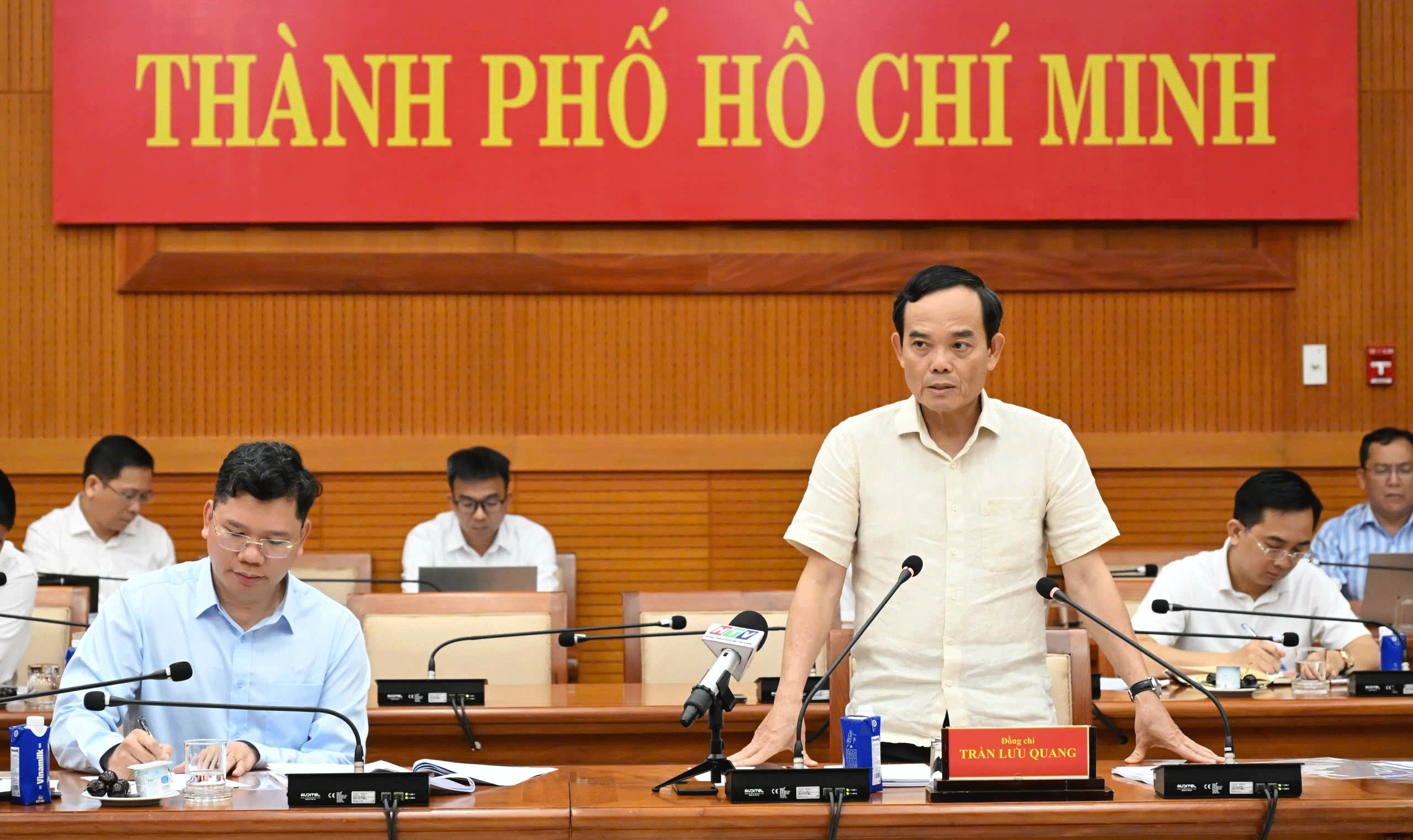
On July 30, Secretary of the Ho Chi Minh City Party Committee Tran Luu Quang, Head of the Steering Committee for the Development of the Urban Railway Network in Ho Chi Minh City, chaired the Steering Committee's third meeting.
Boosting localization and technology transfer in urban rail development
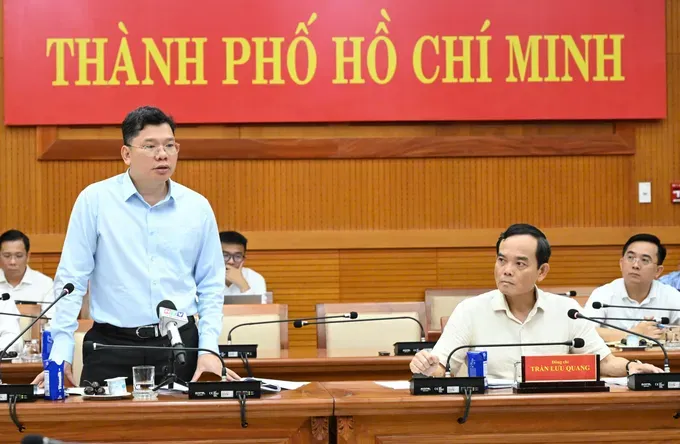
At the meeting, Director of the Ho Chi Minh City Department of Construction, Tran Quang Lam, reported on the progress of the city's railway projects and outlined key tasks for the period ahead. According to the report, Ho Chi Minh City has commenced three of the six priority railway projects slated for investment during the 2026–2030 period.
Specifically, the city held a groundbreaking ceremony for the Ben Thanh–Can Gio railway project, which is being invested in by VinSpeed High-Speed Railway Investment and Development JSC. The investor is currently completing the necessary procedures, with the project targeted for completion in 2028.
Meanwhile, the Ho Chi Minh City People's Committee has directed relevant departments and agencies to expedite land clearance, compensation, resettlement and site handover to facilitate construction. Site handover is scheduled to begin in September 2026 and be completed by November 2026.
The city has also broken ground on Metro Line 2 (Ben Thanh–Tham Luong), which is scheduled for completion in 2030.
In addition, construction has begun on the Ben Thanh–Thu Thiem section of Metro Line 2, with the city aiming to complete the project by 2030 in sync with the Ben Thanh–Tham Luong metro line.
Additionally, Ho Chi Minh City is accelerating investment preparations for several key railway projects, including the Thu Thiem–Long Thanh railway, the new Binh Duong–Suoi Tien urban railway line, and Phase 1 of Metro Line 6, which will run from Tan Son Nhat International Airport to Phu Huu.
During the 2026–2030 period, the city has identified eight priority urban railway lines for investment, with a combined length of approximately 255km, all targeted for completion by 2030. The plan is intended to meet the objectives set out in the Politburo's Resolution No. 09-NQ/TW on the construction and development of Ho Chi Minh City in the new era.
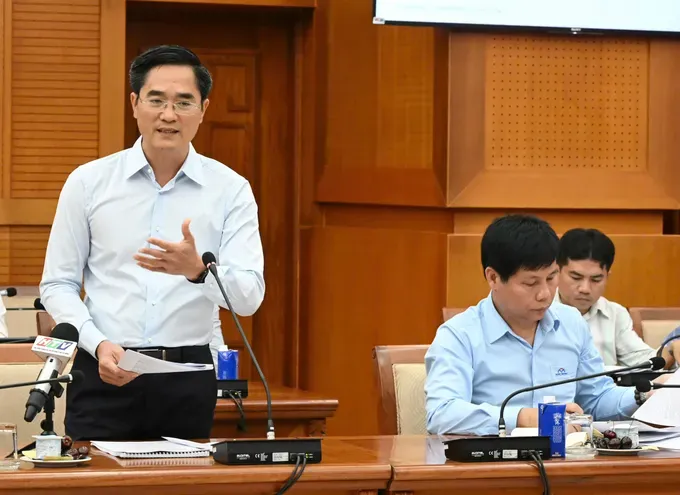
The city has also mapped out seven additional railway lines for completion by 2035. These include Metro Line 4 (Dong Thanh–Hiep Phuoc), Metro Line 3 (Tao Dan–An Ha), Metro Line 5 (Da Phuoc–Long Truong), Phase 2 of Metro Line 6 (Inner Ring Road section), Metro Line 7 (Tan Kien–Vinhomes Grand Park), the Ben Thanh–An Ha section of Metro Line 1, and Metro Line 3 connecting Vung Tau, Ba Ria and Phu My.
In addition, several national railway routes and sections pass through Ho Chi Minh City, including the Bau Bang–Cai Mep national railway and the An Binh–Saigon (Hoa Hung) section. The city has proposed that responsibility for implementing these two projects be assigned to Ho Chi Minh City.
Accordingly, following the revised plan, Ho Chi Minh City's railway network for the 2026–2030 period and through 2035, including both urban metro lines and national railways, will comprise eight urban metro lines totaling 255km to be completed by 2030; seven additional urban railway lines or sections totaling 277km to be completed by 2035; and 171km of national railway lines to be completed by 2035.
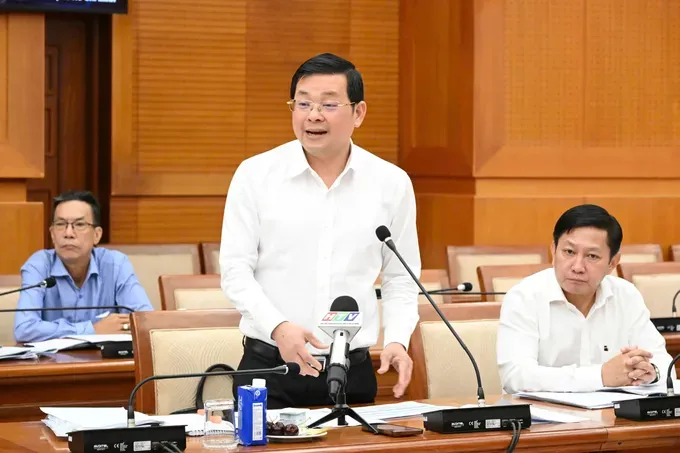
At the meeting, Director of the Ho Chi Minh City Department of Agriculture and Environment, Nguyen Toan Thang, reported on preparations to ensure an adequate supply of construction materials for the railway projects scheduled to be launched simultaneously in the coming years. He stressed the need to urgently review mineral resources within the city and develop a roadmap for quarry exploitation and material supply to prevent shortages or disruptions during construction.
Regarding the development of the railway industry, the Ministry of Construction and other ministries have focused on completing the legal framework in recent years. The regulatory and institutional framework is now largely in place, providing a solid foundation for implementing railway investment projects.
Ho Chi Minh City is also preparing a centralized procurement scheme for railway industrial products serving its urban railway network. The plan includes a roadmap to increase localization and facilitate technology transfer, with the long-term goal of strengthening domestic capabilities in the railway sector.
Urban railway development must be closely integrated with TOD
Concluding the meeting, Secretary of the Ho Chi Minh City Party Committee Tran Luu Quang, Head of the Steering Committee for the Development of the Urban Railway Network in Ho Chi Minh City, endorsed the proposals, directions and key tasks presented during the session.
He instructed relevant agencies to complete the city's master plan in 2026, providing the basis for detailed planning, investment preparation and implementation of urban railway projects.
He stressed that the urban railway network must be planned in a coordinated and consistent manner with the city's overall master plan. From the planning stage onward, relevant agencies and units must ensure that all plans are comprehensive, accurate, scientifically sound, well-coordinated and forward-looking.
Emphasizing that urban railway development must be closely aligned with the Transit-Oriented Development (TOD) model, he stated that as each metro line is implemented, TOD projects along the corridor and around stations must be planned and developed in parallel.
Regarding investment financing, Secretary of the Ho Chi Minh City Party Committee Tran Luu Quang said that, in addition to funding from the central and municipal budgets, Ho Chi Minh City would mobilize capital through the Ho Chi Minh City International Financial Center while making effective use of its land resources to generate investment capital and develop modern, integrated urban spaces.
On technical regulations and standards for the urban railway system, he directed relevant agencies to continue thoroughly reviewing and reaching consensus on the principles governing the application of technology and engineering standards across all metro projects.
He stressed that these technical and technological standards must be aligned with international best practices while ensuring openness, transparency and fair competition, without creating undue advantages for any investor, technology supplier or country.
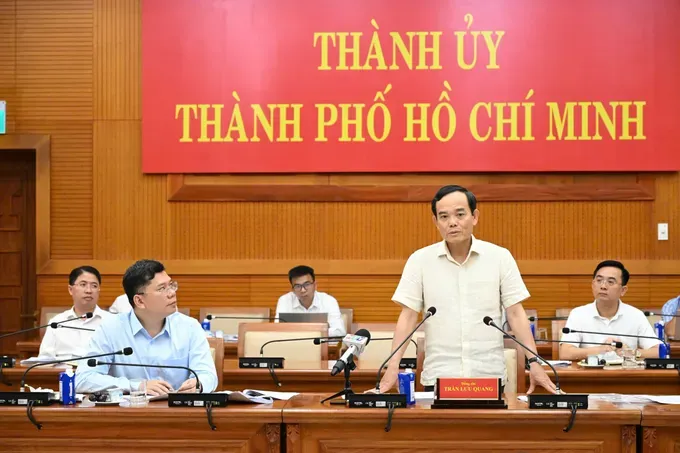
The Scretary of the Ho Chi Minh City Party Committee also underscored that the city's urban railway network must ensure system-wide integration, seamless connectivity and interoperability, while facilitating efficient operations, maintenance and workforce training. On that basis, Ho Chi Minh City should gradually increase the localization rate, move toward mastering urban railway technologies, and contribute to the development of Vietnam's domestic railway industry.
Gantt chart for each project
To closely monitor implementation progress and promptly address obstacles arising during execution, Secretary of the Ho Chi Minh City Party Committee Tran Luu Quang directed relevant agencies to develop a Gantt chart for each urban railway project.
Initially, the project management tool will be applied to the eight urban railway lines scheduled for implementation during the 2026–2030 period, covering a total length of approximately 255km.