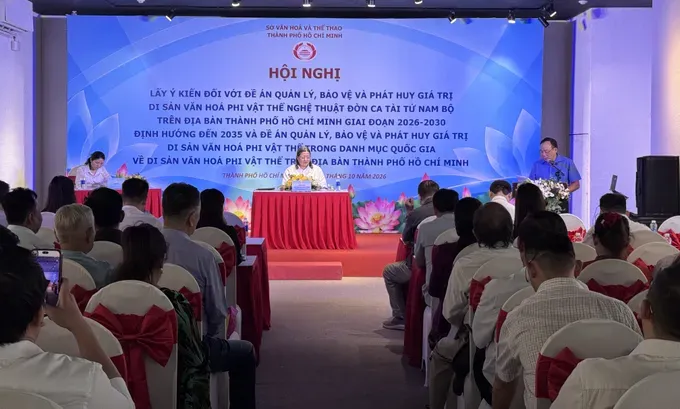
The initiatives include a project dedicated to Don Ca Tai Tu Nam Bo (southern amateur traditional music) for the 2026–2030 period with a vision toward 2035, alongside a broader framework for managing all national-level intangible cultural heritage items in the city.
During the session, researchers, artisans, and practitioners analyzed practical challenges on the ground and proposed measures to enhance conservation efforts in the new development phase.
According to draft project documents, Ho Chi Minh City boasts 15 intangible cultural heritages inscribed on the National Heritage List as of October 2026. These cover traditional festivals, social practices and beliefs, folk performing arts, traditional craftsmanship, and local knowledge.
Prominent entries include the Nghinh Ong (Whale Worshiping) Festival in Can Gio, the Lantern Festival (Tet Nguyen Tieu), Lion-Dragon Dance performing arts, Tuong Binh Hiep lacquerware making, Binh Duong pottery making, Vovinam (Vietnamese martial arts), and Don ca tai tu Nam Bo (southern amateur traditional music).
A central concern raised at the conference was the risk of a generational gap among successors. Following administrative consolidation, Ho Chi Minh City currently counts 282 Don Ca Tai Tu Nam Bo (southern amateur traditional music) clubs with 3,190 members, including five People’s Artisans and 26 Meritorious Artisans.
However, many clubs face operational struggles due to funding shortages, a lack of designated performance venues, and a scarcity of professionally trained instrumentalists. The aging membership, lack of young practitioners, and fading numbers of veteran artisans with deep knowledge of classical repertoires highlight an urgent need for structured training.
Associate Professor Dr. Nguyen Thi My Liem, Vice President of the Ho Chi Minh City Music Association, noted that training traditional instrument musicians requires long-term commitment and intensive practice. She recommended establishing suitable support policies for musicians, strengthening coordination between the cultural and educational sectors, developing standardized teaching materials, and creating heritage clubs in schools.
Regarding Don Ca Tai Tu Nam Bo (southern amateur traditional music), several experts stressed the need to preserve its authenticity and avoid over-theatricalization that alters its core artistic character.
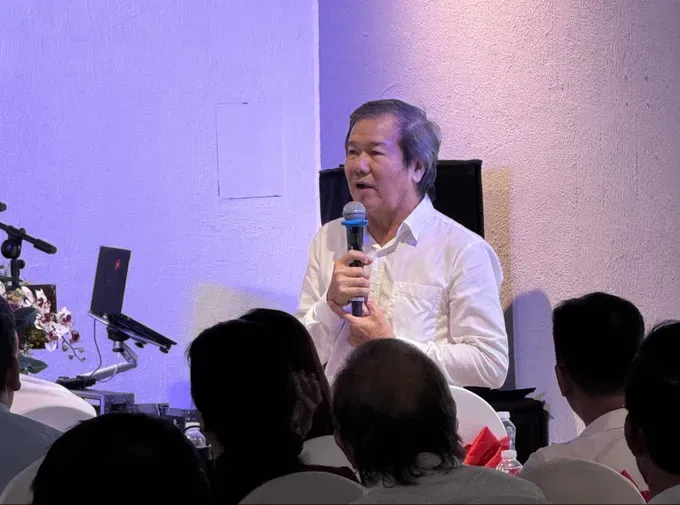
Meritorious Artist Huynh Khai proposed standardizing the system of 20 core repertoires (bai ban to) and leveraging archival audio recordings to ensure consistent instruction.
Artisans also petitioned for dedicated, regular performance spaces at museums and cultural institutions to bring heritage closer to daily community life.
Acknowledging the feedback, Nguyen Minh Nhut, Deputy Director of the Ho Chi Minh City Department of Culture and Sports, stated that heritage conservation will proceed along two main tracks: one focusing on elements already recognized by UNESCO and the Ministry of Culture, Sports and Tourism, and the other on potential heritages undergoing research, inventorying, and nomination filing.
Among these, Don Ca Tai Tu Nam Bo (southern amateur traditional music) remains a top priority for resource allocation and for piloting scalable conservation models, he affirmed.