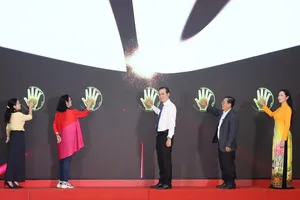
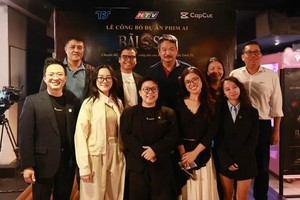
The Ministry of Culture, Sports and Tourism's recent announcement of the Vietnam Cultural Industry Development Network alongside 17 initiatives has opened a new avenue connecting the State, businesses, and the creative community. These initiatives have strongly encouraged artists and writers in Ho Chi Minh City on their creative journey.
Each specialized association acts as a crucial link
The 17 initiatives span digital cultural databases, digital heritage twins, digital film studios, and performance art control technology platforms, to music, video games, tourism, cuisine, publishing, and fashion.
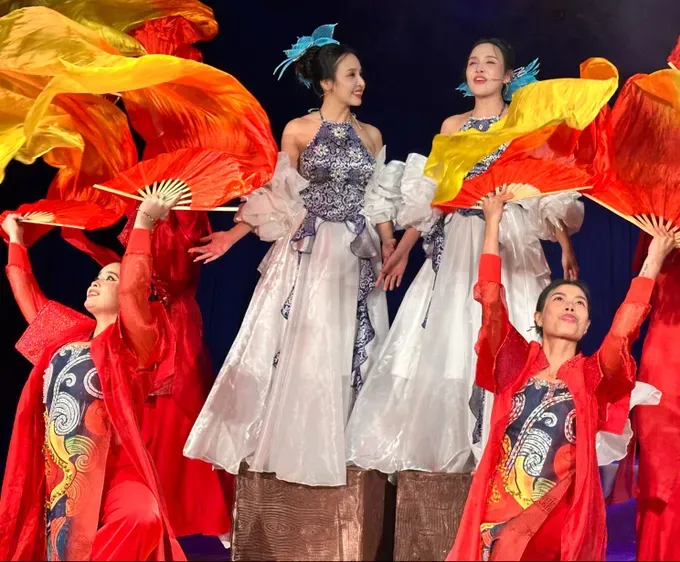
According to the Ministry of Culture, Sports and Tourism, these initiatives serve as "open problems," inviting businesses, investors, artists, research institutes, and training institutions to jointly solve them.
The city is home to nine specialized associations under the HCMC Union of Literature and Arts Associations, bringing together a large pool of artists and creators across diverse disciplines. This talent base is widely seen as a key asset for driving the growth of Ho Chi Minh City's cultural industries.
Sharing his thoughts, People's Artist Tran Minh Ngoc noted that city artists have long been concerned about market outlets for their works, production resources, copyright protection, technology access, and opportunities to reach broader audiences. The Cultural Industry Development Network raises expectations of translating these concerns into concrete projects, partnerships, and clear implementation roadmaps.
Assoc. Prof. Nguyen Thi My Liem from the HCMC Music Association noted that the concept of a "network" clearly demonstrates the synergy among existing resources. Here, each specialized association can start by identifying its own field's resources and needs: which works can be developed into products, which materials need digitizing, which skills require training, and which copyrights need protection. From there, associations can build project portfolios for potential collaboration with businesses, training institutions, and technology platforms.
For instance, the HCMC Writers' Association could develop literary works—such as short stories, novels, poetry, and children's books—into literary scripts linked to cinema, theater, and video games.
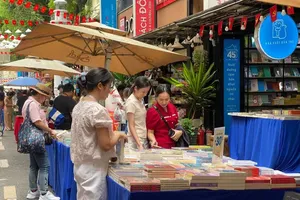
Among the 17 initiatives outlined by the ministry are the "Cultural Industry Bookshelf" and "Special Editions - On-Demand Reprinting," which specifically target this objective. If realized, domestic literary life will become more vibrant and appealing by connecting authors, publishers, bookmakers, and readers right from the content selection stage.
Consequently, works invested in suitable formats will enjoy stronger longevity, while copyright protection and exploitation rights are established from the start.
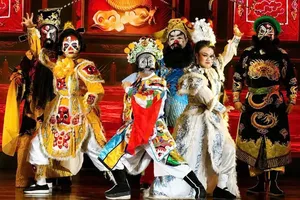
Meritorious Artist Ca Le Hong proposed a joint plan between the HCMC Theater Association and the HCMC Dancers' Association. Both could co-develop touring programs that integrate technology, tourism, and local cultural spaces.
This would leverage the performing strengths of artists from both associations while meeting diverse audience needs across regions domestically and internationally. Notably, it addresses the demand for tourism-linked performances—a high-profit segment that has long been a weak point in HCMC's performing arts.
Echoing this view, Prof. Nguyen Xuan Tien suggested that the HCMC Fine Arts Association and the HCMC Photography Association jointly build image archives, develop art markets, and design derivative products from heritage.
Bridge between creators and investors
Assoc. Prof. Phan Bich Ha expressed enthusiasm about the network and the ministry's 17 initiatives. She stressed that through this network, the artistic community sees a concrete direction for cultural industry development.
"Everyone saw the need for connection, but no one took the lead, so everyone worked independently. Now, the HCMC Cinema Association can proactively connect screenwriters, directors, producers, actors, and technical crews into joint projects and contribute opinions to the digital program production system," Assoc. Prof. Phan Bich Ha stated.
Meanwhile, the HCMC Association of Architects proposed organizing creative spaces, cultural institutions, and urban experiences tied to community life. A prime example is repurposing the lobby of the HCMC Union of Literature and Arts Associations building (at No. 81 Tran Quoc Thao Street, Xuan Hoa Ward) into an artistic space for the nine specialized associations, while transforming it into a weekend cultural gathering place for residents.
A key point emphasized by many artists is that beyond their organizational role, specialized associations play an equally vital role as bridges between creators and investors.
Artists possess talent and creative works, but often lack the capacity and resources to commercialize them. Conversely, businesses possess capital and expertise in management, production, distribution, and marketing.
Facilitating their meeting from the concept phase—helping define target audiences, product formats, exploitation rights, and profit-sharing mechanisms—will help cultural works spread widely. This enables artists to recreate and enriches artistic life, contributing to both public spiritual life and overall societal development.
Additionally, associations can organize interdisciplinary project teams rather than operating in isolation. For example, a historical narrative could originate from literary research, develop into scripts, music, visual design, films, or games, and connect with tourism and publishing. Through inter-association collaboration, cultural materials can adapt to multiple formats while maintaining authenticity and depth.
For the network to operate effectively, each initiative should feature clear output products, designated units, partners, deadlines, and evaluation metrics. The State facilitates, connects resources, and perfects mechanisms; businesses invest in production, technology, and distribution; and specialized associations mobilize creative forces, provide expertise, and help ensure content quality.
Ultimately, success will be measured by works reaching audiences, products establishing markets, creators earning income, and the community benefiting.