The move aims to attract high-quality foreign investment, reduce logistics costs and position the city as a regional hub for production coordination and supply chain management.
For more than three decades, export processing zones and industrial parks have played a pivotal role in Ho Chi Minh City's industrial growth, investment attraction and international integration. The city currently has a vast network of industrial zones, with 67 zones established across more than 27,300 hectares. Of these, 58 are operational, maintaining an occupancy rate of around 80 percent. Together, they have attracted more than 5,300 investment projects worth nearly US$80 billion and created employment for approximately 920,000 workers.
According to Mr. Nguyen Trung Tin, Deputy Head of the Ho Chi Minh City Export Processing and Industrial Zones Authority (HEPZA), the expansion of industrial development space has enabled the city to build a regional ecosystem encompassing manufacturing, logistics and high technology. However, the traditional industrial development model is facing mounting challenges, including shrinking land availability, increasing infrastructure pressure, rising production costs and more demanding investor requirements.
Tran Ngoc Liem, Director of the Ho Chi Minh City branch of the Vietnam Chamber of Commerce and Industry (VCCI-HCMC), noted that high-quality foreign direct investment from leading global technology corporations increasingly flows only to industrial parks that meet smart and sustainable standards. He warned that if Ho Chi Minh City fails to modernize its existing industrial zones, it risks losing out to regional competitors such as Jakarta, Kuala Lumpur and Bangkok in attracting billion-dollar technology projects that will shape the future economy.
These challenges underscore the need for the city to accelerate the restructuring of its industrial zones toward high-tech manufacturing, smart production systems, integrated logistics and stronger participation in global supply chains.
To achieve this, HEPZA has identified three key priorities. The first is resolving land-related bottlenecks, accelerating site clearance and addressing delayed projects. The second is developing eco-industrial and smart industrial parks that meet international standards while advancing green and digital transformation and implementing environmental, social and governance (ESG) practices. Technologies such as artificial intelligence, the Internet of Things (IoT), big data, automation and digital management systems will form the foundation of future smart industrial parks. The third priority is to further streamline administrative procedures and effectively implement new investment mechanisms to create a more transparent and competitive business environment.
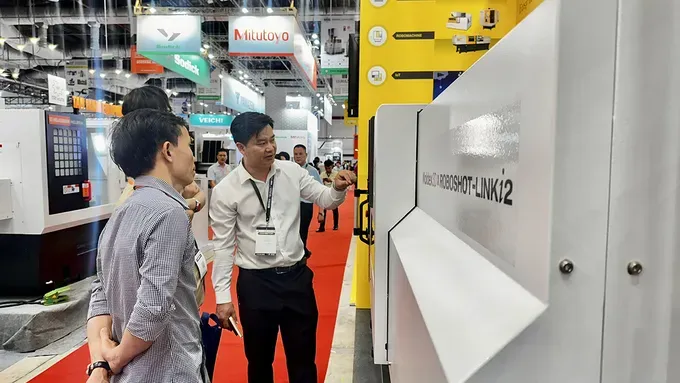
From a business perspective, Mickaël Driol, Chief Executive Officer of Mekong Partners, said that investors are increasingly drawn to locations that seamlessly integrate logistics, industrial infrastructure, data systems, public services and supply chains. While Ho Chi Minh City has already established a strong industrial base, its next challenge is to evolve from a manufacturing hub into a regional center for coordinating production networks and supply chains.
Cutting logistics costs
Le Cong Danh, Deputy Director of the Ho Chi Minh City Department of Industry and Trade, said that following recent administrative boundary adjustments, the city has maintained its position as Vietnam's largest logistics hub and a key gateway for national and regional trade flows. However, several bottlenecks remain.
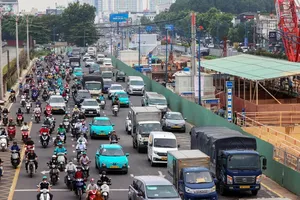
Transport infrastructure connecting industrial parks, seaports, airports and logistics centers remains insufficiently synchronized, causing localized congestion, longer delivery times and higher logistics costs. In addition, the transport structure remains heavily dependent on road freight, while the potential of inland waterways and rail transport remains underutilized.
Most domestic logistics firms are still small or medium-sized enterprises, and the sector lacks leading companies with sufficient technological capabilities to drive digital transformation and expand internationally.
To address these challenges, the municipal Department of Industry and Trade is advising the city government on an action plan for the 2025-2035 period. The plan targets annual industry growth of 13-16 percent while reducing logistics costs to between 11 and 14 percent of the city's Gross Regional Domestic Product (GRDP). Another ambitious goal is to ensure that 80-100 percent of logistics enterprises adopt digital transformation solutions and to establish at least one internationally recognized logistics center.
A key strategic direction is developing a smart manufacturing ecosystem linked to logistics and the future Free Trade Zone, connecting production activities with warehousing systems, seaports and modern logistics services to optimize the value chain from raw materials to exports, he said.
Nguyen Thanh Trung, Deputy Director of the Ho Chi Minh City Department of Finance, added that the city's target of achieving 10 percent economic growth in 2026 requires not only sustaining an economy worth more than VND3 quadrillion but also undertaking comprehensive restructuring based on science and technology, innovation and smart logistics.
Alongside ongoing efforts to simplify administrative procedures, the city is accelerating investment in major infrastructure projects, including Ring Road 3, Ring Road 4, the Bien Hoa–Vung Tau Expressway, metro lines, Long Thanh International Airport and the Can Gio International Port. These mega-projects are expected to become new growth drivers and help businesses build more cost-efficient and time-efficient supply chains.
According to Mr. Hoang Quang Phong, Vice Chairman of the Vietnam Chamber of Commerce and Industry (VCCI), Ho Chi Minh City's long-term development plan envisions 105 export processing and industrial zones covering more than 49,000 hectares by 2050. This presents a historic opportunity for the city to reshape its industrial landscape and focus on developing high-tech industries with greater knowledge content and higher added value, creating new and sustainable growth momentum for the local economy.






)