Following directives from the municipal People’s Committee, the Department of Agriculture and Environment in Ho Chi Minh City is collecting feedback on the draft regulations governing conditions for land subdivision and consolidation. Meanwhile, stakeholders emphasize the need to balance residents’ rights with the goal of sustaining organized and modern urban development.
Toward unified regulations
According to the Ho Chi Minh City Department of Agriculture and Environment, in areas formerly under Binh Duong, the city’s Land Registration Office Branch 2 has been implementing subdivision and consolidation procedures under Decision 38/2024 issued by the provincial People’s Committee on October 18, 2024. A total of 10,974 applications have been processed, including 1,439 subdivision cases reviewed by an advisory council, resulting in approximately 3,600 land use certificates. The council assesses cases with legitimate subdivision needs that do not fully meet standard requirements.
For areas formerly under Ba Ria–Vung Tau, Branch 3 has received 8,175 applications under Decision 24/2024, including 116 from organizations and 8,059 from individuals. While all organizational cases have been resolved with 1,156 certificates issued, 570 individual applications remain pending. Officials say the model has strengthened land management and reduced speculative subdivision practices without relying on an advisory council.
After administrative consolidation, the city is now dealing with three different sets of regulations on land subdivision. Officials say this overlap complicates both state management and administrative procedures for residents, making it necessary to introduce a unified regulation on subdivision conditions, consolidation rules, and minimum plot sizes.
The municipal Department of Agriculture and Environment noted that, following the administrative merger, Ho Chi Minh City is currently subject to three different sets of regulations on land subdivision conditions. The simultaneous application of multiple frameworks has created challenges for state land management and administrative procedures for residents. Therefore, issuing a unified regulation on subdivision and consolidation conditions, as well as minimum plot sizes, is both necessary and aligned with practical needs.
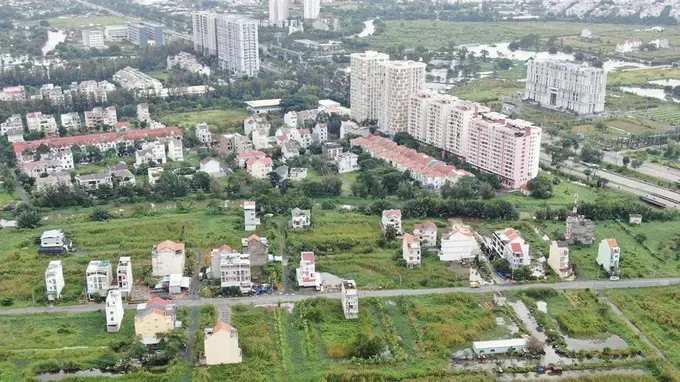
Flexible access road regulations raise urban management concerns
According to Dr. Pham Viet Thuan, Director of the Institute of Natural Resources and Environmental Economics in Ho Chi Minh City, the 2024 Land Law and Resolution 254/2026 have removed many constraints from previous regulations. Under current rules, a land parcel only needs shared or borrowed access to qualify for subdivision, without additional requirements.
However, in the draft currently open for consultation by the Department of Agriculture and Environment, provisions on access roads have raised concerns.
The draft states that “access roads are to be agreed upon by the parties, with commune-level People’s Committees reviewing based on local conditions.” While this creates flexibility for residents seeking to subdivide land, many argue it could complicate management, particularly in ensuring modern urban standards in the country’s largest city.
Commenting on the draft, Mr. Do Van Chung, Vice Chairman of Binh Tri Dong Ward People’s Committee, warned that overly flexible rules could lead to inconsistent implementation across localities. Narrow or inadequate access roads may hinder infrastructure provision, potentially resulting in homes without electricity or water. This would not only affect residents’ rights but also create long-term management challenges and additional burdens for authorities tasked with urban upgrading.
Meanwhile, representatives from Dong Hoa Ward People’s Committee proposed assigning responsibility for setting and guiding access road standards to the Department of Construction and the Department of Planning and Architecture to better align with local realities.
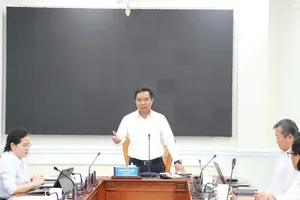
Regarding the issue, Ms. Nguyen Tuyet Phuong, Deputy Head of the Land Management Division under the department, said they are continuing to gather feedback from relevant agencies and local authorities to refine the draft. After completing the consultation process, the draft will be submitted to the Department of Justice for appraisal, with finalization expected within March before being reported to the municipal People’s Committee, she said.