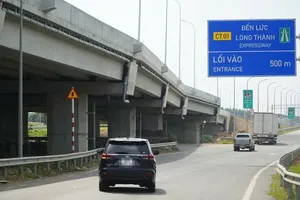
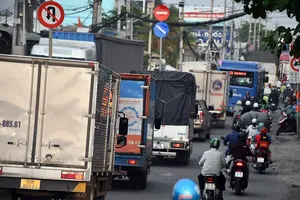
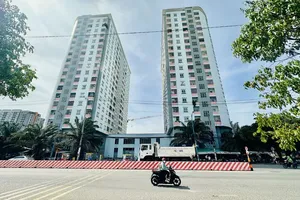
Outdoor dining setups, parked motorbikes, and makeshift stalls that once spilled onto pavements have largely disappeared, creating safer and more comfortable walking spaces. Yet behind the image of a more civilized capital lies growing anxiety among small business owners whose livelihoods have long depended on sidewalk commerce.
In central areas, such as Hoan Kiem and Cua Nam, sidewalks remained unusually spacious despite being lined with offices, restaurants, and coffee shops in early May. The familiar scenes of plastic chairs, parked scooters, and food stalls obstructing public walkways have mostly vanished. Similar changes have spread to outlying streets, including Nguyen Ngoc Vu, Lang Ha, Cau Giay, Thanh Xuan, and Nguyen Thi Dinh, where pedestrians no longer have to weave through what many once described as “mazes” of vehicles and encroaching businesses.
For many residents, the transformation has been welcomed. Le Thi Thu, 32, who lives on Kim Ma Street and walks roughly one kilometer to her workplace near the Ministry of Health on Giang Vo Street, said commuting on foot had previously felt like navigating an obstacle course. Sidewalks were so heavily occupied that pedestrians were often forced onto the roadway. Recently, however, conditions have improved significantly.
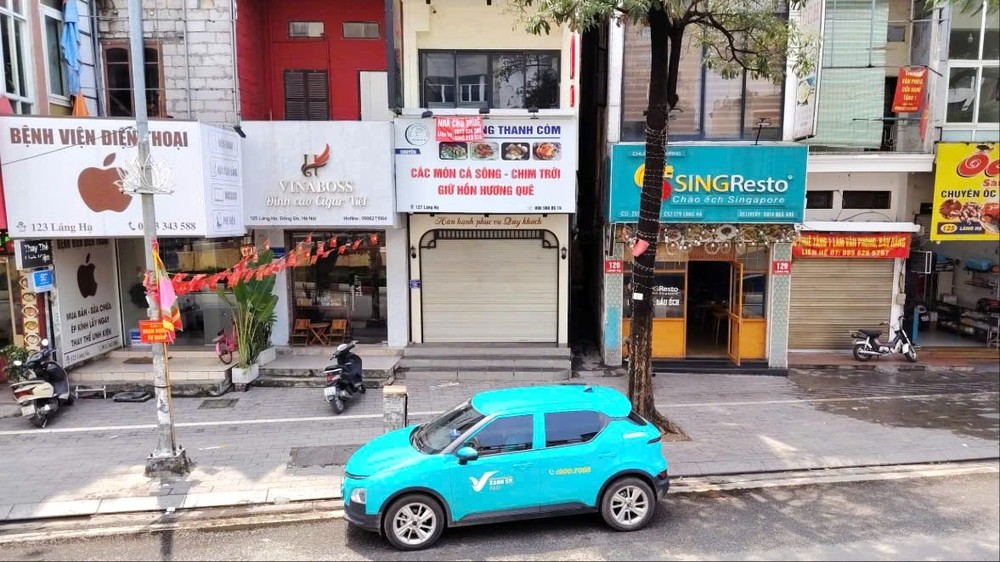
The stricter atmosphere is also evident among business owners. At a well-known cafe on Le Van Huu Street, staff quickly asked customers to move plastic chairs back indoors after they attempted to sit on the sidewalk. The owner explained bluntly that AI-powered surveillance cameras installed across the street could detect the violation and immediately report it to local authorities, potentially resulting in a fine of VND2.5 million.
Hanoi’s rapid urban facelift has been driven by an aggressive campaign to restore public order and strengthen urban discipline. Authorities have mobilized large numbers of personnel and deployed new technologies, particularly AI surveillance systems, in an effort to tackle chronic sidewalk encroachment and improve the city’s image.
According to Hanoi police, by the end of April 2026, 32 out of the city’s 126 wards and communes had established camera monitoring centers within local police headquarters to improve oversight and enforcement capacity. Authorities have eliminated 179 out of 231 informal street markets, achieving more than 77 percent of the city’s target. More than 1,000 inspection rounds have also been conducted, resulting in over 6,600 penalties issued either directly or through “cold fines” based on camera evidence.
In Dinh Cong Ward, one of Hanoi’s most densely populated areas, nearly 300 business households have signed commitments pledging to maintain urban order and civility. Before signing, shop owners were shown images documenting sidewalk and traffic violations within the neighborhood. Mr. Nguyen Tuan Anh, Chairman of the People’s Committee of Dinh Cong Ward, said the visual evidence was intended to help residents recognize their own violations and address what authorities view as the root problem: public awareness and compliance.
Yet while the crackdown has improved urban order, it has also dealt a heavy blow to Hanoi’s long-standing sidewalk economy, which provides income for thousands of households. Along many streets, struggling businesses and “Shop for Rent” signs have become increasingly common. For many vendors and restaurant owners, sidewalks are not merely public walkways but essential commercial space. Without areas for customer parking or outdoor seating, declining foot traffic has become almost inevitable.
One owner of a popular draft beer restaurant on Phan Chu Trinh Street lamented that both locals and tourists cherish Hanoi’s sidewalk culture, where people can eat, drink, and observe the rhythm of the city. Since customers have been forced indoors, he said, the atmosphere has become cramped, parking has become difficult, and revenue at his establishment has fallen by more than 50 percent over the past month.
The campaign to restore urban order is widely viewed as necessary, but it also raises difficult questions about livelihoods. Many street-front businesses argue that the city should pursue more balanced and sustainable solutions rather than blanket prohibitions. Among the proposals gaining support is the creation of regulated sidewalk business zones where vendors could operate legally for a fee, with revenues reinvested into urban infrastructure and public services.
For small businesses hit hardest by the crackdown, some residents believe authorities should introduce support policies encouraging transitions to online commerce or relocate affected vendors to organized markets and properly planned pedestrian streets. Others argue the city urgently needs centralized parking facilities within 200-300 meters of busy commercial areas to reduce pressure on sidewalks currently used for vehicle parking.
Urban planners and residents have also suggested categorizing streets according to function. Heritage and tourism streets, they argue, could permit limited sidewalk business activities during designated hours, while major traffic corridors should remain strictly regulated to guarantee safety and mobility.
The city’s determination to enforce order appears unlikely to weaken. Hanoi Party Secretary Tran Duc Thang recently endorsed a proposal from Lieutenant General Nguyen Thanh Tung, Director of Hanoi police, calling for accountability measures against local Party committees and authorities that repeatedly fail to prevent urban order violations.
Under the proposal, local authorities and ward-level police departments that receive three warnings from the city for recurring violations could be classified as “failing to fulfill duties.” Continued violations beyond that point could trigger reviews affecting personnel appointments and official positions.