On January 4, the Government Office issued a notice summarizing the conclusions of the Standing Government at a meeting on the implementation of railway projects and the related procedures, regulations, and technical standards governing railway development.
According to the notice, with regard to the North–South high-speed railway project, the Standing Government instructed the Ministry of Construction to direct the Railway Project Management Board to complete the selection of an international consultant no later than January. In addition, the ministry was urged to swiftly appoint an international consultancy firm to prepare the project’s feasibility study report and submit it to the Prime Minister by January 15.
The Ministry of Construction is tasked with determining the routes, ensuring accurate boundary demarcation and cadastral documentation to formulate compensation plans in strict compliance with regulations, and preventing losses and waste.
The Ministry of Construction will also coordinate with the Ministry of Science and Technology, the Ministry of Foreign Affairs, and other relevant ministries and agencies and draw the support of experts and consultants to review Vietnam’s technical standards and regulations alongside international benchmarks and global best practices while taking into account domestic conditions. The aim is to select the most appropriate technology for the project from among conventional rail-based systems, magnetic levitation, and vacuum tube–based transport technologies.
The Standing Government has assigned the Ministry of Construction to take the lead, in coordination with relevant ministries and agencies, in developing criteria, procedures, and evaluation frameworks to select the most effective and optimal investment model—one that serves the national interest and the public, while preventing corruption and misconduct.
Where necessary, the Government may introduce additional tailored mechanisms and policies suited to specific investment approaches, including public investment and public–private partnerships (PPP). Any such measures must be implemented in strict accordance with established procedures and regulations, based on thorough impact assessments, and incorporate risk-sharing arrangements in line with directives from the Prime Minister.
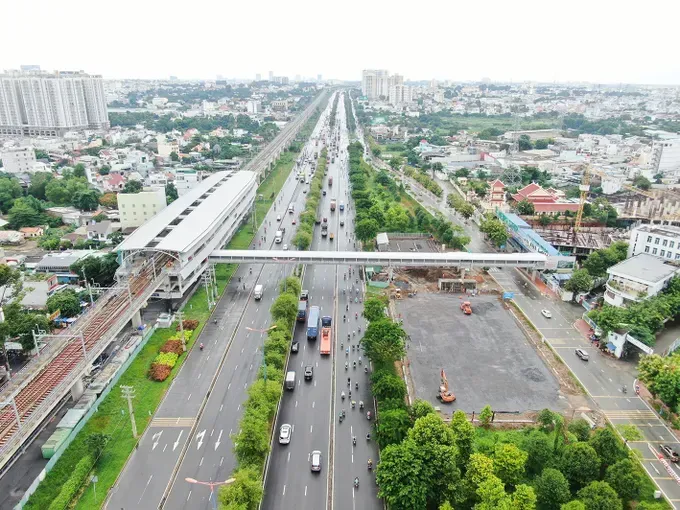
For urban railway projects in Hanoi and Ho Chi Minh City, the Standing Government has instructed the municipal People’s Committees of both cities to proactively organize the implementation of metro lines within their respective authorities, ensuring progress and construction quality.
The two city administrations are also required to review and report to their municipal Party committees on the application of railway standards and technical regulations, with the aim of ensuring system interoperability, coherence, universality, and modernity, while gradually fostering the development of a domestic railway industry. In addition, they are tasked with studying the feasibility of issuing national technical standards for urban railways.
The Ho Chi Minh City People’s Committee has been urged to accelerate the completion of all required procedures, in accordance with regulations, to enable the groundbreaking of railway lines linking the city to Long Thanh International Airport, including Ben Thanh–Tham Luong, Ben Thanh–Thu Thiem, and Thu Thiem–Long Thanh.