Addressing barriers to unlock consumer spending
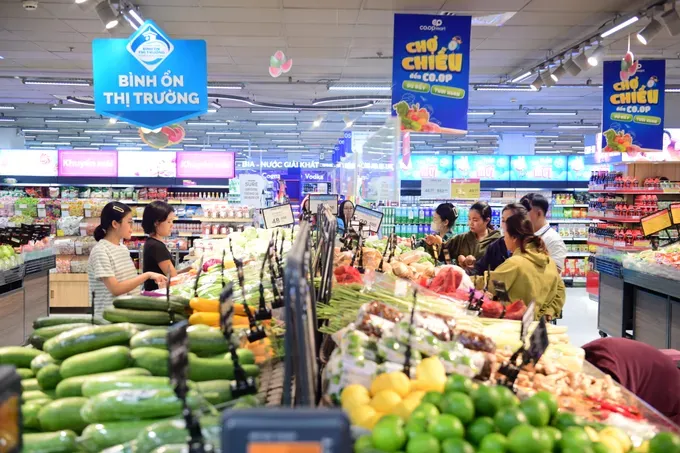
The Prime Minister has issued Directive No. 40/CT-TTg dated November 21, 2026, outlining measures to stimulate consumption and develop the domestic market in the remaining months of 2026 and during the 2027 Lunar New Year.
The move represents a proactive and timely government response aimed at addressing bottlenecks in aggregate demand and injecting fresh momentum into the economy.
Under the policy, the Government is not merely encouraging people to shop but seeking to boost purchasing power through a simultaneous impact on capital flows, production capacity, employment, incomes, and goods distribution. Notably, measures to promote consumption are being pursued in tandem with efforts to address underlying constraints on purchasing power.
Vietnam's consumer market has, in fact, shown positive momentum. Total retail sales of goods and consumer service revenues in the first 10 months of 2026, at current prices, were estimated at VND6,618.9 trillion (US$256 million), up 13.5 percent year-on-year, while GDP growth in the first nine months was estimated at 9.01 percent.
However, after adjusting for price factors, retail sales and consumer service revenues rose 7.7 percent, while the average Consumer Price Index (CPI) for the first 10 months increased 4.57 percent. These figures indicate that the market continues to expand, but price pressures and production and business costs remain a drag on consumers' spending capacity, underscoring the need to further strengthen purchasing power.
Consumer stimulus efforts are often associated with promotional campaigns, discounts, trade promotion activities, and inventory clearance. Such measures are necessary to boost sales, particularly during peak shopping seasons. However, in the current context, stimulating demand cannot be limited to creating more shopping opportunities or making goods more accessible to consumers.
The fundamental challenge is how to translate demand into actual purchasing power. People may have consumption needs, but spending decisions also depend on income, employment, living costs, access to credit, and confidence in the economic outlook. Unless these conditions improve, promotional campaigns are unlikely to deliver sustainable changes to the market.
Turning domestic consumption into a driver of economic growth
Therefore, unlocking purchasing power should be viewed as an economic policy imperative rather than simply a commercial campaign. A notable feature of Directive No. 40/CT-TTg is that demand-stimulating measures are framed within a coordinated, cross-sectoral approach, including accelerating public investment disbursement, addressing difficulties facing businesses, cutting costs to create room for consideration of lower lending rates, developing appropriate consumer credit products while ensuring safety and managing credit risks, promoting e-commerce, expanding distribution channels, and organizing trade promotion activities.
The directive also emphasizes ensuring resources for implementing wage policies, social welfare, policies for people with meritorious service to the nation, and rational tax and fee management to reduce living costs and improve household spending capacity. These measures are intended not only to influence shopping activity but also to improve conditions for production and business, create jobs, raise incomes, and facilitate people's access to goods and services.
Purchasing power is not an isolated factor; it is shaped by the functioning of the entire economy. Businesses with access to capital, lower costs, and opportunities to expand production and operations are better positioned to create jobs and increase workers' incomes. Stable incomes, reasonable costs, and stronger confidence enable consumers to spend more proactively. Rising consumption, in turn, generates demand for production and services, accelerates goods circulation, and contributes to economic growth. Unlocking purchasing power, therefore, also means revitalizing the cycle linking production, employment, income, and consumption.
Effective demand stimulation requires more than discounts on goods. It must also combine income-support measures, improved access to credit, distribution system development, expanded consumption channels, and promotion of services with broad economic spillover effects. Stimulus policies need to generate momentum on both the supply and demand sides, turning household spending into a driver of production, business activity, investment, and employment, rather than merely producing a short-term sales boost.
Given the scale of the domestic market, diverse consumer demand, and increasingly developed distribution networks, Vietnam still has considerable room to harness domestic consumption as a growth driver. However, this potential can only be fully realized if barriers involving resources, costs, goods circulation, and spending capacity are removed and if consumers have convenient access to quality products at reasonable prices.
Demand stimulation must also go hand in hand with inflation control, product quality assurance, market transparency, and efforts to promote Vietnamese products, thereby generating stronger spillover effects for domestic production.
Directive No. 40/CT-TTg, issued by the Prime Minister not only aims to boost consumption in the final months of the year and during the Lunar New Year but also underscores the need for coordinated economic measures to strengthen purchasing power. Stimulating demand cannot begin merely at retail outlets; it must start with capital flows, employment, and people's disposable income.
To get the market moving, it is not enough to encourage people to shop. More importantly, resources must be unlocked to build purchasing power. Only then can consumption truly become a driving force for economic growth.