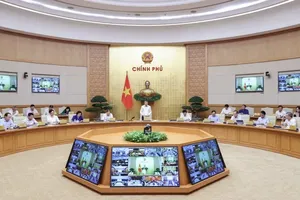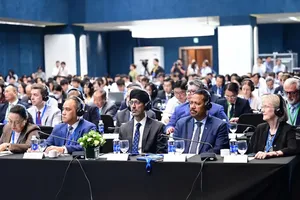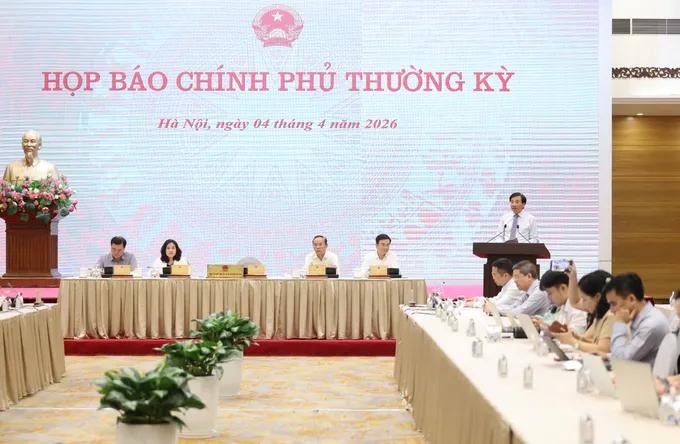
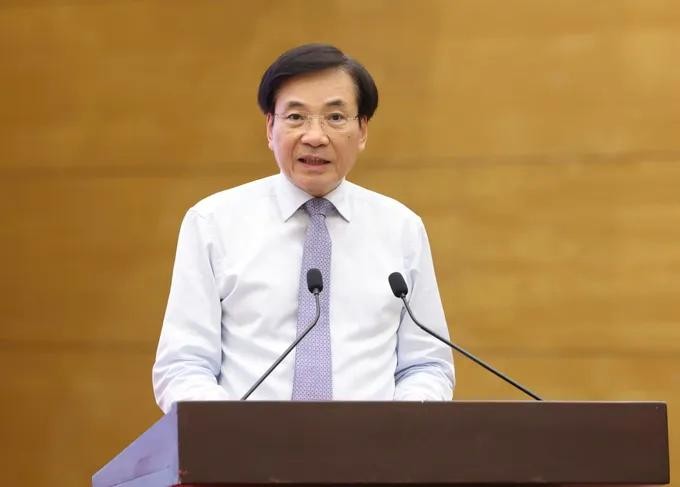
Speaking at the Government’s regular March press conference in Hanoi on April 4, chaired by Minister and Chairman of the Government Office Tran Van Son, Deputy Minister of Industry and Trade Nguyen Sinh Nhat Tan underscored the Government’s commitment to ensuring uninterrupted electricity supply during the upcoming dry season, stressing that preventing shortages remains the guiding principle.
Moreover, the Deputy Minister reported that electricity provision has been fully maintained over the past three months and outlined preparations for stable supply through the summer period.
According to the Deputy Minister, preparations for electricity supply in 2026 have followed established annual procedures. The Ministry of Industry and Trade has approved the national power system operation plan for 2026. For peak dry-season months, contingency scenarios have been developed to manage demand growth projected at up to 14.3 percent.
Under the April operational plan, electricity demand is expected to grow by approximately 6.07 percent compared to the same period in 2025. For the full year, total national electricity output is estimated at around 350 billion kWh, representing a 7.92 percent increase year-on-year. Over the past three months, supply has remained stable, with actual demand growth reaching 6.5 percent compared to the same period last year.
Looking ahead, the Ministry has conducted working missions with power generation and supply units to review preparedness for ensuring stable electricity provision.
Major corporations, general companies, and relevant units have proactively developed comprehensive supply plans, conducted inspections and maintenance, addressed technical issues, and implemented measures to improve operational reliability. These include applying equipment monitoring technologies, preparing backup materials and equipment, and strengthening inspections at critical points. With these preparations, the Ministry expressed confidence that electricity supply will be secured throughout 2026. Its consistent directive remains to prevent any power shortages during the year.
The Ministry also stressed the need to effectively implement key measures, including ensuring adequate fuel supply, particularly coal, and strictly managing hydropower reservoirs to meet multiple objectives: electricity generation, downstream water supply, drought prevention, and flood control. Relevant units are required to proactively prepare for extreme scenarios and must avoid any disruptions to the national power grid caused by subjective factors.
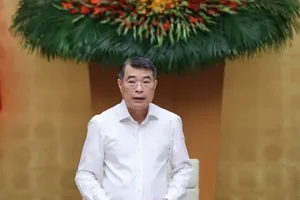
At the same press conference, Deputy Governor of the State Bank of Vietnam Pham Thanh Ha addressed issues related to interest rates.
He noted that tensions in the Middle East have driven up oil prices, creating significant inflationary pressure and posing challenges for monetary policy management and banking operations. In response, and in line with Government and Prime Minister directives, the State Bank of Vietnam has implemented proactive and flexible measures, using a coordinated set of tools to help control inflation, stabilize the macroeconomy, and support sustainable economic growth.
Regarding policy rates, the central bank has maintained current levels, enabling commercial banks and credit institutions to access funding at low cost to support the economy.
As for market interest rates, amid rising pressure, the State Bank has instructed credit institutions and banks to implement measures to stabilize lending rates. However, in practice, interest rates have shown an upward trend. This is attributed to pressures on capital mobilization across the banking system and competition from alternative investment channels, leading deposit rates to rise from late 2025 after a period of stability.
In terms of capital balance, credit growth has outpaced deposit growth, reflecting persistently strong demand for financing, particularly as the economy pursues double-digit growth targets.
Looking ahead, many international organizations anticipate continued complexity, uncertainty, and unpredictability in the global environment, with risks affecting inflation, growth, and overall economic stability. The State Bank reaffirmed its stance on maintaining a steady hand in monetary policy, pledging to monitor both global and domestic developments with a proactive and flexible approach. Its central priority remains clear that are safeguarding macroeconomic stability, keeping inflation under control, and fostering conditions for sustainable economic growth.
The central bank will continue to manage interest rates appropriately while flexibly using policy tools to support market liquidity. It will also require credit institutions to strictly comply with regulations on transparent disclosure of lending rates.
At the same time, credit institutions are instructed to stabilize interest rate levels and ensure a balance between capital mobilization and credit growth to avoid disruptions in the market rate environment.