Domestic fuel prices have undergone several adjustments since early July. Under the latest price revision on July 23, which remained in effect as of July 29, the retail price of E5 RON 92 gasoline rose by VND1,060 (about US$0.04) per liter to VND20,880 (about US$0.80), while E10 RON 95-III increased by VND880 (about US$0.03) to VND21,430 (about US$0.82) per liter. Diesel saw the steepest increase, rising by VND2,440 (about US$0.09) to VND25,760 (about US$0.98) per liter.
Nguyen Lam Hai, deputy director of Mien Dong (Eastern) Coach Station in Ho Chi Minh City, said on July 29 that none of the transport operators serving the station had applied to raise ticket prices.
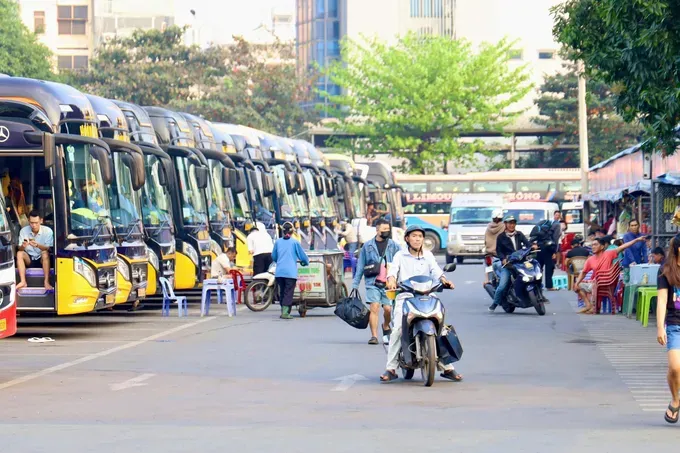
Under current regulations, operators wishing to increase fares must first submit a pricing plan to the bus station, which will forward it to the relevant authorities for review and approval before any fare adjustment can take effect.
Although fares remain unchanged, he said rising fuel prices are directly affecting transport companies' operating efficiency.
Tran Dinh Hoa, Director of Dinh Hoa Transport Company, which operates the Da Nang–Ho Chi Minh City passenger route, said that his company would maintain current fares after raising prices in March.
Fuel now accounts for about 35–40 percent of the company's operating costs, meaning it spends VND350,000–VND400,000 (US$13-US$15) on fuel for every VND1 million (US$38) in revenue.
Sharp increases in fuel prices place enormous pressure on transport businesses, he said.
Other passenger transport operators said that they are closely monitoring fuel price movements. With travel demand yet to fully recover, many companies prefer to keep fares stable to remain competitive and ease the financial burden on passengers.
They noted that fare adjustments cannot be implemented immediately. Companies must first develop a pricing plan based on their cost structure, submit it to regulators for approval, and, once approved, complete administrative steps such as printing new tickets, updating fare boards, and revising related systems before the new prices can take effect.
Representatives of several taxi operators in Ho Chi Minh City said fares were already increased by more than 10 percent in March. Raising fares again would incur additional costs for recalibrating taxi meters and updating software, while potentially reducing competitiveness if their prices exceed those of rivals.
Transport companies said that they will continue to offset higher fuel costs by improving operational efficiency and reducing unnecessary spending, with fare increases remaining a last resort subject to regulatory approval.