At a review meeting of the Ho Chi Minh City Business Association (HUBA) covering the first six months of the year on July 28, many members said that although the economy continues to recover, businesses remain under pressure from weak markets, rising input costs, and supply chain disruptions.
Companies said they have had to devote most of their resources to maintaining production and securing orders, leaving little room for expanding investment. To unlock business growth, they urged authorities to resolve outstanding issues related to tax refunds, invoicing, cash flow, and access to financing.
Tax issues hold businesses back
At the meeting, many businesses said they were encountering difficulties with tax refunds, deductible expenses, and invoice processing, affecting their cash flow.
Thanh Cong Textile Garment Investment Trading JSC, for example, said more than US$1 million in tax refunds remains outstanding because of issues involving the application of the zero-percent tax rate for goods exported to bonded warehouses.
Similarly, Duc Thanh Wood Processing JSC said there have been cases in which tax authorities conducted audits nearly 10 years after transactions took place. By the time inspections occurred, suppliers had either dissolved or disappeared, leaving businesses liable for back taxes as well as substantial late-payment penalties.
Businesses also reported difficulties with the tax authority's supplier-chain risk management mechanism covering first-, second-, and third-tier suppliers.
Although purchases, deliveries, and payments were all legitimate, companies said tax refunds had been suspended or expenses had not been recognized as deductible because of risks involving suppliers further up the supply chain.
In addition, electricity, water, telecommunications, and fuel invoices issued by certain state-owned entities undergoing mergers or dissolution have not been accepted as deductible expenses, increasing operating costs and cash flow pressure.
According to HUBA Chairman Nguyen Ngoc Hoa, businesses are facing challenges not only from market fluctuations but also from obstacles in implementing government policies. He said the business community needs existing regulations to be enforced consistently, transparently, and efficiently.
HCMC accelerates tax digitalization expanding credit for growth
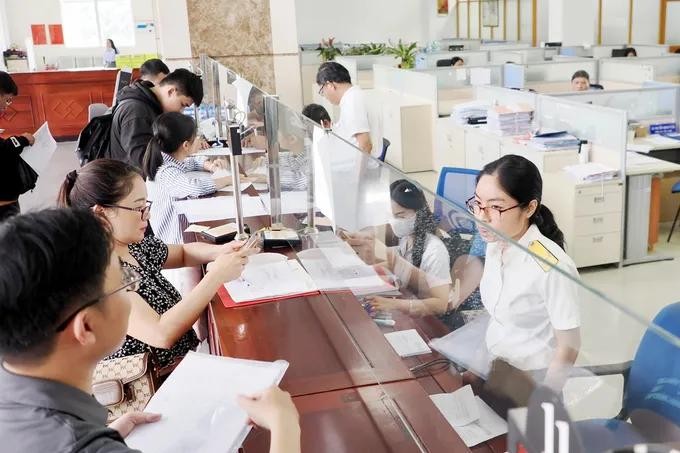
In response to the concerns, the Ho Chi Minh City Tax Department said it is accelerating the digitalization of administrative procedures and moving toward a fully electronic processing system to reduce compliance time and costs.
Under the new process, tax refund applications are now processed within six working days for cases eligible for refunds before post-audits, and about 10 days for cases requiring audits before refunds, compared with as long as 40 days under previous regulations.
Regarding the supplier-chain risk management mechanism, Giang Van Hien, Deputy Director of the Ho Chi Minh City Tax Department, said the policy is intended to prevent tax fraud and protect the state budget.
However, he said businesses that can demonstrate legitimate transactions, maintain stable commercial relationships, and accept legal responsibility will have their cases reviewed. Tax officials have also assigned specialized units to work directly with businesses on issues involving goods exported to bonded warehouses and invoices issued by entities undergoing mergers.
Alongside efforts to resolve tax-related issues, improving access to financing is expected to provide additional momentum for economic growth.
According to the State Bank of Vietnam, total outstanding credit across the banking system exceeded VND20 quadrillion by the end of June 2026, up 7.73 percent from the end of the previous year. About 77 percent of outstanding loans were concentrated in production and business activities.
Pham Chi Quang, Director General of the Monetary Policy Department at the State Bank of Vietnam, said the central bank will continue directing credit toward projects with broad economic spillover effects. Excluding loans for certain major infrastructure projects, social housing developments, industrial parks, and export processing zones from credit growth limits will enable financial institutions to expand lending to the manufacturing and business sectors.
Deputy Governor Pham Thanh Ha said the State Bank of Vietnam will continue maintaining stable policy interest rates to help lower deposit rates and support reductions in lending rates.
The central bank will also implement measures to expand capital supply, including developing electronic lending services, accelerating digital transformation, introducing a regulatory sandbox for the banking sector, and flexibly adjusting prudential limits to create greater capacity for financial institutions to increase lending for investment, production, and business activities.