While regulators insist that overall fuel supplies remain sufficient, some retail gas stations have closed because they cannot secure supplies.
In response, the Ministry of Industry and Trade is proposing a series of changes in a draft decree on fuel trading, including streamlining intermediaries, reforming the pricing mechanism, and strengthening the responsibilities of major fuel wholesalers.
Overall supply sufficient, localized retail shortages
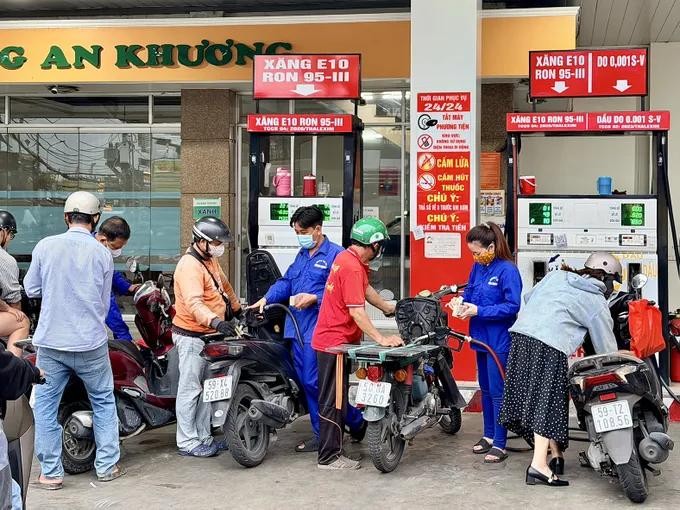
As previously reported by SGGP, in recent days some localities have seen small retail gas stations limit sales or temporarily suspend operations because they have been unable to obtain fuel supplies. Meanwhile, Head Tran Huu Linh of the Agency for Domestic Market Surveillance and Development under the Ministry of Industry and Trade, said total fuel supply in the market remains sufficient.
Conditions at retail stations indicate that the problem does not lie in the overall volume of fuel available but in the ability of businesses at the end of the distribution chain to access supplies. In addition to imbalances in discount allocation in the fuel distribution system which is considered the biggest bottleneck at present, businesses say the domestic pricing mechanism has failed to keep pace with fluctuations in global markets, placing increasing risks on retailers.
In many cases, businesses place orders while shipments are still in transit, only to see domestic retail prices fall before the cargo arrives. By the time the fuel reaches storage, the businesses incur losses. A representative of a gas station operated by Thanh Huyen Oil Transport Company in Ha Dong Ward, Hanoi, said retailers at the end of the distribution chain are entirely dependent on distributors and major fuel wholesalers.
When deliveries are delayed or allocations are limited, retailers have virtually no control over supply. At times, available inventory meets only about 50 percent of normal demand. During supply shortages, large companies typically prioritize their own retail networks, while smaller stations must wait several days for allocations.
Despite prolonged losses, most retailers are reluctant to close because they still face loan repayments, rental costs, employee salaries, and other fixed expenses. If they suspend operations, reopening becomes difficult due to the loss of customers and workers. Dang Hoai Phuong, a representative of Phuong Nam Lam Dong Petroleum Company said many existing regulations no longer reflect market realities, leaving retailers to shoulder most of the risks related to prices, supply, and inventory.
"The Government should soon issue a new decree that promotes transparency and market-based operations while decentralizing licensing authority for major wholesalers and distributors to local governments. At the same time, it should minimize situations where wholesale prices approach retail prices, causing discounts to fall to zero, thereby creating a stable business environment, ensuring reasonable profits for retailers, enabling them to maintain operations, secure supplies, and develop sustainably," Dang Hoai Phuong said.
Petroleum draft decree seeks fewer intermediaries, market-based pricing
Feedback from retailers and inspections by regulatory authorities show that the current fuel distribution system has numerous shortcomings. Addressing these issues is a central objective of the Ministry of Industry and Trade's draft decree on fuel trading.
Head Tran Huu Linh said one of the draft's key proposals is to reduce intermediary layers in the distribution system to the greatest extent possible. Under the proposal, retail agents, franchised retailers, and fuel distributors would be consolidated into a single category known as "fuel distributors," shortening the supply chain from sourcing to distribution.
Discussing the draft decree with SGGP, Chairman Dang Ngoc Bao of the Vietnam Petroleum Association said its breakthrough lies in reforming the fuel pricing mechanism toward a more market-oriented model. He said the current practice of adjusting prices every seven days has exposed many shortcomings because it fails to keep pace with changes in global fuel prices, leaving wholesalers, distributors, and retailers unable to plan their business operations effectively, while the fuel distribution margins have at times fallen to zero dong per liter.
The draft decree proposes giving businesses the authority to determine selling prices within the Government's regulatory framework. When prices more closely reflect market movements, businesses will be able to proactively balance supply, establish appropriate commission policies, and calculate business efficiency instead of relying on scheduled price adjustments. According to Chairman Dang Ngoc Bao, this would fundamentally address pricing bottlenecks, encourage businesses to secure supplies, ensure stable availability, and allow the market to operate more flexibly.
Head Tran Huu Linh of the Agency for Domestic Market Surveillance and Development emphasized that in addition to reforming the pricing mechanism and streamlining intermediary layers, the draft decree would strengthen the responsibility of major fuel wholesalers to ensure adequate supplies for the distribution network. It would also require businesses to connect inventory, total supply, and pricing data with regulatory authorities to improve transparency.
According to the head of the Agency for Domestic Market Surveillance and Development, these amendments are intended to increase business autonomy while enhancing the accountability of major fuel wholesalers, thereby reducing situations in which retail gas stations face shortages even though overall market supply remains sufficient.