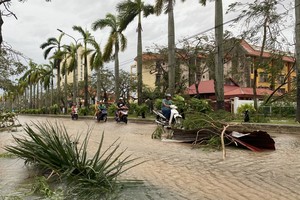
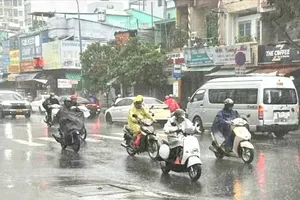
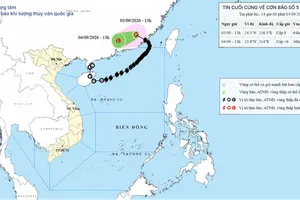
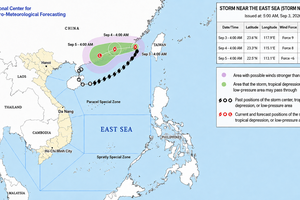
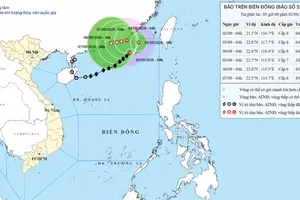
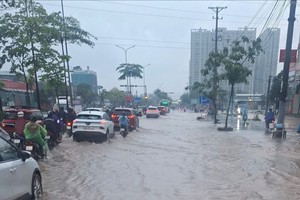
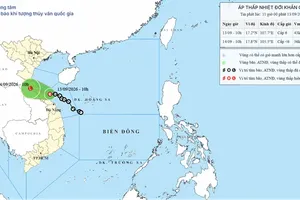
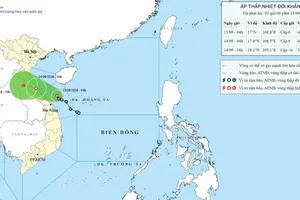
Meanwhile, in the South Central region, the circulation of typhoon No. 15 interacted directly with an ongoing cold air mass, which may bring rain again from Quang Tri to Lam Dong provinces.
The National Center for Hydro-Meteorological Forecasting warned that from December 1 to December 2, both the Northern and North Central regions will be cold at night, with particularly severe cold in the Northern mountainous areas, and be sunny but dry and cold at daytime, with humidity dropping to 35–40 percent.
The temperature difference between day and night may cause a temperature inversion, leading to morning fog, with frost and hoarfrost possible in high mountainous areas.
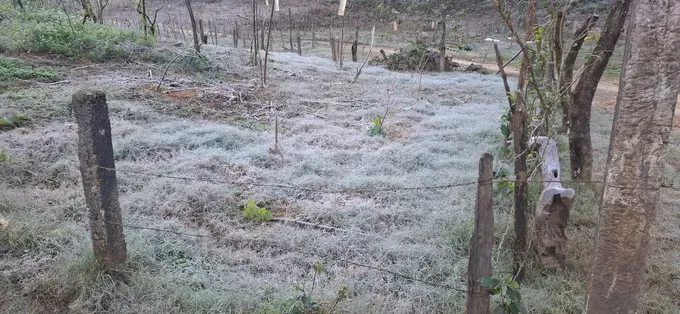
According to meteorology experts, fog can increase the risk of pollution or reduce air quality, decreasing visibility in the early morning and at night. The fog will intensify once the current cold front starts to weaken.
In response to the risk of temperature inversions and fog causing accumulation of PM2.5 fine dust, the Ministry of Agriculture and Environment has issued a document to seven Northern provinces, including Hanoi, Hai Phong, Bac Ninh, Hung Yen, Phu Tho, Thai Nguyen and Ninh Binh, requesting measures to cope with air pollution from late November to early December.
As for the Central and Southern regions, the National Center for Hydro-Meteorological Forecasting indicated that from December 2, the coastal provinces of the South Central, the Central Highlands and the Southern regions will experience showers to locally heavy rain. In the Central Highlands, mornings and nights will be cold; in other areas, mornings and nights will be chilly.
Meteorology experts noted that the circulation of typhoon No. 15, interacted with reinforced cold air moving into the Central region from December 1, will cause widespread rain from Quang Tri to Dak Lak, then extending to Lam Dong from December 2 to December 4.
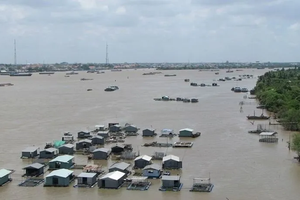
Dak Lak and Khanh Hoa may experience 50–100mm of rainfall, but not extreme rainfall like the period from November 16 to November 22.
Air quality in Hanoi reaches unhealthy levels
Data from several automatic environmental monitoring systems in Hanoi on November 30 showed that the Air Quality Index (AQI) in multiple areas was at unhealthy levels, affecting residents’ health.
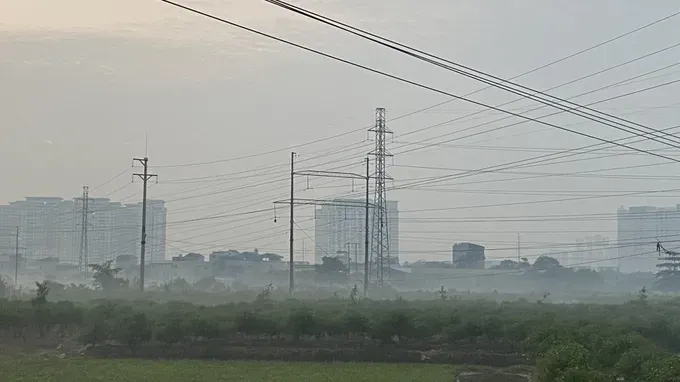
On the morning of November 30, the global air quality monitoring and assessment system IQAir ranked Hanoi as the fifth most polluted city in the world, with an average AQI of 225, purple – very unhealthy.
According to authorities, over the past week, air quality in the capital city of Hanoi and numerous Northern provinces and cities has shifted into a polluted phase, impacting human health, especially the elderly, children and people with respiratory illnesses.
Air quality in Hanoi has reached unhealthy levels due to a combination of traffic, industrial activity, construction and unfavorable weather conditions.






)