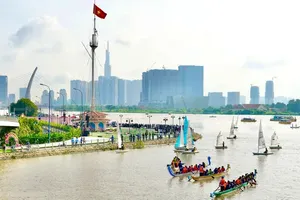
The Thanh pho muon sac hoa (City of a thousand flowers) movement in Ho Chi Minh City has gone beyond creating vibrant floral streets to become a wide-reaching social initiative, contributing to improved quality of life and shaping a greener, cleaner, and more civilized urban–rural landscape.
In An Nhon Tay Commune, the movement has taken concrete form through large-scale flower road projects.
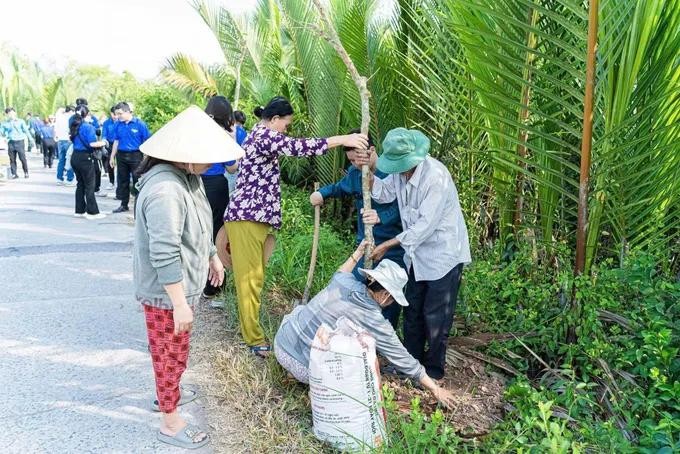
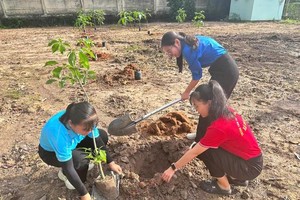
In late 2025, the Vietnam Fatherland Front Committee of An Nhon Tay Commune launched a campaign to plant flowers along Route 781 in Xom Thuoc Hamlet, spanning nearly four kilometers. The initiative drew participation from farmers’ union members, local officials, and residents living along the route. The area has since taken on a new look, with vibrant greens and yellows creating a foundation for community-based tourism development.
Dao Thi Dem, a resident of Xom Thuoc Hamlet, shared that the flower road has replaced previously untidy surroundings, improving the environment and making the area greener, cleaner, and more pleasant. More importantly, it has raised environmental awareness and encouraged residents to take an active role in maintaining the landscape. The routes feature cosmos, chrysanthemums, lantana, moss rose, and other colorful, climate-resilient plants.
According to Chairwoman Le Ngoc Suong of the An Nhon Tay People’s Committee, local authorities have mobilized residents to care for and protect the flower routes, particularly on weekends, helping maintain their vibrancy and enhance the visual appeal of the area.
In Hung Long Commune, farmers’ union members have responded to campaigns to plant golden bell trees and maintain greenery by planting new trees, cleaning up waste, and clearing road corridors to create more open, pleasant spaces. Meanwhile, in Binh Thanh Ward, Kindergarten 12 has introduced a Truong hoc ruc ro sac hoa (Flower-filled school) project as part of the Binh Thanh - Sac hoa nghia tinh (Binh Thanh – Blossoms of Solidarity) program. A multi-colored flower garden at the school’s entrance has created a welcoming and refreshing environment.
Principal Kieu Thi Mai Trang expressed hope that the vibrant flower beds will bring joy, safety, and a sense of familiarity to children as they enter the school, while also motivating teachers and parents to work together in caring for and educating students.
Cultivating a green lifestyle
Launched by the Vietnam Fatherland Front Committee of Ho Chi Minh City for the 2025–2030 period, the City of a Thousand Flowers movement has demonstrated a strong and far-reaching impact, reflected in impressive figures.
To date, nearly 2,000 projects have been established across the city, including model flower streets, self-managed flower alleys, flower-filled balconies, green offices and schools, green spaces at religious facilities, flower fences, and areas transformed from former dumping sites into green spaces. Beyond quantity, the movement has mobilized more than VND12 billion (US$455,493) in contributions from businesses and residents.
Notably, residents have directly contributed 13,669 workdays, highlighting their central role and collective commitment to building a better living environment. Nguyen Thanh Trung, Vice Chairman of the Vietnam Fatherland Front Committee of Ho Chi Minh City cum Chairman of the city’s Farmers’ Union, said that to sustain and expand the movement as a distinctive cultural feature, multiple coordinated solutions are being implemented.
Key measures include strengthening communication through digital platforms, leveraging grassroots union chapters to take responsibility for maintaining flower routes, and mobilizing additional social resources to expand green spaces.
At the same time, training programs are being organized to equip local officials with skills, helping build a core group of “community catalysts” who can inspire participation and ensure the movement develops in both scale and depth.
The City of a Thousand Flowers initiative is no longer merely an urban beautification effort. It is gradually becoming a new cultural value where each resident is an active participant and every living space a carefully nurtured “green corner,” shaped by awareness and responsibility.
As Ho Chi Minh City advances toward enhanced rural development and a modern, livable, and compassionate urban future, the movement stands as a convergence of public trust, collective solidarity, and a shared aspiration for a better city.