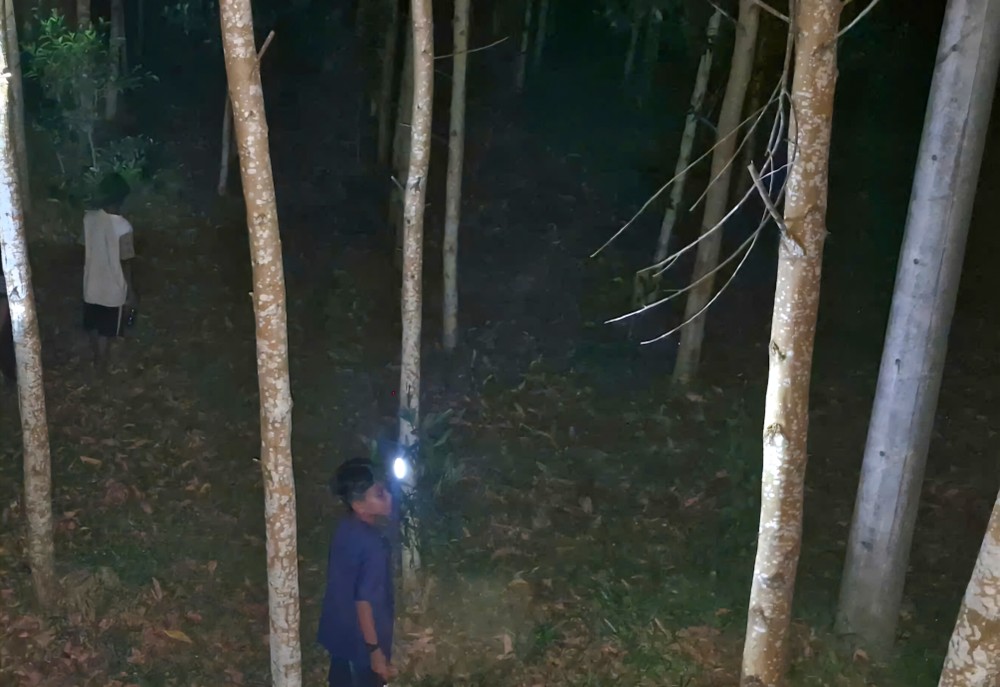
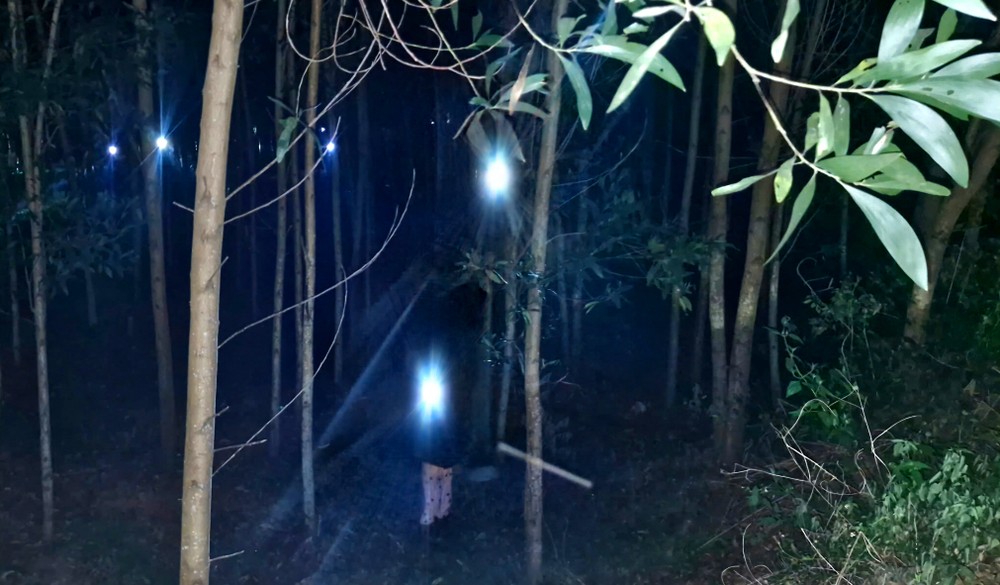
From dusk until dawn, groups of men, women, and even schoolchildren, equipped with flashlights and carrying buckets and containers, head deep into the forests in search of cicadas.
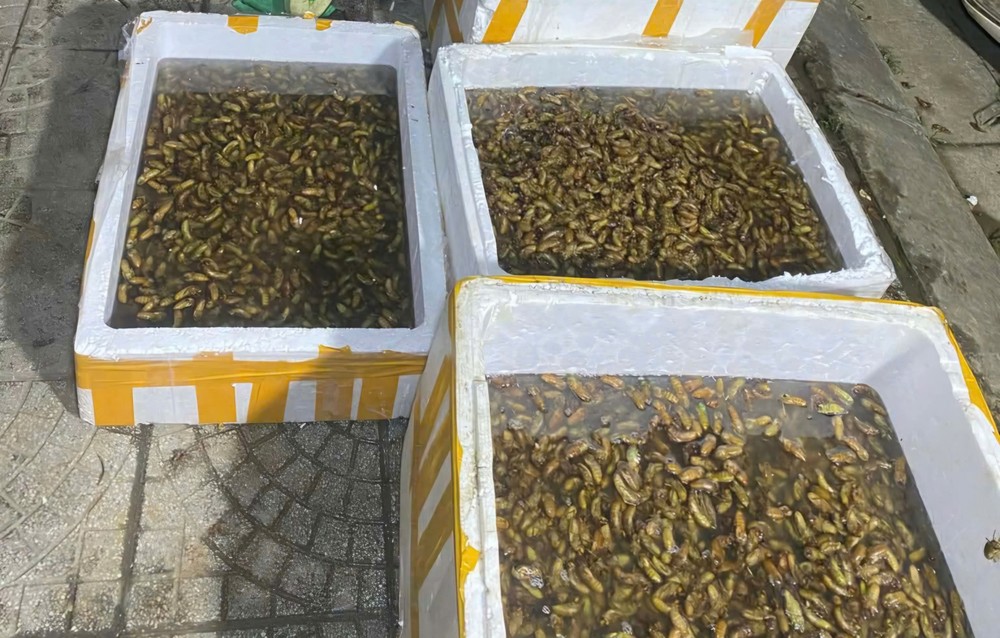
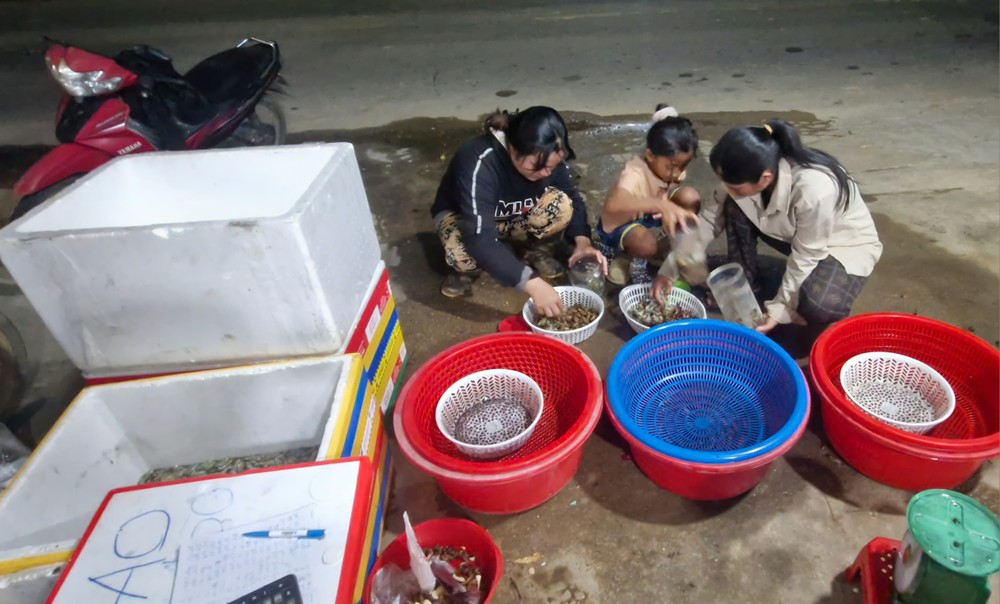
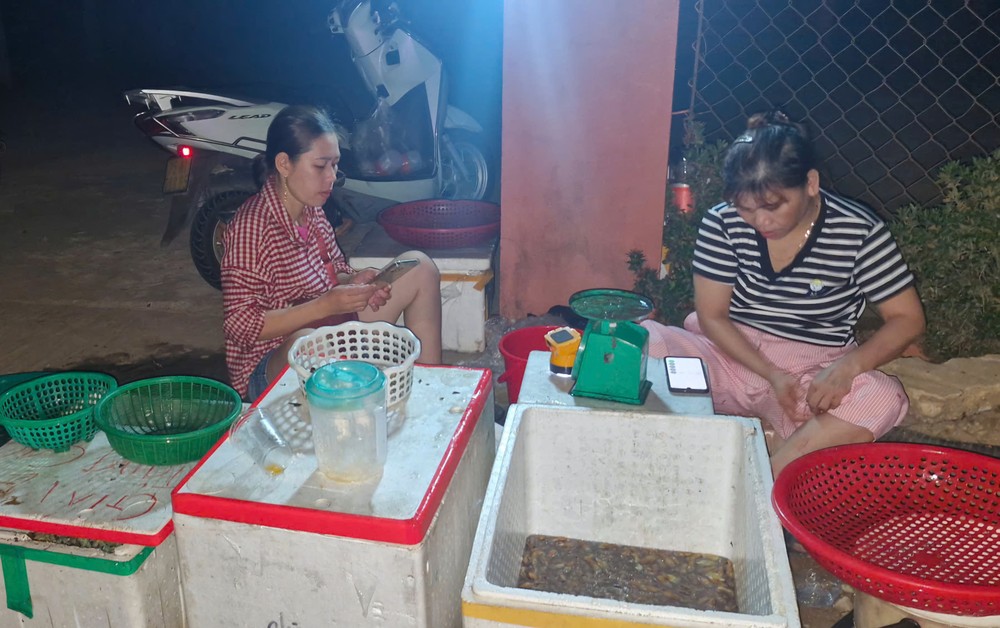
Ho Van Thanh, a resident of Long Quang commune, said that since traders began purchasing cicadas, locals have gone out to catch them every night. On average, each person collects between 1 and 2 kilograms per night, sometimes more.
“At first, traders bought cicadas at VND150,000–160,000 per kilogram. In recent days, prices have risen to VND250,000–270,000 per kilogram, making the activity even more vibrant,” Thanh said.
Preliminary statistics from local authorities show that residents in the three communes collectively catch between 1.5 and 2 tons of cicadas each night. At an average price of around VND250,000 per kilogram, the total nightly value is estimated at VND375–500 million.
Mr. Ho Sy Minh, Secretary of the Party Committee of Long Quang Commune, said the additional income is a positive sign, helping improve livelihoods, especially amid ongoing economic difficulties. However, authorities have warned of risks associated with entering forests at night, including getting lost, accidents, and attacks by insects or venomous snakes. Recently, a resident in Nam Dong Commune was bitten by a cobra while catching cicadas at night and is now in critical condition at Hue Central Hospital.
Regarding the issue, Mr. Ngo Van Minh, Deputy Head of the Nam Dong Forest Protection Unit, said cicada harvesting is currently seasonal and has not shown significant environmental impacts if not conducted destructively. However, authorities advise residents to harvest responsibly to avoid harming the natural ecosystem. In addition, the market outlet and end use of cicadas remain unclear, posing potential risks for future demand.
Residents noted that cicadas typically climb trees at night, making them easier to catch than during the day. Those familiar with the terrain can collect between 5 and 10 kilograms per night.