Facing the stringent requirements of the U.S. Marine Mammal Protection Act (MMPA), Vietnam’s red swimming crab fishery is under urgent pressure to adopt sustainable practices that meet international standards and secure export markets.
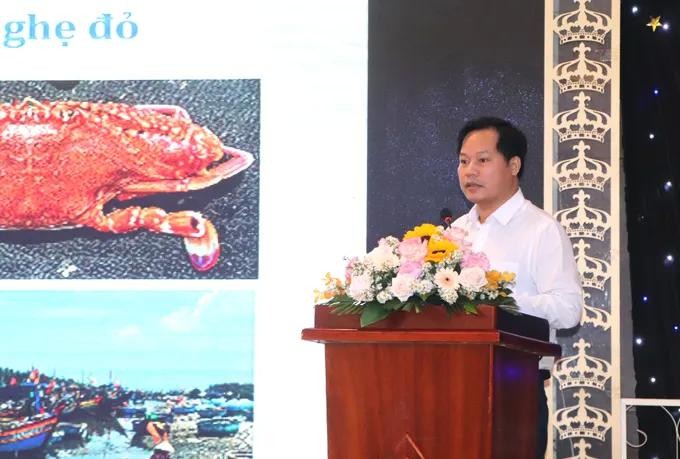
Today in Ho Chi Minh City’s Vung Tau Ward, the Vietnam Association of Seafood Exporters and Producers (VASEP) held a workshop on the U.S. Marine Mammal Protection Act (MMPA) and pathways to improve the sustainability of Vietnam’s red swimming crab fishery.
At the workshop, experts from VASEP, the Directorate of Fisheries, the Fisheries Resources Surveillance, and the Research Institute for Marine Fisheries provided updates on the MMPA and emphasized the need to build a sustainable crab fishery. They also introduced new circulars regulating the certification of seafood exported to the U.S. market, summarized preliminary assessments of the red crab fishery, and presented an action plan to improve red crab harvesting in the Southeast Sea region.
Le Tran Nguyen Hung, Deputy Director of the Directorate of Fisheries, expressed a desire to hear feedback from businesses, local authorities, and fishermen on certification regulations for seafood exports to the U.S. This, he said, is essential for meeting equivalence requirements under the MMPA. The workshop also discussed developing the red crab fishery in three key provinces and cities such as Dong Thap, Ho Chi Minh City, and Lam Dong where red crab harvesting is particularly strong.
Red swimming crab is considered a high-potential export product. To ensure sustainable development and long-term livelihoods for fishermen while conserving national marine resources, the fishery must pair harvesting with resource regeneration. At the same time, the industry must strive to obtain Marine Stewardship Council (MSC) certification for sustainable fishing and comply with equivalent U.S. standards to maintain and expand export markets.
The U.S. MMPA currently affects 135 countries and about 2,500 different fisheries. So far, 89 fisheries have achieved full equivalency and 34 partial equivalency. In Vietnam, 13 fisheries have been recognized as equivalent, while 12 remain non-equivalent. Without equivalency, exports from these fisheries to the U.S. will be suspended. Currently, 12 countries have failed to meet the MMPA’s standards and are unable to export to the United States.
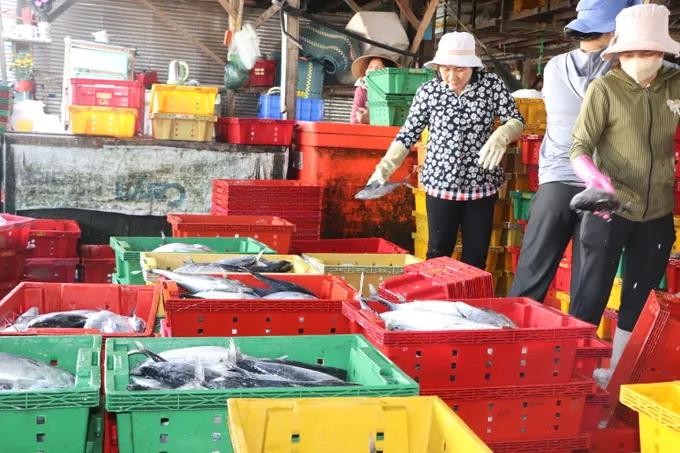
According to Deputy Director Le Tran Nguyen Hung, maintaining and promoting seafood exports requires a comprehensive set of solutions. These include issuing and amending legal documents to align with U.S. requirements, implementing marine fishing monitoring programs, and developing conservation plans to minimize unintentional impacts on marine mammals. In addition, further surveys and assessments of marine mammal populations and resources are needed to improve fisheries management.
Under U.S. law, exporting countries must adopt regulations and technical measures that prevent harm to marine mammals. In cases where marine mammals are accidentally caught, fisheries must follow standardized handling procedures to minimize injury and mortality.