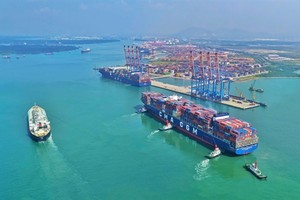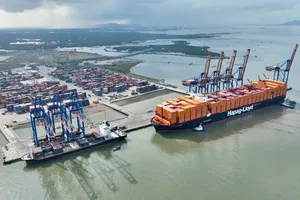
Vietnam's export turnover is projected to reach US$470 billion by the end of this year, an increase of approximately 16 percent compared to 2024. Entering 2026, with increasing market openness, Vietnamese exporters are warned to face risks due to their heavy reliance on a few key markets. Therefore, proactively exploring new markets is becoming an urgent direction.
Vietnam’s exports approach growth ceiling
According to the Ministry of Industry and Trade, in the first 11 months of 2025, the total import and export turnover of goods nationwide reached US$839.8 billion, of which exports reached US$430.2 billion, an increase of 16.1 percent compared to the same period last year. However, the market structure shows a very high level of concentration; for example, the United States accounts for approximately 32 percent of total export value, the EU 15 percent, China approximately 14 percent, ASEAN nearly 10 percent, and South Korea and Japan each about 6 percent. Thus, over 80 percent of Vietnam's export value depends on these six major markets.
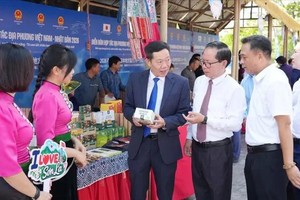
At the recent Vietnam Export Promotion Forum, Vu Ba Phu, Director of the Trade Promotion Department under the Ministry of Industry and Trade, stated that focusing on a few key markets helps businesses effectively exploit tariff preferences and free trade agreements, thereby rapidly increasing export value when major markets recover their purchasing power. However, the downside of this model is the increasing vulnerability to policy shocks.
According to Tran Phu Lu, Director of the Ho Chi Minh City Trade and Investment Promotion Center, most trade defense investigations, carbon tax pressures, labor and environmental requirements, and traceability requirements originate from the very markets that account for Vietnam's largest export share. When these markets simultaneously raise their standards, the growth potential for Vietnamese goods will narrow if businesses do not adapt quickly.
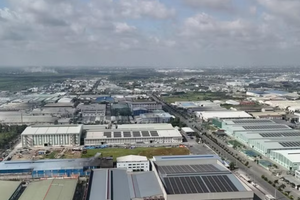
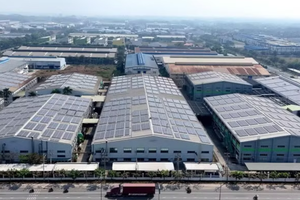
In reality, many export pillars are approaching their growth ceilings. In the industrial and electronics sector – computers, components, and machinery and equipment, which contributes over 30 percent of total export turnover. The United States, the EU, and South Korea remain the main markets. However, a major bottleneck is the low domestic value-added ratio, heavily reliant on imported components. When these markets tighten rules of origin, export advantages will diminish if the level of localization is not increased.
Similarly, for the textile and footwear group, which accounts for approximately 12 percent-13 percent of total export turnover, the United States still accounts for nearly 40 percent of the industry's total turnover, the EU about 15 percent, and Japan and South Korea each 8 percent - 9 percent.
According to Truong Van Cam, Vice President and General Secretary of the Vietnam Textile and Garment Association, the growth potential in the 2026 period no longer lies in expanding production, but in the ability to retain orders through green transformation, compliance with labor standards, and supply chain transparency. Businesses that are slow to transform risk losing market share even in traditional markets.
For the agricultural products, processed foods, and seafood group, export turnover has approached US$70 billion annually, accounting for about 16 percent of total turnover. China remains a large market, but the proportion of exports to the EU, Japan, and South Korea is increasing, reflecting a trend of shifting to markets with higher requirements but better added value.
At the same time, this is also the product group most directly and quickly affected by regulations on food safety, residue levels, and quarantine, leading to increasing pressure for compliance.
Vietnam boosts exports with parallel market development strategy
According to Tran Phu Lu, the current market development strategy needs to be implemented in two parallel directions, with different focuses for each market group. For traditional markets such as China, the EU, and the US, the goal is to increase market share by improving the quality of growth. The focus is on promoting deep processing, investing in research and development of new products, improving designs, and increasing added value.
Simultaneously, businesses are supported in meeting increasingly high standards of quality, traceability, green production, and deeper connections with international distribution systems, thereby strengthening the position of Vietnamese goods in established markets. Conversely, for new and potential markets, the prerequisite is the ability to meet market standards. Markets like Halal, India, or Africa only truly offer opportunities when businesses invest systematically in production processes, build their own production lines, and obtain mandatory certifications according to international practices.
Vo Tri Thanh, Director of the Institute for Brand and Competitive Strategy, emphasized that opening new markets is only viable when tied to a defined segment, the right product, appropriate distribution channels, and strict compliance with standards. He noted that such markets can serve as a “buffer zone,” easing reliance on traditional partners. Alongside direct expansion, Thanh highlighted indirect exports and cross-border e-commerce as crucial pathways to help Vietnamese businesses diversify and strengthen their global reach.