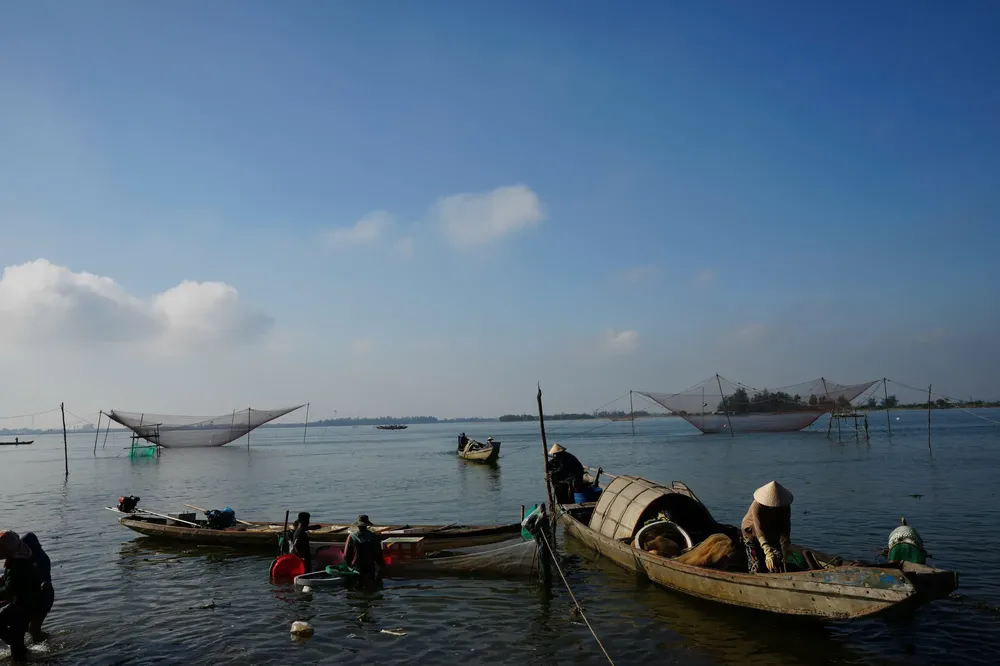
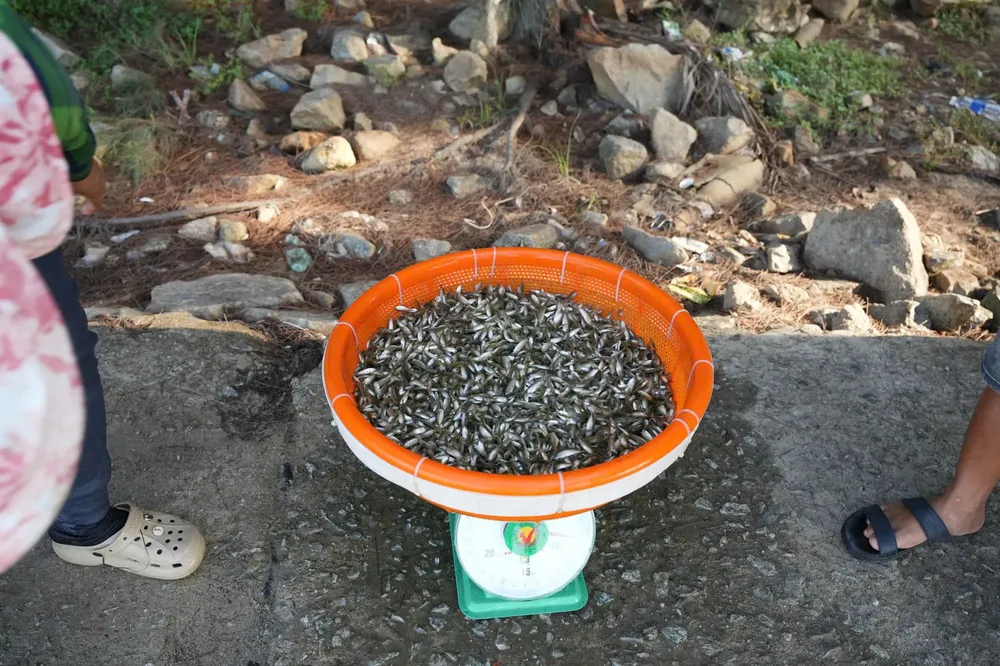
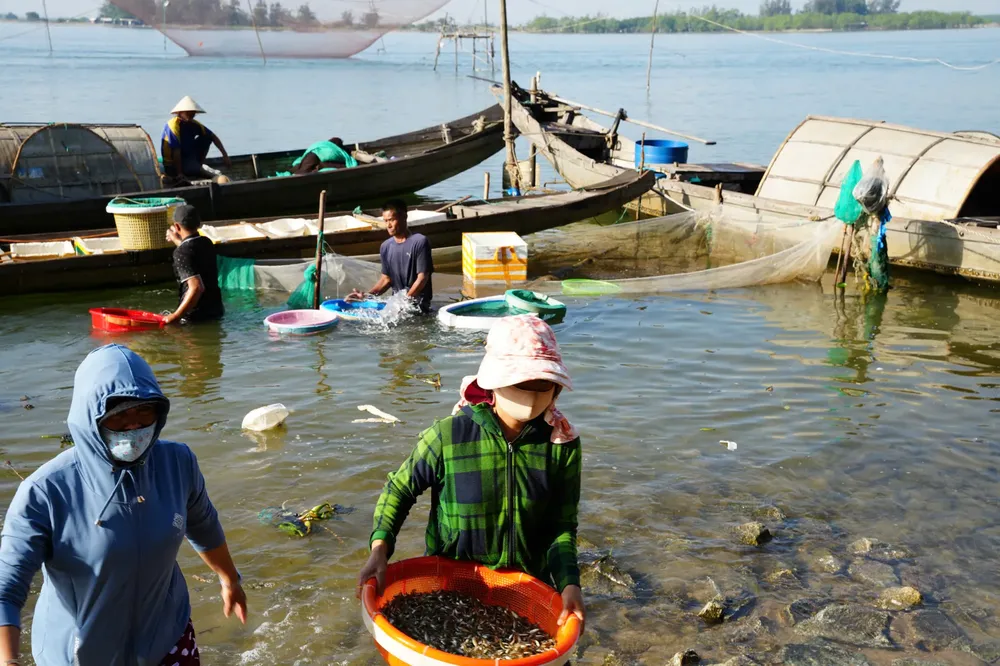
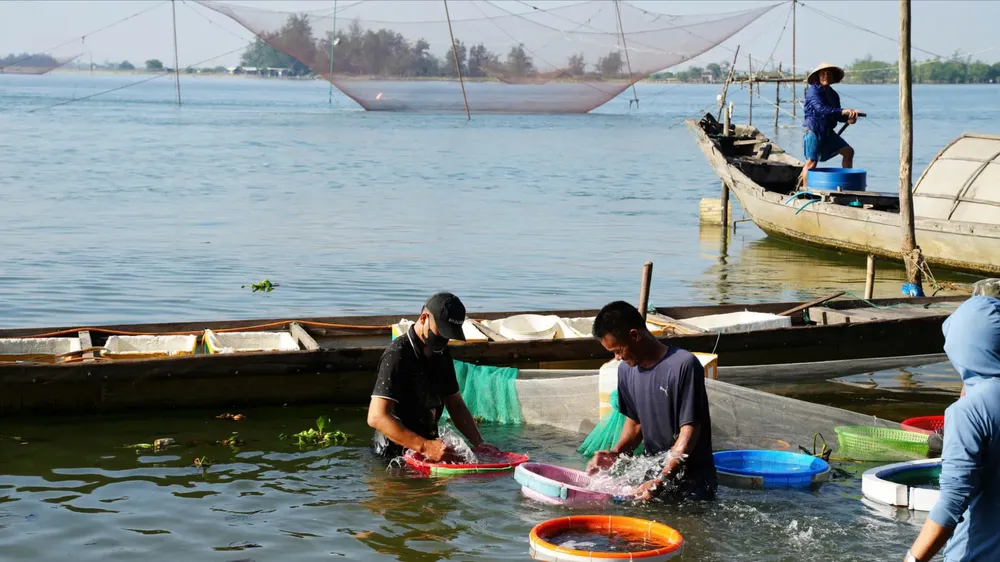
At the Thuan An estuary in Hue, fishermen wade along coastal concrete embankments with nets to catch juvenile spinefoot fish. Traders purchase live fingerlings directly on the shore for VND100,000 (US$3.8) per kilogram. They place the catch into specialized, aerated truck tanks for transport. These live fish serve as seed stock for aquaculture farms across the Tam Giang lagoon.
The fingerlings average 350 to 400 fish per kilogram when introduced to farms. After three months of cultivation, the fish reach commercial size at 20 to 30 fish per kilogram. Extending the farming period to seven or eight months yields larger fish weighing five to six per kilogram. These mature fish command market prices between VND100,000 and VND200,000 per kilogram.
The spinefoot fish is a brackish water specialty of the Tam Giang lagoon, highly favored by consumers in Hue and central Vietnam. The species features prominently in local cuisine, including fish salad, sour soup, and savory pancakes (banh xeo).
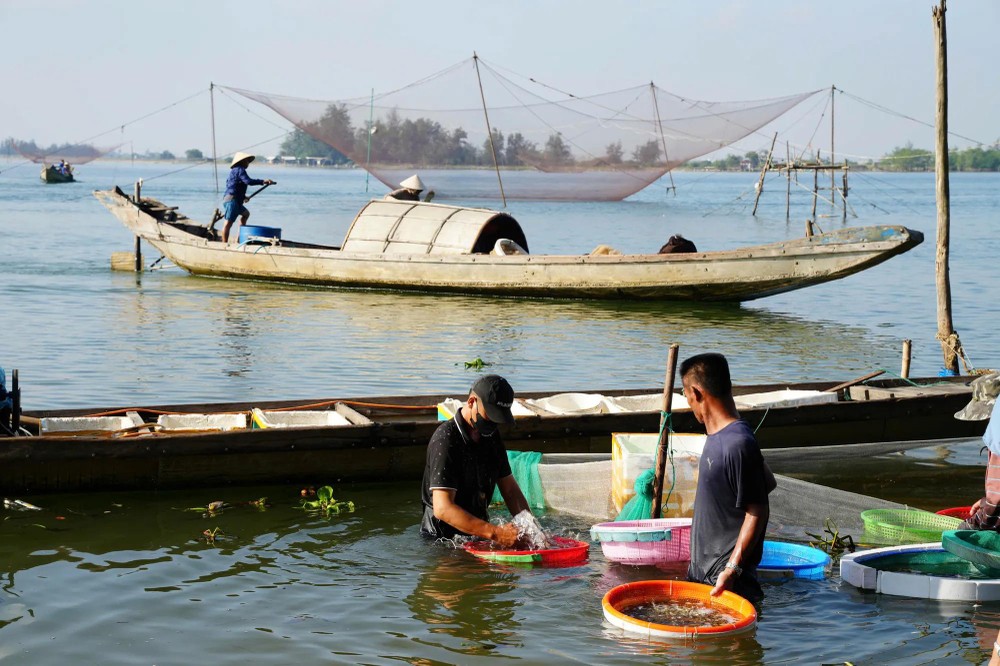
Local fisherman Tran Van Thanh noted that live spinefoot fish command high prices, prompting residents to net them quickly and transfer them to boat cages before heading ashore. Over a recent two-day period, fisherman Tran Van Thanh and his wife caught 15 to 30 kilograms of fish per night between midnight and 6:00 a.m., earning roughly VND2 million per shift. Some households secured larger catches, netting up to 100 kilograms of fish in a single night.
While live fish supply aquaculture farms, dead or weak specimens that cannot survive farming go toward making fermented fish paste (mam ca ro), a famous specialty of Hue. Traders buy these fish by the batch or at lower rates ranging from VND5,000 to VND10,000 per kilogram.
Experienced fishermen in Thuan An observe that spinefoot fish only migrate into the estuary when the water environment is clean and unpolluted. Consequently, the large influx of fish serves as a positive indicator for the ecological health of the Thuan An coastal area.