For Director Dang Tran Cuong of the Vietnam Cinema Department (under the Ministry of Culture, Sports, and Tourism), rushing to impose rigid AI quotas, whether 20 percent, 30 percent, or 50 percent, isn’t advisable right now since this technology seamlessly permeates numerous production stages. “The most viable path forward involves establishing robust transparency principles while determining the actual extent of human creative contribution,” he explained.
Regarding film festivals plus state awards, the department is researching a mandate requiring competing submissions to provide detailed declarations encompassing AI-assisted stages, specific generative tools utilized, alongside stringent commitments covering copyright, image, plus voice rights.
For individual prizes, the fundamental criterion dictates that evaluated outcomes must genuinely reflect the nominee’s substantive creative labor. The guiding perspective remains straightforward that officials shouldn’t shut doors on novel technologies, but these automated tools absolutely can’t erode fairness, integrity, plus intrinsic human value within the arts.
Dr Ho Khanh Van from HCMC University of Social Sciences and Humanities (Vietnam National University – Ho Chi Minh City) noted she perceives technology unlocking myriad opportunities for youth in cinematic creation. Digital tools, especially AI, make filmmaking far more accessible, comprehensively streamlining everything from brainstorming scripts to audiovisual processing. She remarked that this is a highly encouraging advantage, considering cinema remains inextricably intertwined with rapid technological innovation.
However, she frequently reminds students that technology should merely serve as a supplementary tool; it can’t ever replace a filmmaker’s distinct creative mindset. The paramount essence of any masterpiece remains its underlying narrative alongside unique perspectives. Even if a movie boasts visually stunning imagery plus cutting-edge techniques, it’ll struggle leaving a lasting mark without raw emotion. Ultimately, youth must proactively leverage algorithms, explicitly avoiding a precarious scenario where technology masters their creative voice plus pushes them into absolute dependency.
Dr Dang Vu Canh Linh, Deputy Director of the Institute for Cadre Training and Scientific Research, emphasized that easily generated products don’t inherently equate to true masterpieces. Cultural competency irrevocably demands profound knowledge, artistic thinking, plus constant responsibility to the public.
View counts alongside revenue strictly reflect fleeting attention; they don’t inherently prove cultural value. It’s crucial to rectify the toxic mindset chasing clicks through violent or vulgar content, essentially profiting at viewers’ expense. The fundamental solution remains ramping up constructive AI creation training intricately linked with ethics and social responsibility.
Deputy Director Mai Nhu Ngoc of TV360 (Viettel Telecom) pointed out cinematic works possess three authentic layers, namely core ideas, storytelling methods, and personal imprints derived from lived experiences.
AI is exceptionally adept at mimicking structural frameworks, camera angles, or narrative pacing, but it merely borrows the underlying ideas. The fewer human imprints a film contains, the harder securing exclusive legal protection becomes, which constitutes the distribution industry’s livelihood. Massive libraries overflowing with polished AI products devoid of genuine authorship are legally fragile assets, highly susceptible to plagiarism. AI might pave faster paths, but shouldn’t do humans’ thinking.
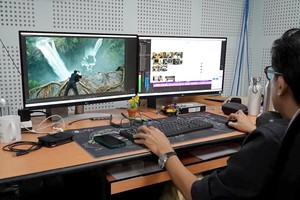
For Meritorious Artist Trinh Quang Tung, Deputy General Director in charge of the National Documentary and Scientific Film Studio, AI has reportedly evolved into an indispensable support tool within modern production pipelines, seamlessly assisting everything from initial scriptwriting to final image generation.
The current trend reveals blurring genre boundaries, where documentaries seamlessly merge with feature films. This rapid evolution unlocks myriad novel choices regarding materials and expressive methods. Nevertheless, no matter how potent AI becomes, it remains merely a tool. Filmmakers must unequivocally retain final decision-making authority, proactively preventing technology from hijacking their creative mindset.
Writer Pham Ha Thu highlighted the pressing need for empathy and psychological breathing room. Having watched several Chinese AI short films, she noted she’d heavily restrict her teenager’s exposure to such content.
She explained an outright ban probably wouldn’t work since it’s a massive trend among the youth. In her view, numerous AI shorts harbor toxic content profoundly distorting cognitive awareness, leading young minds astray. She admitted experimenting with AI episodes herself, harboring staunch ambitions to eventually produce high-quality AI shorts.
Meritorious Artist Ngoc Thu warned that while AI unlocks unprecedented possibilities, it concurrently threatens actors’ distinct identities. When technology arbitrarily utilizes faces to mass-produce characters identical to real humans, it irrevocably destroys inherent uniqueness.
Cinema simply can’t rely solely on flawless, algorithm-generated faces. A character’s true vitality stems from raw emotion, tangible real-life experiences, plus artists wholly dedicating themselves. Technology can flawlessly simulate appearances, but if subjected to rampant mass cloning, an actor’s unique, irreplaceable creative footprint risks being disastrously diluted.
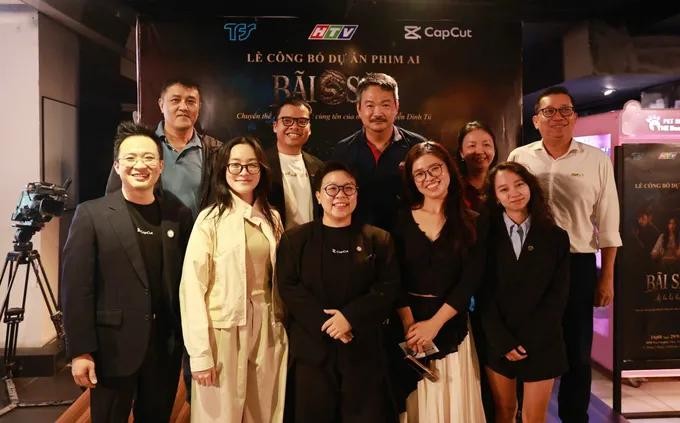
For director Hong Phuc of the AI film “Bai San” (The Hunting Ground), this technology amplifies the director’s orienting role. AI reportedly expands creative horizons while fundamentally altering how pieces take shape.
Previously, he’d conceptualize visuals only to scrap them early because stringent budget constraints didn’t allow for them. AI pushes those boundaries incredibly far. A director can now experiment extensively prior to formal production, conjuring scenes previously reserved for massive blockbusters.
However, he doesn’t believe this diminishes the director’s role. When generating imagery becomes remarkably effortless, the power of selection morphs into something critical. With AI, the core dilemma shifts to asking why that image must be created, which truly embodies a director’s core artistic responsibility today.