Foreign direct investment (FDI) is gaining momentum in Vietnam in early 2026, not only expanding in scale but also shifting toward high-tech, data, and green manufacturing sectors. That presents both opportunities and challenges for improving investment quality.
From the beginning of 2026, FDI inflows into Vietnam have shown strong growth and a clear shift toward high-value industries. This transition opens up opportunities for the country to enhance its position in the global value chain, while also requiring more selective and higher-quality investment attraction.
According to Mr. Suan Teck Kin, Head of Global Economics & Market Research at UOB Group, Vietnam’s economy maintained positive momentum in the first quarter of 2026, with GDP growth reaching 7.83 percent. Notably, total registered FDI hit approximately US$15.2 billion, up 42.9 percent year-on-year, while disbursed capital reached US$5.41 billion, the highest first-quarter figure in the past five years.
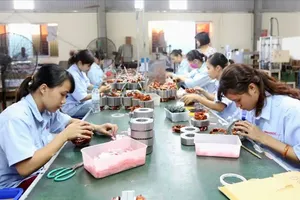
The processing and manufacturing sector accounted for more than 70 percent of total investment, highlighting Vietnam’s strong appeal amid global supply chain shifts.
Several large-scale projects have been launched early in the year, including a US$2.1 billion artificial intelligence (AI) data center in Tan Phu Trung Industrial Park. The project is a joint venture between Accelerated Infrastructure Capital (AIC), Kinh Bac City Development Holding Corporation, and international partners, with construction expected to begin this month.
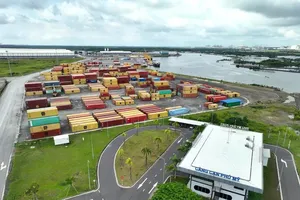
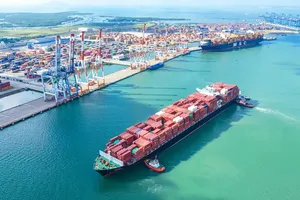
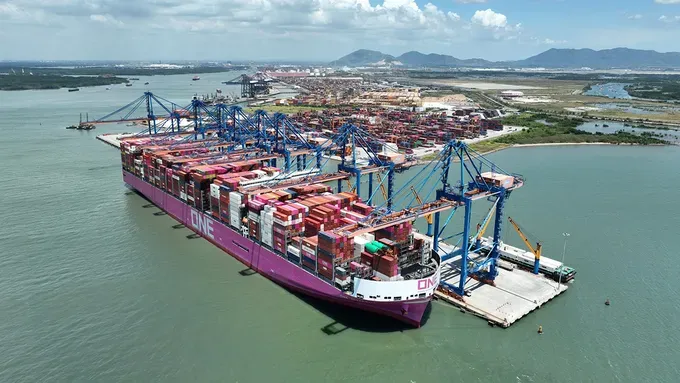
Meanwhile, Mr. Andy Reed, Head of global trade at the Port of Portland, said that there is a proposal to collaborate with Saigon Newport Corporation to establish a direct shipping route between Portland Port and the Cai Mep–Thi Vai port cluster. This initiative aims to create a stable trans-Pacific logistics corridor, enabling Vietnamese goods to better access markets in the United States and Canada.
Multinational corporations are also increasing investments in greener production. A US$200 million factory by Acecook Vietnam in Vinh Long Province, with an annual capacity of 81,000 tons, is designed to reduce emissions by an estimated 75,000 tons of CO₂ per year. Coca-Cola continues to expand modern, integrated production complexes to optimize supply chains and improve operational efficiency.
According to Mr. Tran Phu Lu, Acting Director of the Investment and Trade Promotion Center of Ho Chi Minh City, continued expansion by major consumer groups signals Vietnam’s transition from a consumption market to a key manufacturing hub in the region.
Amid rising FDI inflows, Le Na, Head of FDI advisory at UOB Vietnam, noted that investors are increasingly concerned about macroeconomic stability, cost of capital, and access to finance. Maintaining system liquidity and stable interest and exchange rates will be critical to sustaining competitiveness.
In the long term, improving the quality of FDI must go hand in hand with strengthening the overall capacity of the economy. This includes developing strategic infrastructure, especially in logistics, energy, and digital systems, to support large-scale manufacturing and technology industries.
Administrative reforms are also essential, particularly efforts to reduce compliance costs and processing times, which are increasingly important to investors. Another key pillar is the development of a highly skilled workforce aligned with the needs of advanced sectors such as semiconductors, AI, and modern logistics. These factors are crucial for shifting from quantity-driven to quality-driven FDI and enhancing value-added output.
According to Dr. Can Van Luc, reinforcing partnerships between foreign and domestic enterprises will be essential. The formation of industry clusters and domestic supply chains will allow Vietnamese firms to participate more deeply in global production networks rather than remaining limited to outsourcing roles. At the same time, prioritizing green and sustainable investment aligned with ESG standards will help Vietnam capture future capital flows.
Mr. Gregory Harris, Head of Commercial Section at the U.S. Consulate General in Ho Chi Minh City, said that the United States currently has more than 900 investment projects in the city, totaling about US$7.6 billion, and over 1,500 projects nationwide with registered capital exceeding US$12.5 billion. Vietnam’s exports to the U.S. reached over US$151.8 billion in 2025, with US$23.84 billion recorded in the first two months of 2026, up 21.9 percent year-on-year.
These figures underscore Vietnam’s position as one of the most dynamic economies in the region. Rising trade flows are driving strong demand for logistics and supply chain infrastructure, creating further opportunities for U.S. businesses to expand their role as long-term investors in Vietnam.