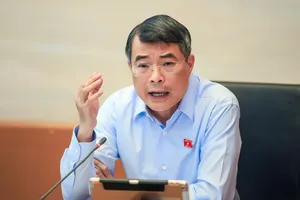
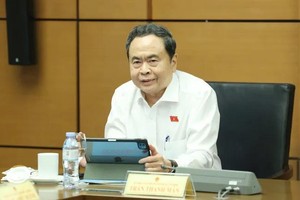
It also reduces reliance on traditional markets and adopts a more proactive stance in the face of global trade fluctuations, Mr. Nguyen Ngoc Hoa, Chairman of the Ho Chi Minh City Business Association, said at a seminar to analyze opportunities and challenges for Vietnamese exporters in markets under the Regional Comprehensive Economic Partnership (RCEP) and the European Union (EU) held by the Ministry of Industry and Trade on November 11.
The event is part of a series of initiatives aimed at equipping Vietnamese businesses to seize opportunities for expanding their export markets in the near future.
Repositioning the global trade landscape
At the seminar, Dr. Bui Duy Linh from the Institute of International Business Economics at Hanoi Foreign Trade University said that the Regional Comprehensive Economic Partnership (RCEP) is the world’s largest free trade agreement, bringing together the 10 ASEAN (Association of Southeast Asian Nations) nations along with five partners, including China, Japan, South Korea, Australia, and New Zealand. The bloc accounts for nearly 30 percent of global GDP and one-third of the world’s population, with total intra-regional trade exceeding US$12.7 trillion annually. Within this network, Vietnam is regarded as Southeast Asia’s most dynamic link.
The RCEP market currently accounts for approximately 45 percent of Vietnam’s total export turnover, equivalent to US$175 billion in 2024. In the first ten months of this year alone, exports to the bloc are estimated at US$172–180 billion, representing 44 percent–46 percent of the country’s total export value, underscoring RCEP’s continued role as a key market for Vietnamese goods.
Meanwhile, the European Union remains a “strategic arena” for high-value Vietnamese goods, accounting for more than 12 percent of the country’s total export turnover. In 2024, exports to the EU reached approximately US$48 billion, marking an increase of over 10 percent compared to the previous year. In the first ten months of 2025 alone, exports are estimated at US$46.5–48.5 billion, equivalent to 12 percent–13 percent of total export turnover, further affirming the EU’s position as a key market for Vietnam.
These markets are offering significant advantages for manufacturers with regional supply chains. This is an opportune moment for Vietnamese businesses to strengthen intra-regional linkages. It also reduces reliance on traditional markets and adopts a more proactive stance in the face of global trade fluctuations. Mr. Nguyen Ngoc Hoa, Chairman of the Ho Chi Minh City Business Association, said
Reading the market
However, discussions at the seminar highlighted that businesses need to clearly recognize the technical barriers imposed by various markets in order to facilitate future export activities.
For instance, tariff reductions among RCEP countries are not uniform. Some sectors benefit from immediate cuts, while others may have to wait 5–10 years, or even up to 20 years. The EU, meanwhile, maintains the strictest requirements on traceability, carbon emissions, and environmental, social, and governance (ESG) standards, compelling Vietnamese companies to make more strategic investments if they aim to sustain long-term orders.
Businesses need to have a clear understanding of the tariff reduction roadmap and the rules of origin to avoid the misconception that mere participation automatically grants a 90 percent tax exemption. Equally important is a robust risk management framework, especially for small and medium-sized enterprises. Without such a foundation, critical processes, such as partner credit assessments, international payment capabilities, and environmental compliance, can easily break down, leading to disruptions in export shipments,” Chairman of the Ho Chi Minh City Business Association, Nguyen Ngoc Hoa, emphasized.
On the other hand, these markets offer advantages through the application of the cumulation mechanism in rules of origin. Under this system, goods produced from materials sourced within member countries are recognized as originating within the bloc. This presents significant opportunities for Vietnamese businesses to restructure their supply chains and reduce input import costs.
Mr. Trinh Tien Dung, Chairman of the Board of Directors of Dai Dung Corporation, emphasized the need to establish alliances for localization to share data, technology, and standards. Strengthening domestic supply chains would reduce reliance on imports, mitigate the risk of supply disruptions, and enhance the capacity to fulfill export orders.
According to Mr. Nguyen Quoc Khanh, Chairman of the Board of Directors of AA Corporation, green transition and digitalization are mandatory conditions for retaining orders in the EU and RCEP markets. Companies must standardize everything from materials and labor to green production processes. Failure to meet low-emission standards, use of recycled materials, and adoption of clean energy could result in products being excluded from supply chains.
Therefore, businesses need to gain early and effective access to low-cost capital from both domestic and international financial institutions. In reality, interest rates for medium-term loans to support green production transformation remain relatively high, around 5 percent–7 percent, compared with 3 percent–5 percent in other countries in the region, a disadvantage that Vietnamese enterprises currently face.
Leaders of the Ministry of Industry and Trade stated that the ministry has instructed Vietnam’s trade offices abroad to regularly update legal and policy developments and provide timely risk alerts to domestic businesses, enabling them to act more proactively in their commercial activities.
In recent times, through partnerships with e-commerce platforms, Vietnamese exporters have expanded their market share not only in familiar markets such as the U.S., China, the EU, Japan, and South Korea, but have also begun to penetrate ASEAN, the Middle East, Russia, and Australia, regions considered to have significant growth potential. Deputy Director of the Center for E-commerce and Digital Technology Development (eComDX) that operates under the Ministry of Industry and Trade's Vietnam E-commerce and Digital Economy Agency, Bui Huy Hoang added.
According to Mr. Vu Ba Phu, Director General of the Vietnam Trade Promotion Agency under the Ministry of Industry and Trade, the ministry is accelerating the development of the GoGlobal portal and an intelligent e-commerce data ecosystem. These tools will enable businesses to assess risk, rank markets, and connect with partners in real time. Greater transparency builds trust, opens up more opportunities, and allows Vietnamese enterprises to turn risks into competitive advantages.