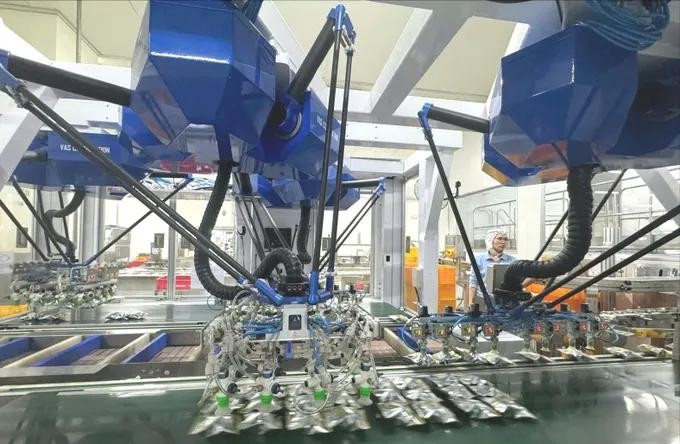
Smart factory models are fast becoming a defining trend in global manufacturing, and Vietnam is keeping pace. A growing number of enterprises are embracing automation and artificial intelligence (AI) to cut costs, boost productivity, and ensure operational stability in an increasingly competitive market.
Technology driving transformation
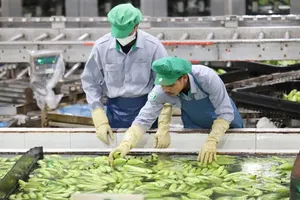
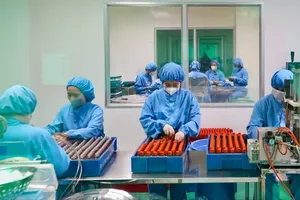
At Orion Vina Food Company, digital transformation is reshaping the production line. Deputy Director General Jeong Jong Yeon said the company launched a smart factory project at its facility in My Phuoc 2 Industrial Park in Ben Cat Ward, applying green and intelligent manufacturing principles. The initiative, divided into three phases from April 2024 to March 2026, includes the development of an Intelligent Operation Center (IOC), robotics-based automation, and Industrial IoT systems.
“After about eight months of implementing phase one, the project has brought tangible benefits from higher operational efficiency and reduced costs to a more sustainable production model,” Mr. Jeong said. According to him, Orion Vina’s production capacity has risen by 30 percent, downtime has dropped by 68 percent, and inspection costs have been cut in half. The company estimates a US$19 million profit in the initial implementation phase alone, driven by real-time monitoring, predictive maintenance, and process optimization.
Automation in action
Automation is also transforming the operations of C.P. Vietnam Livestock Corporation. Senior Vice General Director Vu Anh Tuan shared that the company’s Hai Duong plant, one of its largest animal feed facilities in Northern Vietnam, now runs a fully automated production line. From grinding and mixing to packaging and robotic loading, every process is digitally controlled through a central system.
This high-tech setup enables stable output of 800–850 tons per shift, minimizes manual labor, and enhances both safety and efficiency. The facility also features a Feed Technology laboratory and a comprehensive quality control system to ensure consistency across every batch.
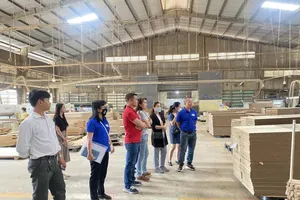
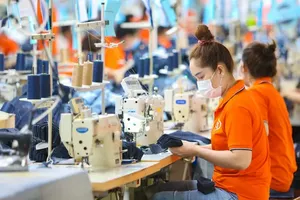
At Viet Thang Jean Company, Chairman Pham Van Viet highlighted how smart manufacturing supports sustainability and flexibility. Speaking at the Smart Factory 2025 Conference in Ho Chi Minh City, he said the company has integrated technology throughout its supply chain from raw materials to distribution using 3D design, automated cutting, and smart warehousing. These advancements help Viet Thang Jean meet diverse order sizes while adhering to strict European emission standards.
AI adoption still faces barriers
Despite promising progress, Vietnam’s overall adoption of AI in manufacturing remains modest. Surveys show only 18 percent of Vietnamese enterprises are using AI, compared with 25 percent in Thailand and 40 percent in Singapore. Experts point to data infrastructure and human resources as the main bottlenecks.
Associate Professor Ali Al-Dulaimi, Head of the Computer Science and Technology Department at the British University Vietnam, emphasized the importance of building robust databases to unlock AI’s potential in production.
For smaller firms, Duong Hong Loan, Senior Strategy Advisor at the British University Vietnam, recommends focusing on cost-effective AI applications such as chatbots for customer service, inventory management, and demand forecasting. Larger enterprises, she noted, should move toward comprehensive automation, intelligent quality control, and real-time data management to create a data-driven governance model.
Beyond technical challenges, cultural and psychological barriers persist. Many workers still fear that AI will replace them entirely. Experts argue that this mindset must change: AI will not replace humans but those who can use AI effectively will replace those who can't.
As Vietnam’s manufacturing sector advances toward Industry 4.0, experts agree that human resource development is the decisive factor. Equipping workers with digital and analytical skills will determine how successfully the country can harness AI to power its next phase of industrial growth.