Despite the ongoing debates over criteria and weighting, the very presence of university rankings has become an inevitable trend. Many countries have reportedly poured massive investments into key projects aimed at propelling their higher education institutions (HEIs) into the top tiers of these global tables.
In Vietnam, Resolution No. 71-NQ/TW, issued on August 22, 2025 by the Politburo on breakthrough development in education and training, has set a clear goal of elevating HEIs to truly become national and regional centers for research, innovation, and startups:
- By 2030: at least 8 HEIs in the top 200 in Asia and at least 1 in the top 100 globally in certain fields according to prestigious international rankings;
- By 2035: at least 2 HEIs in the top 100 globally;
- By 2045: at least 5 HEIs in the top 100 globally.
According to Assoc Prof Dr Tran Thi Hong Lien, Dean of Business Administration in the University of Economics and Law (Vietnam National University – Ho Chi Minh City), the goals are crystal clear, serving as a “guiding orientation” for top universities.
“This is a technical task and is entirely achievable with professional governance,” she argued. “However, ranking shouldn’t be the final goal. It should only be a means to help Vietnamese universities reach a world-class standard.”
Director Nguyen Quoc Chinh of the VNU-HCM Center for Educational Testing and Quality Assessment, explained that current rankings assess a university’s three crucial missions of training, scientific research, and community service. Data is gathered from multiple sources: provided by the HEI, extracted from third parties (especially research data), or pulled from national data and the HEI’s own website.
According to Dr Le Van Ut, Head of the Research Group on Scientometrics and Research Management Policy at Van Lang University, rankings like the “SATUQU” group have been a hot topic for 15 years. Vietnam has also established two domestic rankings, VNUR and SARAP, to localize evaluation criteria.
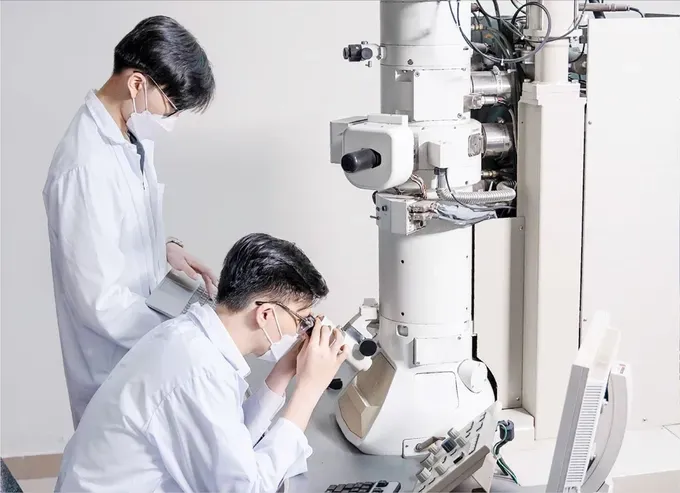
Many HEIs have proactively established development strategies based on ranking goals. This has yielded significant growth in the 2025 and 2026 QS (Quacquarelli Symonds) and THE (Times Higher Education) lists, a major increase from just a few universities in 2017-2018.
Reality shows that many HEIs have proactively established development strategies based on ranking goals and have achieved recognized results. If in 2017-2018, Vietnam only had a few universities on the QS and THE lists, the numbers for 2025 and 2026 show significant growth.
Specifically, on the THE ranking, Vietnam has 9 HEIs ranked in Asia (one in the top 200, four in the top 500). On its global list, Vietnam has 11 institutions, four of which are in the top 1,000. On the QS ranking, 25 HEIs are ranked in Asia (three in the top 200, 13 in the top 500). On its global list, 10 HEIs are ranked (one in the top 500, four in the top 1,000).
As of today, many Vietnamese HEIs are present on the regional and world university map. According to education experts, this is a positive signal. “However,” they caution, “the goal is not just to be honored or to chase achievements. What’s most important is the quality of the training.”
Assoc Prof Dr Phan Tai Huan, Vice President of HCMC University of Agriculture and Forestry stated that Vietnamese universities need to participate in rankings, but without a strategy, they risk falling into the “achievement trap”, chasing formalities or beautifying the data, which obscures the real value. A clear strategy is needed here as rankings should be a “mirror” to reflect quality, not the destination. They can then become a lever for international integration.
Agreeing with that, Assoc Prof Dr Dam Sao Mai, Vice President of HCMC University of Industry stressed that the 25 Vietnamese universities on the QS Asia 2026 list is a record, but it also creates immense pressure. Staying out of the game means accepting a hit to the ability to attract international students and research projects.
Nevertheless, joining the wrong way by blindly chasing indexes carries the risk of depleting resources and veering off course. Many experts have warned that global rankings are often biased toward research, potentially ignoring the teaching or community service strengths of many schools. So, the question is how to participate effectively. The sustainable path is to build from the root of quality, using international accreditation as the foundation.
Dr Hoang Ngoc Vinh, Former Director of the Department of Professional Education under the Ministry of Education and Training, commented that ranking is a global trend to know where a university stands. But only seeing this ranking as glory is very dangerous as it’s easy to just chase after formalities.
Famous scholars like Ellen Hazelkorn and Philip Altbach have criticized international rankings because they are heavily biased toward international, English-language publications, while ignoring the soul of higher education, meaning its mission to serve society, train a workforce, and contribute to the community.
For Vietnam, quality and real-world effectiveness must be put first. If the training is good, graduates work effectively, companies want them, and society recognizes them just like the old saying “good wine needs no bush”. Participating in rankings is not a “beauty contest.” A strong university must be one that has the capacity to help solve the nation’s problems.