Addressing the needs of the metropolis of over 15 million people, the Vice Chairman emphasized that the department is vital to achieving the city's long-term goal of improving public health and wellness.
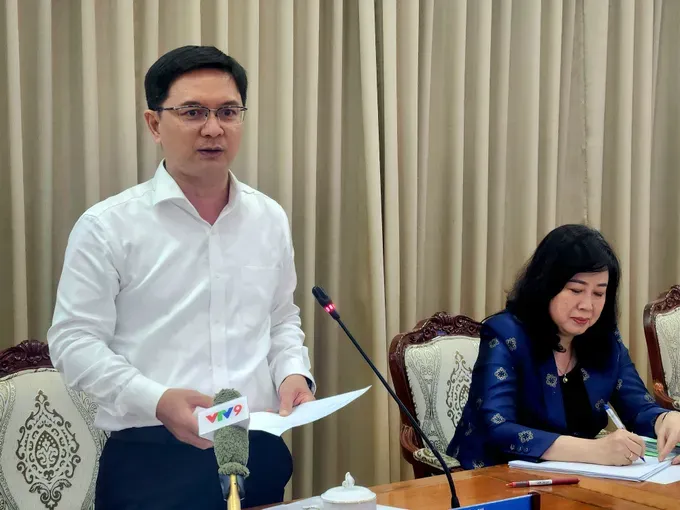
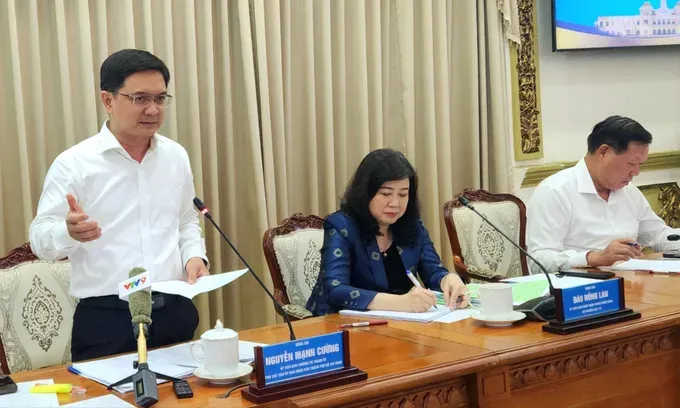
A high-level delegation from the Ministry of Health, led by Minister Dao Hong Lan, conducted a supervisory visit on Thursday to evaluate Ho Chi Minh City's food safety management model. The working session was attended by Vice Chairman of the Ho Chi Minh City People’s Committee, Nguyen Manh Cuong.
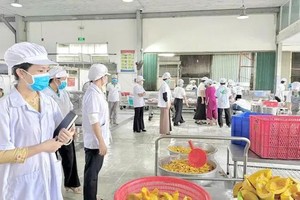
Addressing the delegation, Director of the Ho Chi Minh City Department of Food Safety, Pham Khanh Phong Lan, reported that the metropolis currently manages over 30,000 food production and business establishments. These entities serve the diverse consumption needs of a population exceeding 15 million people.
The HCMC Department of Food Safety stands as the first and only centralized, single-agency model for food safety management in the country, established under the National Assembly’s Resolution 98/2023/QH15 on pilot specialized mechanisms for the city’s development.
Since its inception—evolving from the former Food Safety Management Board—the Department has successfully standardized licensing and evaluation protocols. This streamlined approach has significantly reduced administrative hurdles for businesses and residents alike. Furthermore, the model has catalyzed a fundamental shift in state management, ensuring a unified, professional, and sustainable framework that addresses the city’s complex practical needs while safeguarding public health.
The Ho Chi Minh City Department of Food Safety has remained steadfast in its dual-action motto: "Promoting Clean Food, Combating Tainted Goods." The department has prioritized public communication and awareness campaigns as frontline tools to shift consumer behavior and proactively prevent foodborne illnesses.
A key highlight of the city’s success is the deployment of specialized Food Safety Inspection Teams stationed directly within localities and major wholesale markets. Working in close coordination with local authorities, these teams have significantly bolstered oversight at the grassroots level.
However, food safety management activities in Ho Chi Minh City continue to face challenges stemming from inconsistencies among the legal framework, human resources, and infrastructure.
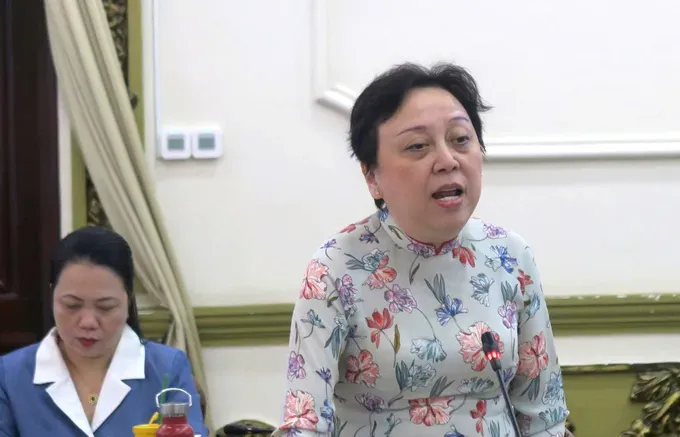
The Department of Food Safety is currently grappling with critical staffing shortages. At the grassroots level—specifically in wards and communes—the number of dedicated food safety officers remains thin, with many lacking the necessary specialized skills and field experience. Furthermore, the efficacy of unscheduled inspections to detect violations is often hampered by existing procedural bottlenecks, preventing these oversight measures from reaching their full potential.
Speaking at the working session, Nguyen Manh Cuong underscored that the Department of Food Safety is a highly necessary model for a major urban center like Ho Chi Minh City, contributing to the goal of increasingly improving public health care.
From the pilot phase of the Food Safety Management Board to the establishment of the Department of Food Safety, the agency has continuously operated while drawing lessons and refining its model under considerable pressure.
Drawing on its practical experience, Ho Chi Minh City proposed the establishment of a central food safety management body under a line ministry, alongside the creation of Departments of Food Safety at the local level, in order to meet state management requirements in inspection activities and strengthen law enforcement by relevant ministries and sectors. At the same time, food safety management should be implemented along the product value chain.
He also recommended that, as the Ministry of Health of Vietnam develops a scheme for a unified food safety management model, appropriate instruments should be designed in alignment with the functions and responsibilities of two-tier local administrations.
The city stands ready to contribute, exchange, and share practical experience with the Ministry of Health to develop and refine the most effective food safety management model, he affirmed.

In her concluding remarks, Minister of Health Dao Hong Lan highly appreciated the recent performance of the Department of Food Safety in Ho Chi Minh City. From the pilot model of the Food Safety Management Board to the establishment of the Department, the city has accumulated substantial practical experience, contributing to the formulation of policies aimed at refining the state management apparatus for food safety.
The working delegation acknowledged the city’s proposals and recommendations and will continue to study and draw on international experience to develop a plan for a unified food safety management model with a single focal point from the central to local levels.