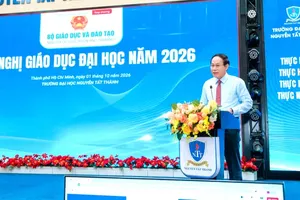
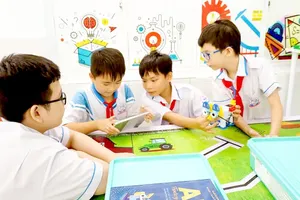
The Department of Education and Training in Ho Chi Minh City organized training sessions on August 3 and 4 to equip principals and subject leaders with skills to apply artificial intelligence (AI) in school management and teaching, part of efforts to drive digital transformation and improve education quality in the new academic year.
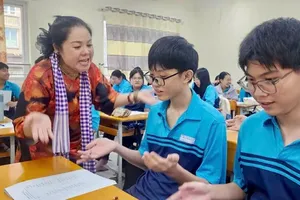
Teacher La Tran Huyen Dieu at Au Lac Secondary School in Tan Son Nhat Ward said many teachers are concerned about how to check the percent of AI-generated content in student presentations and learning products. While free AI tools offer convenience, they also fragment learning data due to a lack of integration across platforms.
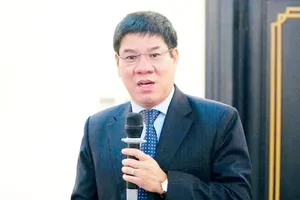
Lecturer Tran Trong Toan of the Vietnam Academy of Science and Technology noted that schools will soon change in scale and operation. Principals must shift from daily task management to process-based governance to ensure efficiency. Yet, data on learners remains scattered, reporting is still manual, and principals are slow to make management and professional decisions.
According to Cambridge Assessment expert Pham Hoang Uyen, to navigate the costs of AI tools, schools can leverage free feature sets while developing prompt libraries to streamline workflows. Rather than relying on paid subscriptions, administrators and educators should focus on maximizing available free access and proactively building a shared repository of effective prompts to boost operational efficiency.
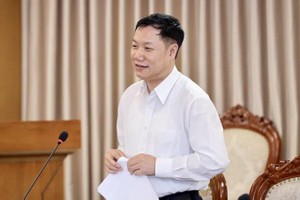
Deputy Director of Ho Chi Minh City’s Department of Education and Training Le Thuy My Chau praised schools’ proactive adoption of AI but stressed that training should be tiered according to teachers’ abilities, avoiding pressure on older staff. Younger teachers can support senior colleagues, spreading effective models from core teachers to the wider faculty. Principals must also change management thinking, moving from checking lesson plans to evaluating actual teaching quality and student engagement. For teachers, mastering technology is key.
Deputy Director Le Thuy My Chau emphasized that AI is a powerful tool for processing data, automating repetitive tasks, and optimizing lesson preparation time. However, it cannot replace the central role of the teacher.
Tran Chau Thanh Thien, Acting Head of the Artificial Intelligence Department at Nguyen Tat Thanh University, said distinguishing between human-made and AI-generated products is increasingly difficult as AI continuously learns and improves. Instead of focusing on the final product, teachers should evaluate the process, emphasizing critical thinking and accountability. Students must demonstrate how they created their work and even challenge AI-generated results to refine their learning products, showcasing creativity and reasoning.
For school governance, experts recommend that AI deployment be based on actual needs, strictly comply with information security and student data protection regulations, and uphold academic integrity.