The new school year begins in a month. School meals remain a key concern for parents, schools, and regulatory bodies, driven by increasingly high standards for food safety, nutrition, and quality. Schools and local authorities are implementing various solutions to ensure information transparency and improve the monitoring of individual meals.
QR codes streamline meal oversight
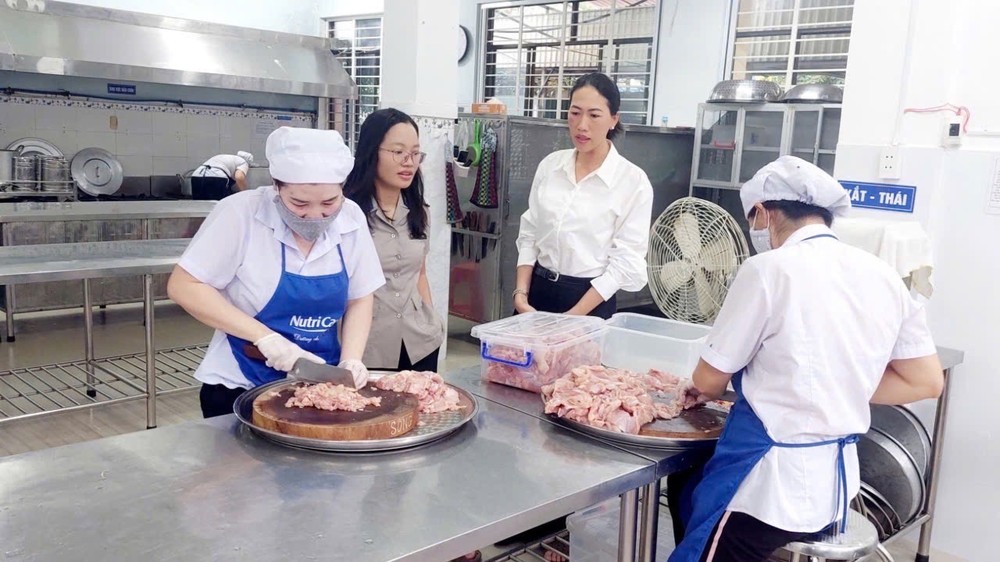
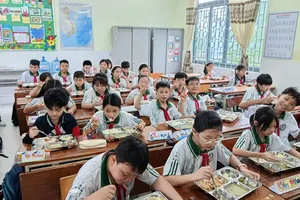
Previously, Phu My Kindergarten in Tan My Ward, Ho Chi Minh City, required five people to supervise the preparation of daily school meals. Teachers took turns arriving early to work with kitchen and medical staff, closely monitoring the entire process, from ingredient delivery and food preparation to the retention of food samples.
Over the past month, however, the school has been piloting the “Responsible Green Tick” model, under which each meal is assigned a QR code. The system enables the school to trace information on ingredient origins, transportation, distribution and preparation. With technology taking over much of the monitoring process, only two staff members are now needed to supervise meals, allowing teachers to devote more time to their teaching duties.
At Tan Phu Kindergarten, also in Tan My Ward, school meals are similarly linked to QR codes, enabling parents to track the food served to their children.
Tan My Ward is among the first localities in Ho Chi Minh City to introduce the “Responsible Green Tick” model in schools, beginning in July 2026.
Nguyen Truong Giang, Vice Chairman of the Tan My Ward People’s Committee, said the program is initially being piloted for three food categories: pork, poultry and eggs. The model is expected to be expanded to all public schools in the ward in early September, while other educational institutions will be encouraged to participate.
Technology-based school meal management is also gaining traction elsewhere. With 21 schools in the area, the People’s Committee of An Lac Ward is working with partners to develop software for managing school meals, covering both on-site kitchens and industrial catering services.
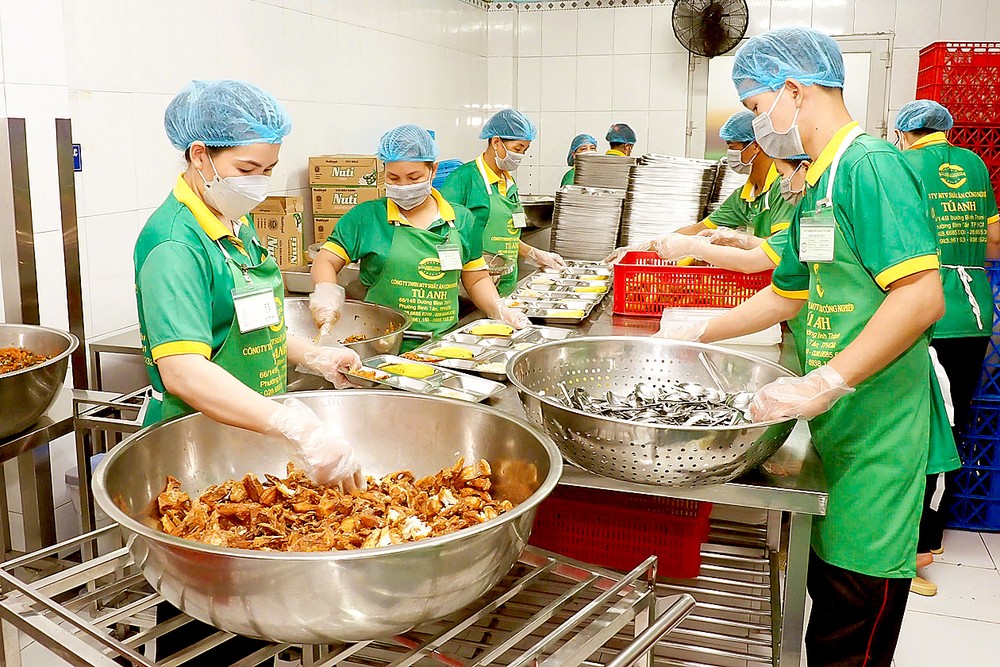
Growing demand for safer and more transparent meal supply chains is also prompting businesses to change their operating models. An industrial catering company based in Binh Tan Ward, which currently supplies about 50,000 meals a day to students and workers across the city, is gradually shifting from delivering pre-prepared meals to setting up on-site kitchens to reduce food safety risks during transportation.
The company is also using QR codes on meals to provide traceability for menus, ingredient origins, production times and retained food samples.
Training strengthens food safety defenses
Beyond food safety, parents are increasingly concerned about the nutritional value and quality of school meals.
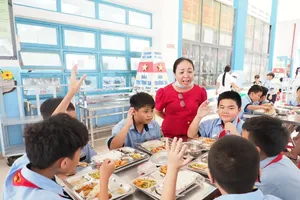
At Truc Xanh Kindergarten in Rach Dua Ward, Ho Chi Minh City, nutritional software is used to calculate and design menus for full-day care programs, ensuring an appropriate balance of energy and nutrients. Tran Thi Tuong Giao, the school’s principal, said the software allows for significantly more accurate calculations than manual methods.
The school maintains direct oversight of meal preparation while encouraging parents to participate in monitoring what their children eat. Meal quality is also evaluated based on the children’s responses, including their enthusiasm, enjoyment of the food and whether they finish their portions.
Despite these efforts, food safety concerns remain.
In April and May 2026, the Ho Chi Minh City Department of Food Safety established 20 inspection teams to assess compliance with food safety regulations at 317 facilities supplying meals or food products to schools. The teams ultimately inspected 220 facilities, achieving a completion rate of 69.4 percent.
Le Minh Hai, Deputy Director of the Department, said inspection efforts were complicated by the fact that many facilities had ceased operations, suspended their businesses, changed ownership, changed their legal status or could not be found at their registered addresses.
Of 24 food samples tested, two ice samples failed to meet microbiological safety standards.
According to officials from the Ho Chi Minh City Department of Food Safety, the main ingredients used in school meals, including meat, eggs and produce, are largely sourced from regulated suppliers and processed in accordance with established procedures. However, side dishes and ice remain potential sources of food safety risks.
In July 2026, the Department of Food Safety worked with the Department of Education and Training to organize training sessions on food safety and the prevention of food poisoning in schools.
The Department of Food Safety said teachers, medical staff and personnel directly responsible for student meals serve as the first line of defense against food-related incidents in schools. Their initiative and sense of responsibility are essential to maintaining a safe and healthy school environment and protecting students’ health.
Nguyen Minh Hung, Deputy Head of the Trade Management Division at the Ho Chi Minh City Department of Industry and Trade, announced plans to introduce the "Responsible Green Tick" initiative to approximately 100 schools.
The Department aims to implement the "Responsible Green Tick" program in schools, enabling parents to track information and trace the origins of daily food supplies.
Initiated by the Department, the program seeks to bring transparency to the supply chain through the use of traceability QR codes for vegetables, meat, fish, and school meals.
The program will undergo a pilot phase before expanding to around 100 schools in the initial stage.
Nguyen Truong Giang, Vice Chairman of the People's Committee of Tan My Ward (Ho Chi Minh City), emphasized that the core factor is the responsibility of each link in the chain.
The key lies in the commitment to responsibility and the transparency of the entire food supply chain.
Each link bears specific responsibilities: suppliers must guarantee the origin of ingredients; processors are accountable for meal quality; schools are responsible for selecting and supervising suppliers; and regulatory agencies handle inspections, support, and information disclosure.
Parents can also actively monitor and access information regarding their children's meals.