Consequently, the timely development of the Vung Tau International Passenger Port has become essential to maintain Ho Chi Minh City’s and the Southern region’s position on the regional cruise tourism map.
Cruise infrastructure falls short
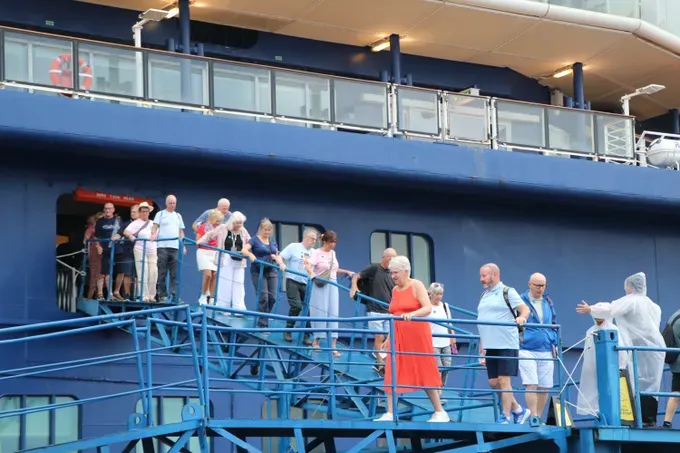
In recent years, the number of international cruise ships docking in Vietnam, particularly in the southern region, has increased rapidly. Royal Caribbean Group—one of the world’s largest cruise operators—alone organized dozens of trips bringing passengers to Vietnam in 2024 and 2025.
While demand for international cruise arrivals continues to grow, the existing passenger port infrastructure remains insufficient. The Vung Tau International Passenger Terminal—the only facility in the Southern region specifically planned for cruise ships—has yet to be constructed.
To meet immediate demand, authorities have had to dock cruise ships at certain cargo ports in the Cai Mep–Thi Vai port cluster. While this temporary solution allows for the continued reception of international passengers, it exposes numerous shortcomings in terms of safety, environmental impact, operational management, and the overall visitor experience.
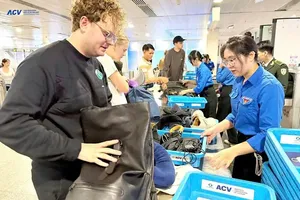
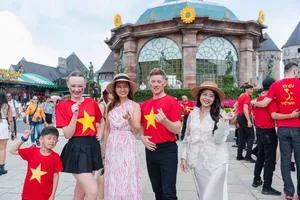
For example, on December 4, 2025, the Maltese-flagged mega-yacht Celebrity Solstice from Celebrity Cruises, carrying nearly 3,000 international passengers, docked at Thi Vai general port. After completing formalities, visitors were taken on tours of Ho Chi Minh City and nearby localities.
Although excited to visit Ho Chi Minh City, Emma, a 70-year-old Canadian passenger on the cruise, noted that Vietnam’s cruise ports need more comprehensive investment in facilities. A proper passenger port should include duty-free shopping areas, souvenir shops, waiting lounges, arrival and departure halls, and spaces showcasing local culture and tourism. It should also ensure convenient connections to airports, city centers, and nearby tourist attractions.
According to Mr. Vo Viet Hoa, Director of the International Tourism Department at Saigontourist Travel Services Co., Ltd., the cruise peak season lasts from October to April of the following year. The company expects to welcome approximately 25,000–30,000 passengers each season.
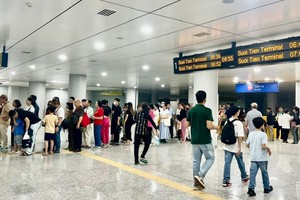
However, Ho Chi Minh City currently lacks a dedicated terminal for international cruise ships, resulting in lost opportunities and diminished advantages in attracting visitors. Using cargo ports for passenger ships not only complicates tour organization but also reduces the experience for high-end travelers—those with significant spending power and exacting service expectations.
According to statistics, since 2018, the nine ports in the Cai Mep–Thi Vai cluster port have handled 277 large cruise ship arrivals. While all voyages have been conducted safely without maritime incidents, using cargo ports to receive passenger ships is only a temporary solution and does not meet long-term technical and service standards.
The Vietnam Maritime and Inland Waterways Administration stated that while the Cai Mep–Thi Vai area has several ports capable of accommodating large international cruise ships, they have recently had to suspend passenger ship operations because their use for cruise services has not been officially incorporated into the planning. If this situation persists, Ho Chi Minh City and the Southern region will lack facilities to receive large cruise vessels, potentially forcing cruise lines to exclude Vietnam from their Asia itineraries.
Urgent need for dedicated cruise ports
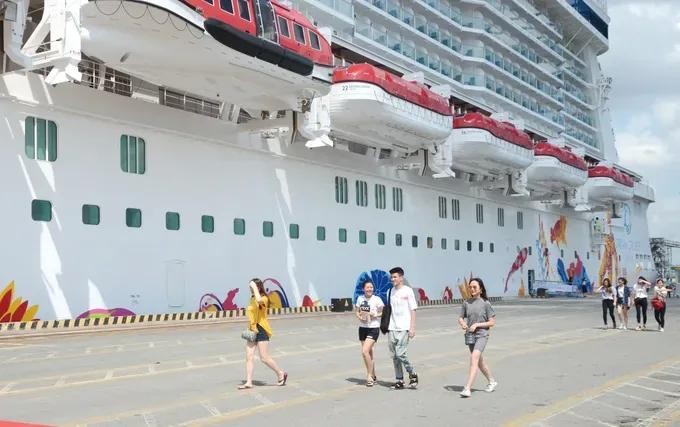
According to Pham Anh Tuan, General Director of Port-Marine Engineering Design Consulting Joint Stock Company (Portcoast), given the city’s current position, it cannot afford to lack a dedicated cruise terminal capable of accommodating next-generation cruise ships carrying 5,000–7,000 passengers. A passenger port has already been planned in the Bai Truoc area in Vung Tau Ward, a prime location for receiving the world’s largest cruise ships. However, investment implementation is currently facing numerous obstacles and difficulties.
Deputy Minister of Construction Nguyen Xuan Sang stated that the ministry has approved the detailed plan for the Vung Tau International Passenger Port and tasked local authorities with implementing the investment. The approach encourages private sector participation; however, if attracting investors proves difficult, public investment could be considered for shared infrastructure or as initial seed capital.
Regarding this matter, Deputy Director of Ho Chi Minh City’s Department of Construction, Mai Trung Hung, said that the locality is finalizing the pre-feasibility study report for the Vung Tau International Passenger Port project. The report is expected to be completed in 2026 and will serve as the basis for selecting the official investor.
The Ministry of Construction has approved the continued temporary reception of international cruise ships at nine ports in the Cai Mep–Thi Vai port cluster until June 30, 2026, in order to maintain cruise tourism activities during the transition period. The ministry has also recently approved the detailed development plan for the land and water areas of Ba Ria–Vung Tau seaports for the 2021–2030 period, with a vision extending to 2050.
Accordingly, the Vung Tau International Passenger Port is a key project, comprising one main pier and two passenger piers with a total length of 840 meters. It will be able to accommodate cruise ships of up to 225,000 GT and is designed to handle 1.39–1.5 million passengers per year.