It is also expected to prevent the recurring issue of price drops during harvest seasons.
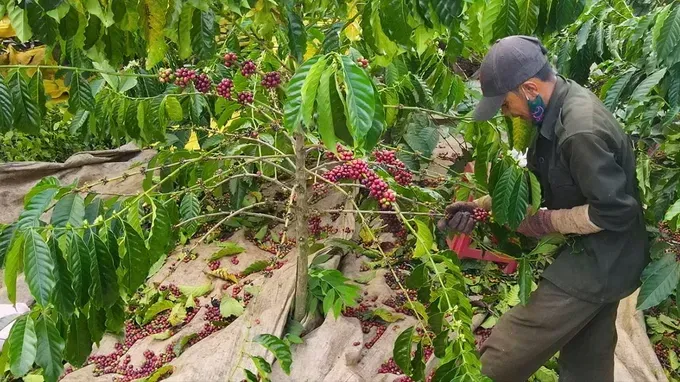
As an exporter of numerous agricultural products to 120 countries worldwide, Mr. Phan Minh Thong, Chairman of the Board of Phuc Sinh Group, stated that while Vietnam leads the world in the production of certain agricultural commodities, such as Robusta coffee and black pepper, it remains unable to control pricing, remaining dependent on the international market—meaning the power to set prices lies beyond its borders. Having a fully operational commodity exchange would not only allow us to take control of pricing but also foster a financial, warehousing, and logistics ecosystem, thereby establishing a hub for the circulation of goods and capital, he emphasized.
Commenting on the landscape of agricultural commodity exchanges in Vietnam, Dr. Dinh The Hien, Director of the Institute for Informatics and Applied Economics, noted that since 2000, numerous agricultural commodity exchanges have been established in the country, most notably the Buon Me Thuot Coffee Trading Center. However, due to ineffective operations, the majority of these exchanges ceased functioning shortly thereafter.
Currently, the Vietnam Commodity Exchange (MXV) is in operation. Established in 2010 with a license from the Ministry of Industry and Trade, MXV has made significant progress. Nevertheless, it has yet to function as a fully developed exchange comparable to those in other regional countries and thus has not fully leveraged its potential to advance agriculture or generate benefits for farmers and businesses. A true commodity exchange must facilitate spot trading. Achieving this requires a comprehensive infrastructure, including delivery centers, bonded warehouses, and quality inspection facilities. MXV, however, lacks these essential components, Dr. Dinh The Hien emphasized.
Advantages of situating the Commodity Exchange within VIFC
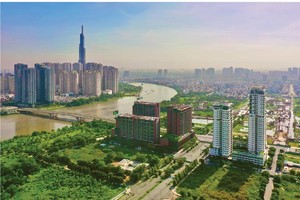
Vietnam’s agricultural sector is poised for significant advancement following the Government’s issuance of Decree 330 late last year, which established an open legal framework aligned with international practices for the Commodity Exchange within the Vietnam International Financial Center (VIFC). Notably, the decree clarified concepts such as spot contracts and derivative contracts, introduced the model of an independent clearing and settlement center, and expanded the range of commodities eligible for trading on the exchange, including agricultural products, energy, industrial raw materials, carbon credits, and digital assets.
To further develop the derivatives market, the Ministry of Industry and Trade is currently finalizing a draft Law on Commodity Derivatives Trading applicable both inside and outside the VIFC, which is expected to be submitted to the National Assembly at its session later this year.
Mr. Tran Huu Linh, Director of the Domestic Market Management Department under the Ministry of Industry and Trade, stated that Vietnam is focusing on developing the Commodity Exchange, particularly within the framework of the Vietnam International Financial Center (VIFC), where the derivatives market and the commodity derivatives exchange play a pivotal role. The advantage of the VIFC-based Commodity Exchange lies in the support of financial institutions, such as clearing and settlement centers. These centers require the participation of financial organizations and banks to possess sufficient capacity for effective operation.
In 2025, several of Vietnam’s agricultural sectors sustained strong export growth. Coffee exports reached 1.5 million tons, generating US$8.57 billion in revenue; fruits and vegetables totaled US$8.56 billion, up nearly 20 percent compared to 2024; cashew nuts exceeded US$5.2 billion, a 20.4 percent increase in value over the previous year; rice exports surpassed US$4 billion; and black pepper exports reached over US$1.66 billion.
Echoing this view, Dr. Dinh The Hien affirmed that situating a Commodity Exchange within the Vietnam International Financial Center (VIFC) is highly appropriate, as it facilitates attracting investors, including foreign participants. For the Vietnam Commodity Exchange to be truly competitive, serious investment is required, including the integration of both a spot trading platform and a commodity derivatives exchange, he emphasized.
According to Associate Professor Dr. Nguyen Huu Huan, Vice Chairman of the Executive Board of the Vietnam International Financial Center in Ho Chi Minh City (VIFC-HCMC), five enterprises have expressed interest and are exploring the establishment of a Commodity Exchange within VIFC-HCMC. The VIFC-HCMC is providing support to these companies in understanding relevant policies and legal frameworks. In addition, Ho Chi Minh City will assist with both hardware and software infrastructure for enterprises participating in VIFC-HCMC.