However, the key challenge lies not only in implementing these commitments but also in establishing substantive operational mechanisms to ensure sustainable development.
Planting seeds in schools
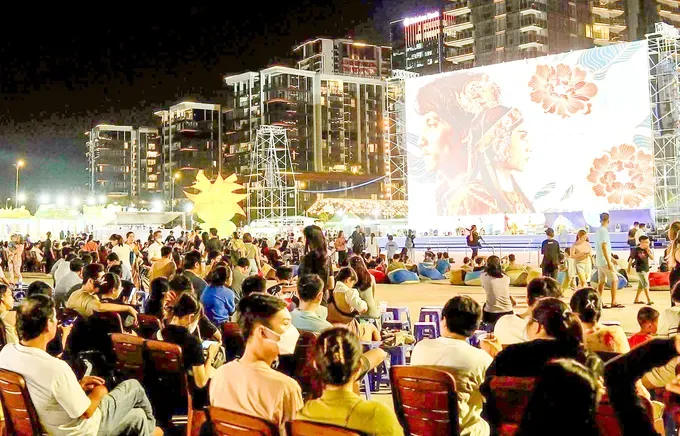
In early June, as part of the 2nd Ho Chi Minh City Short Film Festival 2026, the initial activities of the "Creating School Cinema" initiative were launched across four high schools, including Le Quy Don in Xuan Hoa Ward, Tran Khai Nguyen in An Dong Ward, Tay Thanh in Tay Thanh Ward, and Gia Dinh in Thanh My Tay Ward. Hundreds of students attended film screenings and engaged in discussions with filmmakers about the program's significance.
These initial activities demonstrate that bringing cinema into schools is being approached through diverse methods, ranging from film screenings to providing opportunities for students to explore cinematic language, processes, and creative activities. People's Artist Nguyen Thi Thanh Thuy, Deputy Director of the Ho Chi Minh City Department of Culture and Sports, emphasized that bringing cinema into schools represents a commitment with long-term significance.
For the 2026-2027 academic year, the Ho Chi Minh City Department of Culture and Sports has developed an implementation plan. The immediate focus is to help students access, feel, and understand artistic works across various fields, including cinema. The goal is to gradually familiarize students with cinematic language, from basic concepts to the ability to appreciate a film, People's Artist Nguyen Thi Thanh Thuy said.
Director Tran Thanh Huy, who participated in drafting the school cinema curriculum, noted that the program does not aim to discover talent, as only about 1 to 2 percent of students will pursue professional filmmaking careers.
The most important aspect is contributing to building a generation of knowledgeable filmgoers, thereby elevating the artistic value of the national cinema, Director Tran Thanh Huy shared.
To realize this goal, film education methodology must be positioned properly. According to Master Huynh Cong Khoi Nguyen, Head of the Film Material Exploitation and Distribution Department under the Vietnam Film Institute, watching films in schools holds educational significance only when students are psychologically prepared to receive them, their emotions are respected, and they have opportunities to use their insights to speak, write, and create.
Film education must be a guided learning experience, not forcing students to memorize terminology or seek a single correct answer. To achieve this, four core principles must be ensured, including student-centered learning, work-based foundations, respect for diverse interpretations, and clear role divisions between teachers and guest speakers or artists, Master Huynh Cong Khoi Nguyen added.
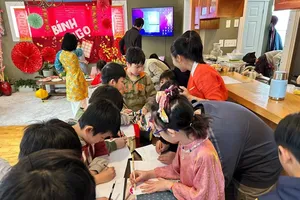
According to a report from the Ho Chi Minh City Department of Culture and Sports, in the first nine months of 2026, the "Creating School Cinema" program organized nine events across various wards and communes in Ho Chi Minh City. Each event comprised multiple components, including showcasing award-winning films from city-hosted film festivals, hosting hands-on cinema experiential spaces, and facilitating exchanges with artists, actors, and experts.
Unbottlenecking administrative procedures
 in Ho Chi Minh City. (Photo: Film crew)")
The Ho Chi Minh City People's Committee has recently issued a decision to implement its commitments to the UNESCO Creative Cities Network (UCCN), tied to the development of the city's cultural industries for the 2026–2030 period. Accordingly, the city is focusing on executing six initiatives pledged to UNESCO, comprising three local-level initiatives—creating school cinema, depicting life's colors through cinema, and establishing creative cinematic spaces—and three international-level initiatives - hosting the Creative Cities Network Forum, organizing the annual Ho Chi Minh City International Film Festival (HIFF), and establishing a film development support hub.
At the local level, the city aims to establish a Cine Park along the Saigon River waterfront park, develop a literary and artistic creative space planned at 25 Le Quy Don Street in Vo Thi Sau Ward, and connect a network of satellite creative spaces.
Furthermore, under the direction of the Ho Chi Minh City People's Committee, the Ho Chi Minh City Department of Culture and Sports is leading the implementation of key projects, including an investment plan for a large-scale studio complex spanning 100 to 150 hectares.
According to leaders of the Ho Chi Minh City Department of Culture and Sports, a crucial task in realizing commitments to UNESCO is unbottlenecking administrative procedures, mechanisms, and policies. Management must shift from traditional administrative control to a development-oriented governance mindset, fostering co-creation in urban management, supervision, creativity, and development.
One proposed solution is to establish a single-window point of contact linked with relevant authorities and localities. Ho Chi Minh City is expected to launch an institution similar to a film commission in the near future.
According to Director Huu Luan, instead of contacting multiple departments, sectors, and local authorities, film crews would only need to approach a single point of contact for guidance and support throughout production—ranging from licensing procedures and location scouting to connecting resources for equipment, workforce, and production services.
In addition, the city's project outlines key task groups to develop cinema into a flagship sector within the city's overall cultural industries. These include promoting community- and urban space-linked cinema activities, training human resources, encouraging the application of emerging technologies, artificial intelligence, and virtual studios in filmmaking, production, distribution, and promotion, as well as strengthening intellectual property protection and supporting film startups.
Despite being a new member, Ho Chi Minh City is evaluated to possess sufficient potential to stand alongside long-standing network members. Fulfilling commitments to UNESCO is thus not only a responsibility but also an opportunity for the city to assert its standing within the global network.
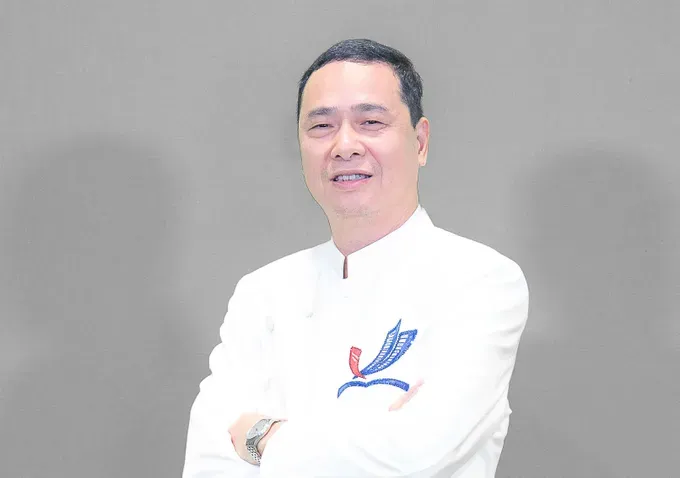
According to Dr. Pham Huy Quang, President of the Ho Chi Minh City University of Theater and Cinema, the primary requirement when introducing cinema into schools is to ensure academic precision, as incorrect knowledge—especially when absorbed at a young age—can impact an entire generation.
Therefore, priority must be given to building a comprehensive, accurate set of learning materials backed by authoritative references, alongside an appropriately qualified editorial and teaching team. In addition, these learning materials must inspire students, first fostering an appreciation for watching films before progressing to hands-on filmmaking practice.

Meritorious Artist Hanh Thuy said greater attention should be paid to training in cinema and the arts. In practice, not every accomplished artist has the opportunity to pursue an eight-to-10-year academic pathway to obtain a master's or doctoral degree before becoming eligible to teach.
Many individuals possess strong creative abilities and have produced numerous works but lack the necessary conditions or time to follow an academic career path. This has created a significant gap in specialized training.
A balance must be struck between training requirements and the distinctive nature of artistic practice. Cinema education should not become a rigid process of applying standardized formulas at the expense of the essence, individuality and creative identity of artists.