Weighing in on the topic “Labor unions representing, nurturing, and protecting the legitimate, rightful interests of members and workers,” numerous delegates argued that it’s absolutely crucial to proactively nip collective labor disputes in the bud from afar. This aims to forge highly harmonious, rock-solid, and progressive labor relations.
Amidst this fresh landscape, there’s a desperate need for robust solutions to elevate the labor union’s participation in drafting pivotal policies and legislation.
For Director Nguyen Thanh Do of the Legal Consulting Center under the HCMC Federation of Labor, representing a locality teeming with members and workers nationwide brings unique challenges. He stated that HCMC is currently managing roughly 23,000 grassroots unions including over 2.4 million union members, which reportedly accounts for about a quarter of the total unionized workforce across the country.
To maintain the workforce’s unwavering trust, the HCMC Federation of Labor has proactively shifted its mindset, refusing to stop at a purely passive mediation role. It has aggressively evolved into a formidable “legal shield,” staunchly protecting workers early on and from afar. A crystal-clear testament to this is that the union organization has successfully represented and safeguarded over 2,500 laborers, securing an impressive sum of more than VND49 billion (US$1.86 million).
As the person operating directly on the frontlines, Chairman Ngo Ngoc Vinh of the Stanley Company Labor Union under the Hanoi Labor Federation, explained that during collective bargaining and dialogue sessions, the grassroots union relentlessly sticks to the golden rule of transparent information. Thanks to this, numerous welfare benefits have been seamlessly added at the enterprise level. For instance, employees gain an extra day off after four years of service, and those working the second and third shifts enjoy an allowance rate 30 percent higher than the legal regulations.
Vice President Ngo Du Hieu of the Vietnam General Confederation of Labor pointed out that with a massive membership base surging over 10 million individuals, the labor union’s mandate is incredibly daunting as it must directly represent, nurture, and shield workers’ rights.
It appears the union is the very first organization laborers flock to when they hit a wall regarding wages, social insurance, and other closely tied benefits. Therefore, in this brand-new context, it’s not enough for union officials to merely distribute material support; they desperately need to harbor a “warm heart” to genuinely empathize with the everyday laborer.
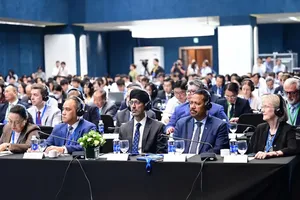
Across the diverse discussion hubs at the 14th Congress of the Vietnam General Confederation of Labor, multiple delegates also advocated for serious investment in workers’ cultural institutions and communal living spaces within industrial parks and boarding house clusters. They also urged the creation of support mechanisms to greenlight pilot models for digital transformation in propagandizing and educating the workforce.
At the center of the discussion named “Comprehensively overhauling union finances to nurture member welfare,” a presentation by the HCMC Federation of Labor revealed that the sheer workforce handling union finances plummeted from over 100 individuals down to a mere 15. Meanwhile, the city is aggressively managing upwards of 24,000 grassroots branches.
For Standing Deputy Head Bui Thi Ngoc Oanh of the Finance Unit at the HCMC Labor Federation, clinging to outdated manual management techniques is a recipe for disaster. She asserted that if they continue to rely on these methods, it’ll be incredibly tough to meet practical, real-world demands. HCMC has rolled out a cutting-edge union management app, seamlessly allowing grassroots tiers to declare dossiers and execute funding reimbursement requests squarely within the digital realm.
Consequently, the timeline for disbursing these funds has been drastically slashed from 1-2 months down to just 7-10 days, provided the submitted paperwork is totally accurate. The city is also digitizing its financial data and union assets, while concurrently integrating member identification codes to better serve comprehensive management needs and profoundly care for the workforce.
Parallel to this urgent demand for management modernization, numerous delegates strongly suggested that union financial resources must remain heavily prioritized for activities that directly nurture members and laborers.
Chairman Tran Dang Ninh of the Labor Union at Dong Nai Food Industry Corporation weighed in heavily on the matter. He argued that several current support levels are sadly out of touch with modern price rates and the sheer practical needs of workers, thereby proposing a thorough study to tweak financial aid for members battling critical illnesses, while simultaneously rethinking the allowance regime for grassroots union staff.
Deputy Head Nguyen Phuong Nga of the Union Affairs Board and Chief Accountant of the Hanoi Labor Federation forcefully recommended that evaluating target efficacy shouldn’t just lean blindly on financial metrics; instead, it must be firmly grounded in the tangible value that workers genuinely reap from these welfare programs.
Exchanging views during the vibrant discussion session, Vice President of the Vietnam General Confederation of Labor Phan Van Anh graciously acknowledged the delegates’ input. He clarified that tweaking the current union financial expenditure norms must strictly adhere to the latest legal regulations and ultimately requires seamless consensus with the Government alongside other relevant authorities.
Even though plenty of hurdles remain, the key goal is still to prioritize resources for members and workers alike. At the end of the day, it’s all about forging a public, transparent union financial management system that radically simplifies administrative red tape and aggressively boosts the efficient use of resources to look after the workforce.