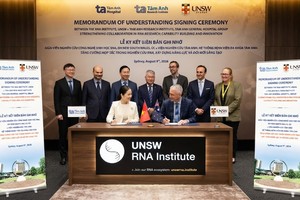
On the afternoon of May 14, the Ho Chi Minh City Department of Health held a signing ceremony on technology transfer and comprehensive professional support for Ba Ria General Hospital.

According to the Department of Health’s orientation, Ba Ria General Hospital will gradually develop into a strategic “gateway hospital” in southeastern Ho Chi Minh City. The hospital will serve as a key center for emergency reception, initial treatment, and management of common diseases, while effectively connecting with the city’s network of specialized hospitals when necessary.
To realize this goal, the city’s Department of Health has directed leading general and specialized hospitals in Ho Chi Minh City to develop specific, synchronized, and long-term support plans for Ba Ria General Hospital.
At the ceremony, Ba Ria General Hospital signed comprehensive professional cooperation agreements with seven leading hospitals in the city.
Among them, People’s Hospital 115 will support the development of emergency medicine, intensive care, stroke unit establishment, red-alert emergency procedures, trauma emergency response, and improving the hospital’s capacity to handle critical cases locally.
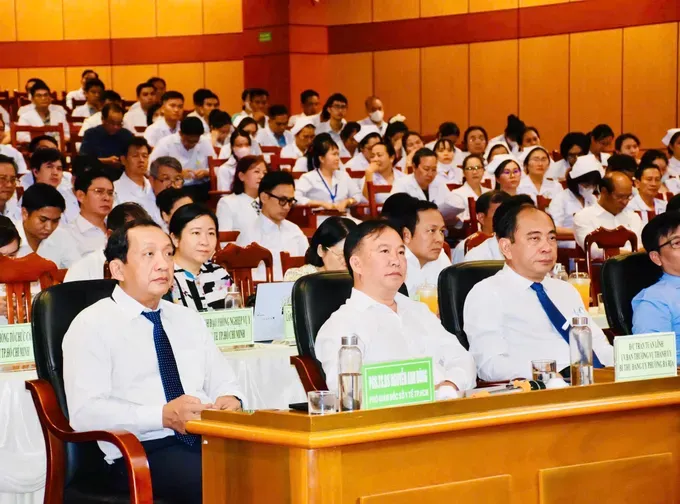
In particular, People’s Hospital 115 will assist Ba Ria General Hospital in building an integrated multidisciplinary “Trauma Emergency Center” model, enabling severely injured patients to receive emergency care, resuscitation, and specialized intervention during the “golden hour.” The model is considered vital for improving emergency response capacity in gateway areas, reducing patient transfers, and increasing survival rates for critically ill patients.
Binh Dan Hospital will support surgical specialties, especially general surgery, urology and advanced surgical techniques.
Tu Du Hospital will support obstetrics and gynecology services, including emergency obstetric care, maternal and neonatal healthcare, and the transfer of advanced diagnostic and treatment techniques.
Hospital for Tropical Diseases will assist in strengthening infectious disease treatment, infection control, and infectious disease intensive care, while training personnel capable of handling common infectious diseases and emerging epidemic situations.
Children’s Hospital 1 will provide comprehensive support for pediatric examination and treatment, pediatric emergency and intensive care, specialist pediatric workforce training, and hospital management.
Meanwhile, Ho Chi Minh City Ear-Nose-Throat Hospital and Ho Chi Minh City Odonto-Stomatology Hospital will support the development of specialized medical services, enabling local residents to access more high-tech healthcare services without traveling to inner-city hospitals.
Associate Professor Dr. Tang Chi Thuong, Director of the Ho Chi Minh City Department of Health, described the initiative as an important milestone in the city’s healthcare development strategy based on a “multi-tiered, multi-polar, multi-center” model.
He emphasized that this is not merely a technical transfer program, but a new healthcare development model described as a “hospital partnership system.” In this model, specialized hospitals act as professional hubs supporting gateway hospitals, creating a closely linked, effective, and sustainable regional healthcare network.
The initiative is expected to help reduce overcrowding at inner-city hospitals and shorten emergency and treatment access times for residents in surrounding areas. In the long term, developing Ba Ria General Hospital will lay the foundation for a new healthcare hub associated with the city’s rapidly growing port, logistics, industrial, and urban development areas.

Ba Ria General Hospital currently has 900 beds, 35 departments and units, and 1,041 staff members. Before administrative restructuring, the hospital was classified as a provincial-level Grade II general hospital.
Dr. Duong Thanh, Director of Ba Ria General Hospital, affirmed the hospital’s commitment to effectively implementing the Department of Health’s directives, maximizing the support from partner hospitals, and closely coordinating with local authorities to gradually improve professional expertise, governance capacity, healthcare quality and public health services.