The ADB projects Vietnam will continue growing through 2026–2027, with inflation at around 4 percent this year, easing to 3.8 percent in 2027. Public investment, estimated at about US$38 billion, especially in infrastructure, is expected to remain the main growth driver.
However, foreign direct investment may slow due to weaker global investment and rising uncertainty, while domestic consumption and exports could face pressure from tighter credit and reduced household spending.
External risks persist, including prolonged Middle East tensions, the ongoing Russia–Ukraine conflict, and potential U.S. tariff adjustments affecting global trade.
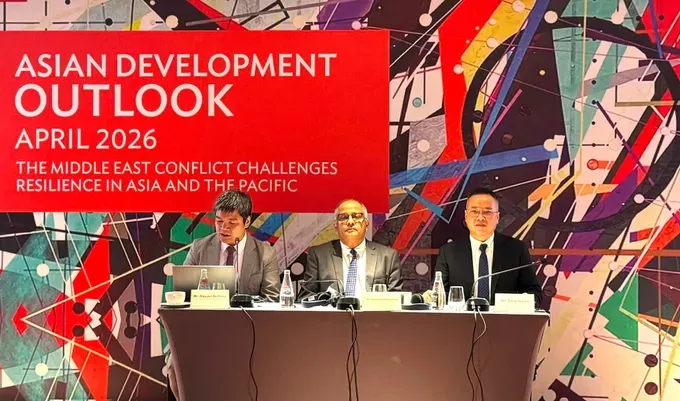
According to Mr. Shantanu Chakraborty, ADB Vietnam Country Director, Vietnam has responded flexibly with short-term fiscal measures to cushion energy shocks and control inflation. At the same time, long-term strategies, such as diversifying energy sources and accelerating the transition to clean energy, along with institutional reforms, are expected to strengthen resilience and sustain growth.
Additionally, the Asian Development Bank representative in Vietnam said that institutional reforms are also expected to positively impact growth prospects. If effectively implemented, these reforms can enhance public sector efficiency, improve the business environment, and strengthen the economy’s resilience.