While 6G networks are under research and development, 5G remains the primary internet infrastructure with increasingly expanding coverage. In Ho Chi Minh City, various organizations and businesses are implementing numerous programs to maximize the value of 5G, especially in the development of smart cities and industries.
With monthly subscription packages ranging from tens of thousands to hundreds of thousands of Vietnamese dong, users can comfortably use 5G for work and entertainment every day. According to statistics from the Ministry of Science and Technology, by the end of 2025, 4G coverage nationwide will reach over 99.8 percent of the population, while 5G will reach over 91 percent.
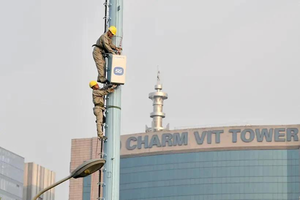
Currently, Viettel Group leads with 30,000 5G base stations nationwide. In 2025 alone, this company installed 23,500 new base stations, and in 2026, it is expected to deploy an additional 15,000 stations. According to Ms. Nguyen Ha Thanh, Deputy General Director of Viettel Telecom, outdoor 5G coverage has reached 90 percent, and indoor coverage has reached 70 percent.
Similarly, VNPT Group is committed to covering 55 percent-60 percent of the population with 5G this year. This company has been testing Network Slicing (network virtualization technology, allowing a physical network to be divided into multiple independent virtual networks) and Network API (an application that allows different software to communicate, exchange data, or use each other's functions over the network) since September 2025.
To maximize the value of 5G, especially its application in socio-economic development, the Ho Chi Minh City People's Committee has recently issued a plan for developing 5G mobile network infrastructure (BTS stations) and IoT (Internet of Things) in the city for the period 2025-2027. Accordingly, the city will continue to focus on investing in expanding 5G coverage in central areas, public administrative areas, high-tech zones, concentrated information technology zones, industrial parks and clusters, densely populated areas, and public areas such as train stations, seaports, airports, and public transportation systems.
Ho Chi Minh City aims to achieve over 90 percent 5G service coverage for its citizens; and improve the quality of 5G mobile broadband internet access services with download speeds of 100-500 Mbit/s. Furthermore, leveraging 5G mobile network infrastructure for IoT solutions and integrating advanced technologies such as artificial intelligence (AI) will develop smart industries and cities.
A platform for building a synchronized digital industrial park
In early February 2026, Viettel Ho Chi Minh City and the Ho Chi Minh City Export Processing and Industrial Zones Authority (HEPZA) launched the deployment of 5G and the Digital Transformation Week at five key industrial parks, aiming for 100 percent 5G coverage in industrial parks by 2026 and building a synchronized, modern digital industrial park model. This activity is based on the strategic cooperation agreement signed on September 25, 2025, between the two entities.
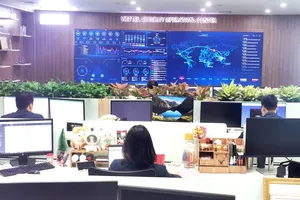
Accordingly, 5G will not only be a simple telecommunications infrastructure but will become the connectivity platform for the digital ecosystem in industrial parks, including IoT and AI surveillance camera systems, intelligent operations centers (IOCs), Cloud - Data Center solutions, 5G Private serving factories, ports and large-scale manufacturing enterprises, and digital enterprise management systems such as digital signatures, electronic contracts, and electronic invoices.
The deployment roadmap is divided into phases, prioritizing industrial parks with high enterprise density, while ensuring uniform deployment in Ho Chi Minh City and surrounding areas. Nguyen Van Dung, Deputy Director of Viettel Ho Chi Minh City, shared that Viettel is committed to investing in a synchronized 5G infrastructure, working closely with Hepza and the business community in building a digital industrial park model. The goal is not just to provide coverage, but to create clear operational and commercial value for each industrial park.
Leveraging the groundwork established by 5G and aiming for digital transformation, HEPZA is concentrating on the creation of a digital industrial park model along with a centralized operations center; ancillary businesses are adopting coordinated digital transformation solutions. Concurrently, employees within industrial parks are being offered access to digital services and guidance on the integration of technology into their daily lives and professional activities.
According to Mr. Le Van Thinh, Deputy Head of HEPZA, digital transformation in industrial parks is a key task aimed at improving management efficiency, increasing the attractiveness of the investment environment, and creating a competitive advantage for businesses. The deployment of 5G, linked to the digital transformation ecosystem, is expected to open a new phase of development for export processing zones and industrial parks in the city and surrounding areas, moving towards building a modern, transparent, and sustainable production environment.
The Department of Science and Technology of Ho Chi Minh City has issued a document requesting that the corporations Viettel, VNPT, and MobiFone conduct research and development on 6G technology in 2026 and collaborate on a pilot project to provide coverage in a specific area. 6G is the next generation of mobile networks following 5G, anticipated to offer higher data transmission speeds, extremely low latency, integration of AI, and satellite connectivity, catering to applications such as the Internet of Things, data centers, long-distance communication, and new generation digital services. However, the official technical standards for 6G have not yet been released globally.