In recent years, the introduction of clean-energy buses such as electric and compressed natural gas (CNG) vehicles has brought significant changes to public transportation in Ho Chi Minh City. Alongside this shift, service quality, operational management and traffic compliance have improved markedly, attracting a growing number of commuters to choose buses over private vehicles.
From motorbikes to buses: A shift in commuting habits
To experience the service firsthand, a reporter of Sai Gon Giai Phong Newspaper (SGGP) boarded an electric bus on Route No.8 late one afternoon, traveling over 30 kilometers from the “village” of Vietnam National University–Ho Chi Minh City to District 8 Bus Station in Chanh Hung Commune.
The difference was immediately noticeable. The bus arrived on time, doors slid open automatically and staff greeted passengers warmly. Payment was quick and convenient, with multiple options including QR code scanning.
Inside, the bus felt modern and comfortable with clean seats, cool air, free Wi-Fi, and clear audio announcements at every stop. Unlike traditional buses, the electric vehicle moved quietly, free from engine noise and fuel odors.
Even during rush hour, when the bus became crowded, order was maintained. Passengers willingly gave up seats to those in need, reflecting a more positive commuting culture.
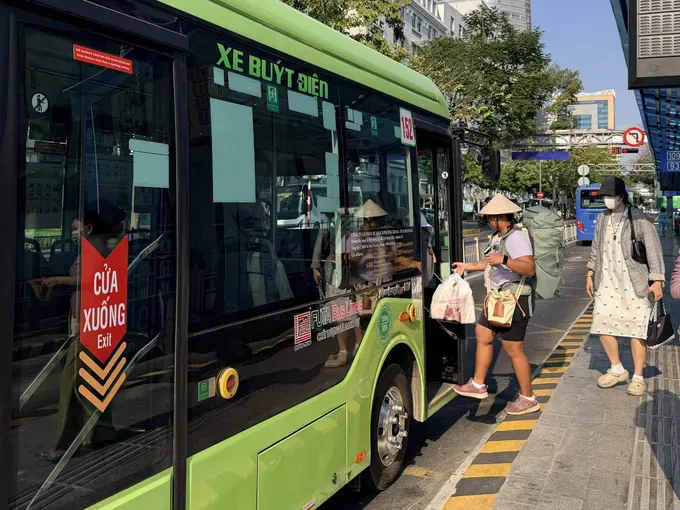
For many, the shift to buses is a practical choice. Nguyen Thi Thuy, a student at the University of Technology under Vietnam National University–HCMC, shared that she abandoned her motorbike after struggling with long, congested, and polluted commutes. The bus is cleaner, safer and far more affordable, the passenger said
Similarly, Nguyen Xuan, who works for a real estate company in the city center and earns over VND100 million (US$3,785) per month, surprised his friends by commuting by bus instead of driving or taking taxis.
Every morning at 7 a.m., he boards Bus Route No.152 near his apartment in Binh Hung Commune, heading to a stop on Pasteur Street near the Ho Chi Minh City University of Architecture, then walks to his office. In the evening, he takes the same route home.
For him, the bus is punctual, stops at designated stations, and remains clean, with travel time not much slower than a private car. He uses the Moovit app to track schedules and appreciates the convenience of stops near central locations such as the Rex Hotel, which also makes it easy to meet clients.
Notably, the route runs from his residence to Tan Son Nhat International Airport, making it convenient for business trips. Encouraged by his experience, more of his friends have started using the bus, not only for commuting but also for airport trips and even for their children’s school travel.
Earlier this year, the route was taken over by Phuong Trang Company and upgraded to electric buses, offering a more modern and comfortable experience while maintaining affordable fares of VND5,000 per trip for both locals and foreigners. An additional VND5,000 fee applies per suitcase for airport trips. Paper tickets have been replaced, and operating hours have been extended from 7 p.m. to 10 p.m.
From infrastructure to innovation: Bus services see comprehensive upgrade
In recent years, the bus sector has seen notable improvements, particularly in infrastructure. According to Nguyen Luong, a resident in Trung Son residential area who has used buses regularly for about a year, many changes are only noticeable to frequent passengers.
On smaller streets where sidewalks are occupied by vendors, bus stops are marked by yellow cross-hatched boxes painted on the road. If passengers don’t wait at the designated spot, the bus won’t stop, he said. On major roads, stops are better equipped with shelters and electronic route displays.
For zero-emission buses, the most significant upgrades are operational. Services largely run on schedule, especially during peak hours, while onboard audio announcements help passengers track stops and avoid missing their destination.
Nguyen Duy Quang, a driver on electric Bus Route No.36 (Ben Thanh–Thoi An), said that strict discipline is enforced. Violations such as improper stopping, smoking, or inappropriate behavior toward passengers can result in heavy penalties. Onboard cameras ensure compliance with regulations.
According to Mr. Pham Ngoc Dung, Director of the city’s Public Transport Management Center, more than 2,000 cameras now monitor bus operations in real time, transmitting data to a central control system. Staff oversee routes, speeds, stop times, and service quality, while drivers receive live traffic updates to adjust routes when needed.
The system also supports rapid response to security incidents and integrates GPS data, camera feeds, and public feedback to improve management and planning.
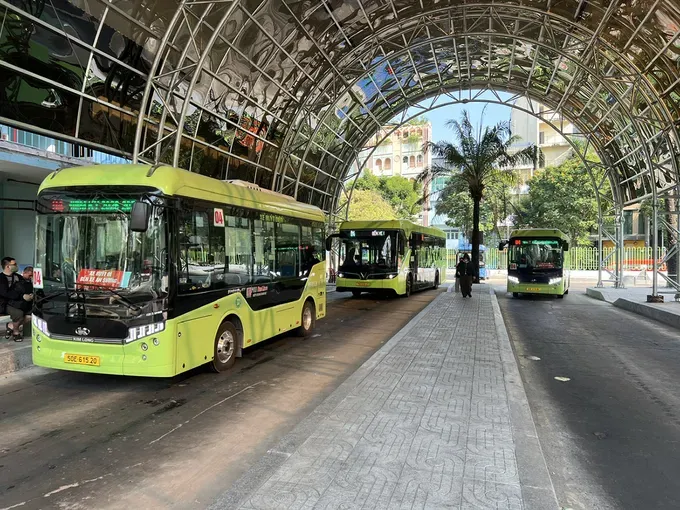
While unavoidable delays may be excused, violations such as route deviations or poor service are strictly penalized. Authorities are also continuing to adjust routes, including new connections to Metro Line No. 1 and universities.
These coordinated improvements are helping electric buses strengthen their role in the city’s public transport system and support long-term sustainable mobility goals.